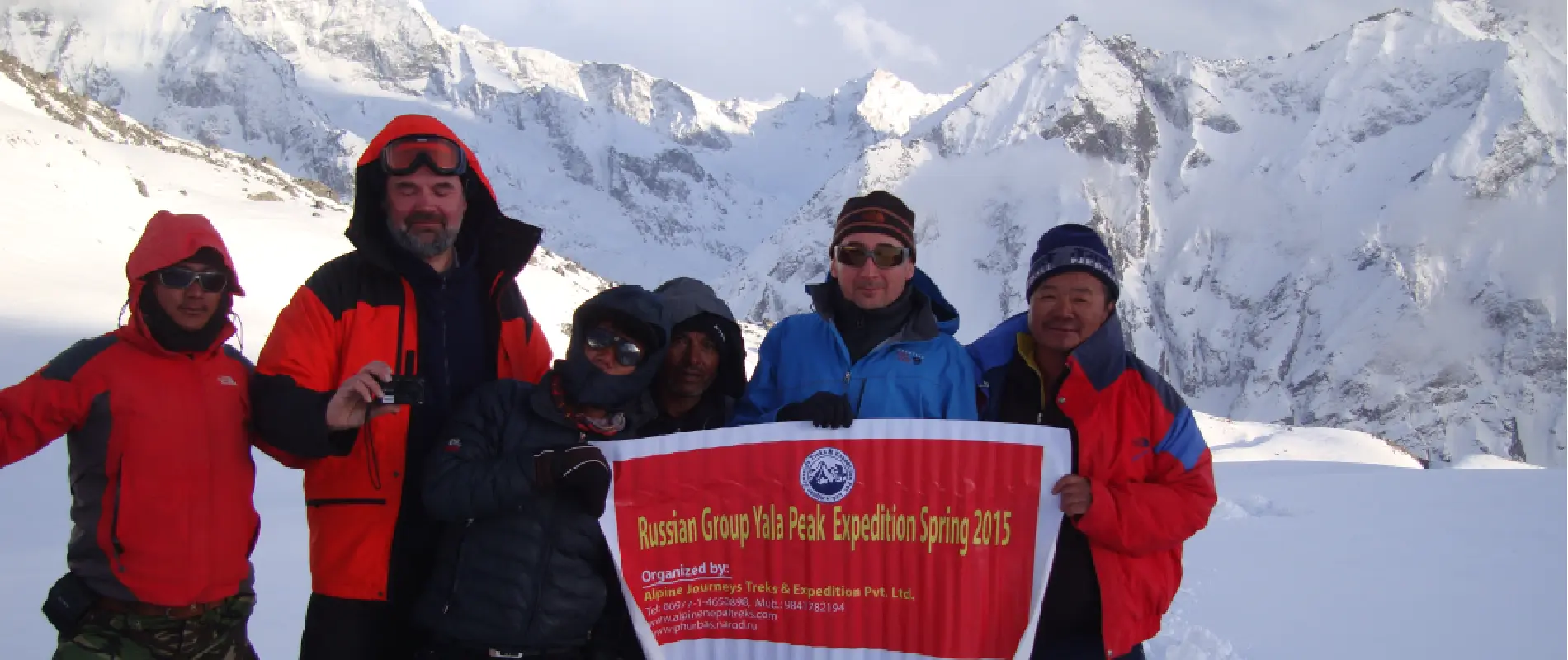
The Perfect Beginner's Mountain: Breathtaking Yala Peak Awaits Your Footsteps.
Enquire NowTrip Duration 15 Days starting from Kathmandu and ending at Kathmandu
Trip Grade Tough
Group Size 1-20 pax
Max Height 5550m.
Best Season March - May, September - November
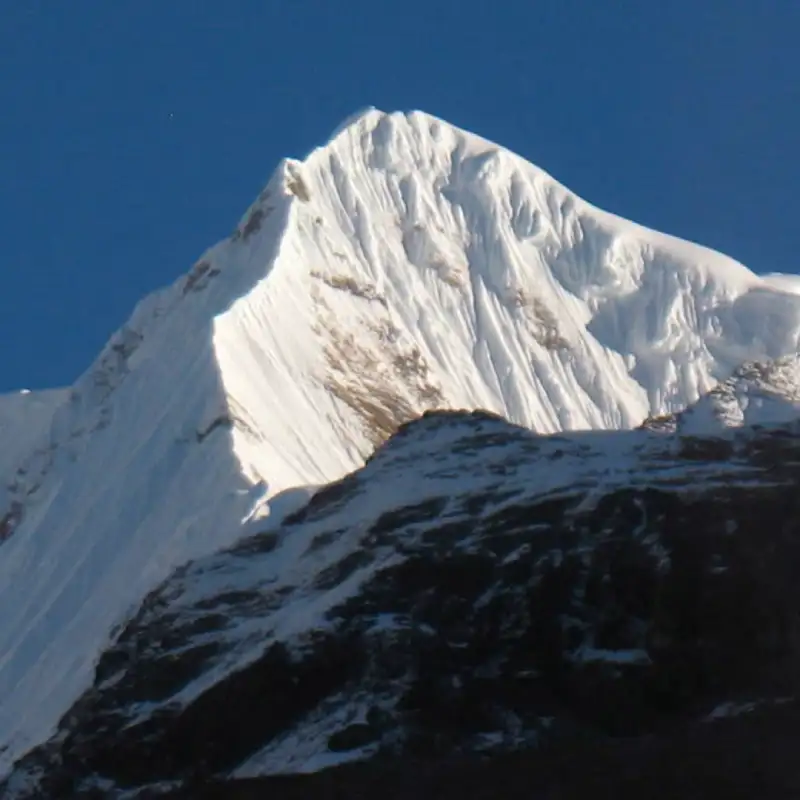
Yala Peak is perhaps the most accessible genuine mountaineering experience located in Langtang region of Nepal. Yala Peak is 5,550 meters positioning itself at a perfect altitude, high enough to provide the authentic challenges of Himalayan climbing yet low enough to minimize serious altitude-related concerns.
The journey starts with a scenic drive from Kathmandu to Syabrubesi, followed by a trek through the Langtang Valley. The trekking trail passes through rhododendron forests, mani walls, traditional tamang villages, and centuries-old buddhist monasteries.
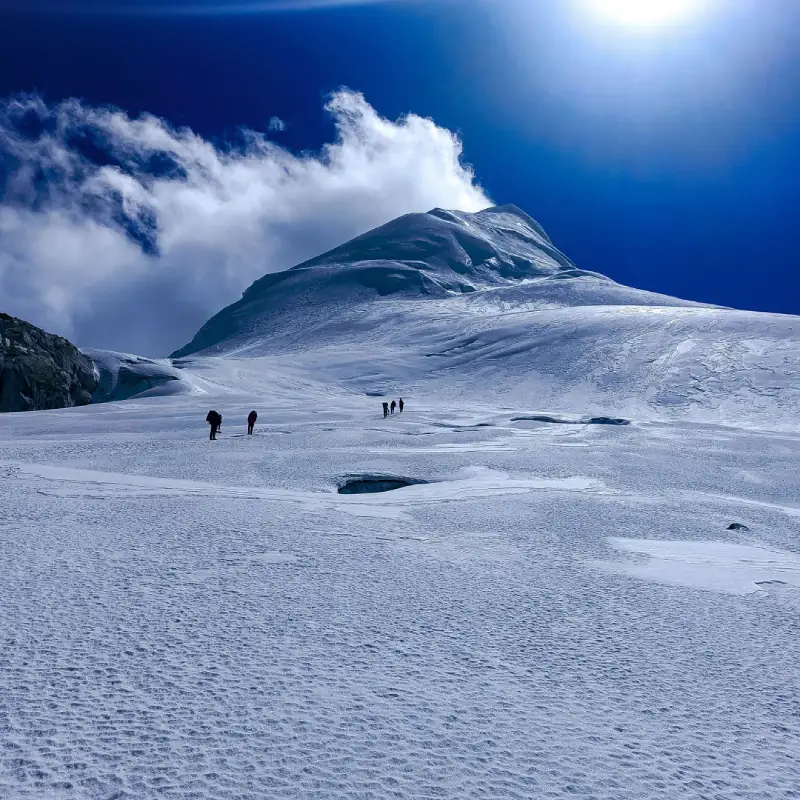
Yala Peak is also popular because of its comparatively easy summit and is equally packed with exciting adventure. From base camp, the route progresses along grassy slopes that gradually transition to snow and ice. It requires basic snow and ice skills, but does not demand extensive technical expertise, making it suitable for fit trekkers seeking their first Himalayan summit.
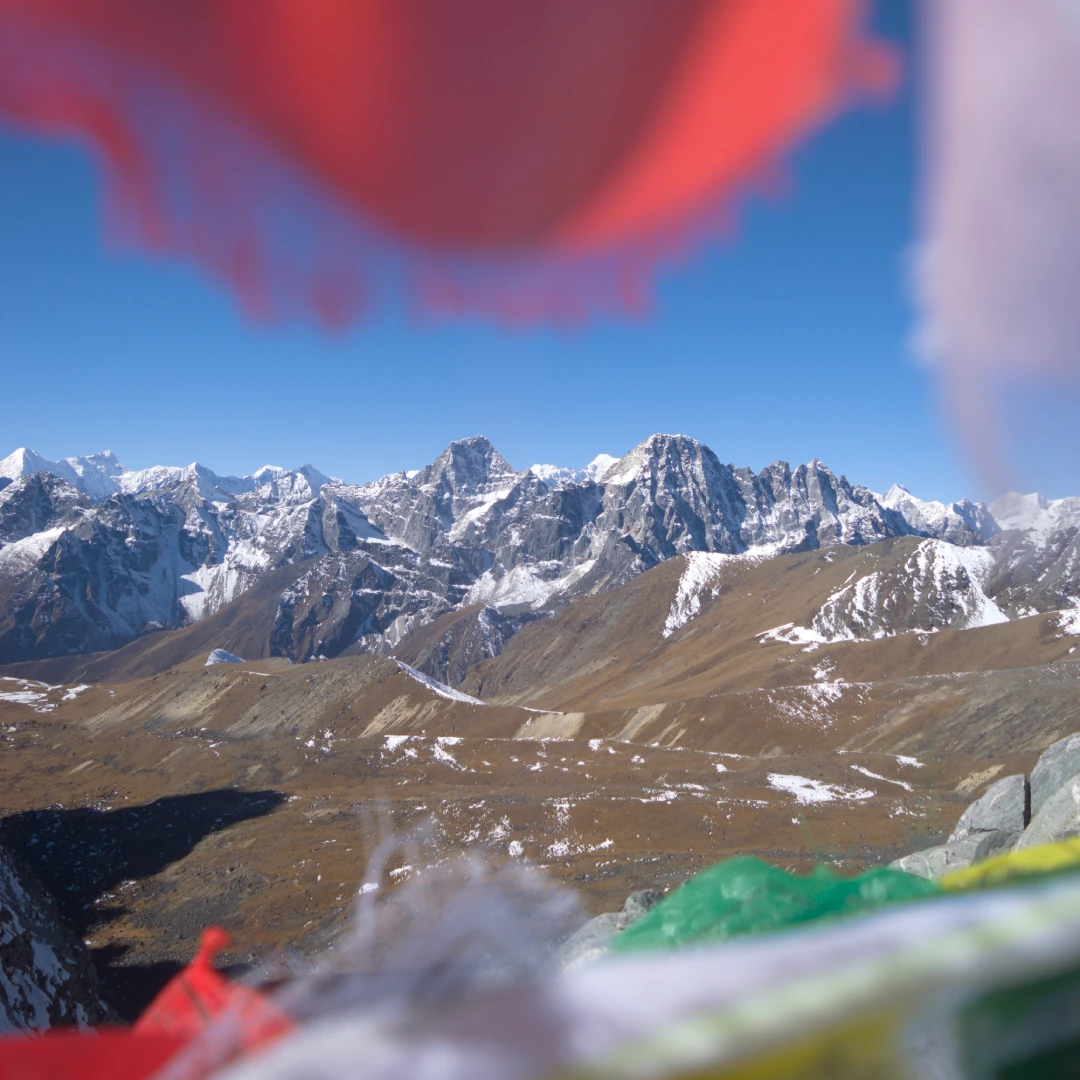
The panorama from Yala Peak’s summit is truly breathtaking, offering a 360-degree view that includes a wide array of Himalayan giants. Some of them include: Langtang Lirung, Dorje Lakpa, Shishapangma, etc.
For those new to mountaineering or with limited time, Yala Peak provides an introduction to Himalayan climbing. It is technical enough to be a genuine achievement, yet accessible enough to be enjoyable.
Included Meals
Yala Peak Climbing is rated as one of the more accessible Nepal high-altitude peaks with a PD– grade, making it an excellent introductory objective in Himalaya mountaineering. At 5,732 m, the Yala Peak Expedition Nepal involves straightforward glacier travel, gentle to moderate snow slopes of 30–40°, and a short final ridge. It is significantly less technical than peaks such as Lobuche East or Pharchamo, offering a rewarding first 5,000 m+ summit experience for climbers transitioning from high-altitude trekking Nepal to genuine Nepal trekking and climbing challenges.
Climbers preparing for Yala Peak Climbing should maintain good cardiovascular fitness and the ability to carry a 10–13 kg pack for 5–7 hours at altitude. Solid leg strength, core stability, and mental endurance for summit days of 7–9 hours are important. Prior experience in high-altitude trekking Nepal or at least one 5,000 m peak is beneficial but not mandatory. A focused 3–5 month training program featuring weighted hikes, stair climbing, and interval sessions prepares participants well for this Nepal high-altitude peak.
Acclimatization is essential for every safe Yala Peak Expedition Nepal. The itinerary includes deliberate “climb high, sleep low” rotations through progressive camps, giving the body time to adapt to altitudes above 5,000 m before the summit push. This structured approach greatly reduces the risk of altitude illness and enhances overall performance. Professional teams incorporate extra rest days because thorough acclimatization remains one of the most reliable predictors of success in Himalaya mountaineering.
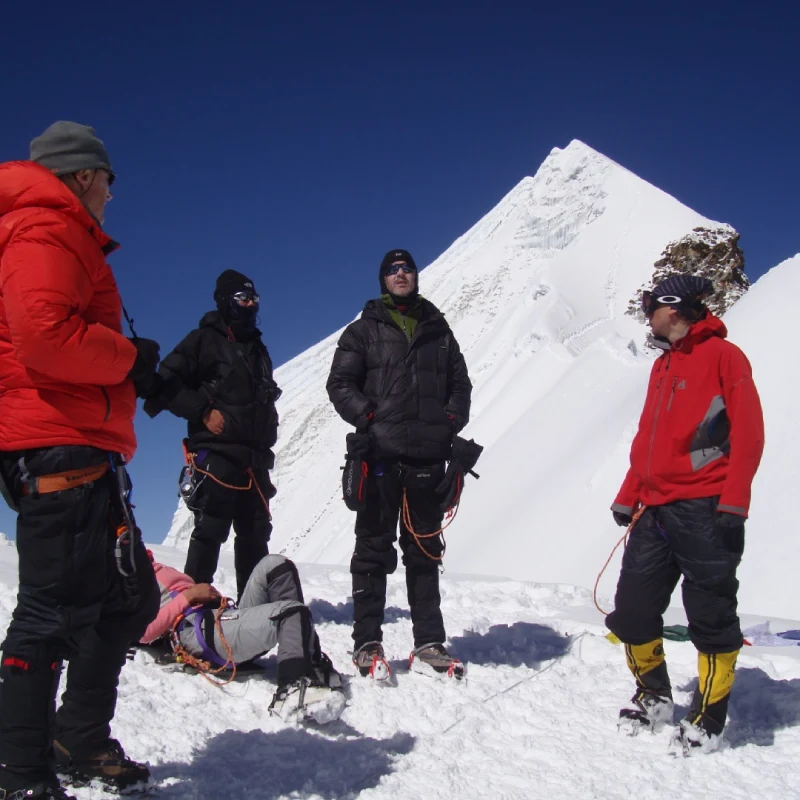
Yala Peak Climbing requires confident crampon technique on snow and ice, basic ice-axe arrest, and the ability to move efficiently in a roped team across glaciated terrain. Climbers should also be comfortable using harnesses, jumars, and fixed ropes on the final ridge section. While the route is not highly technical, solid glacier travel and crevasse awareness are mandatory. Previous experience on easier peaks such as Island Peak provides an ideal foundation for this Nepal high-altitude peak.
An essential equipment checklist for the Yala Peak Expedition Nepal includes double mountaineering boots, technical crampons, ice axe, helmet, harness, ascenders, a down jacket or suit rated to –15 °C, and a sleeping bag rated to –10 °C or lower. Additional items include a 35–45 L backpack, layered clothing systems, trekking poles, and high-altitude goggles. Reputable operators supply group technical gear such as ropes and ice screws, allowing climbers to focus on personal items tailored to this Himalaya mountaineering objective.
Safety during Yala Peak Climbing is maintained through low guide-to-client ratios, daily weather monitoring, and strict conservative turnaround times. Teams carry satellite communication devices, comprehensive medical kits, supplemental oxygen, and maintain constant radio contact. Fixed ropes are installed on exposed sections, and all glacier travel is conducted in roped teams. These professional protocols reflect the high safety standards expected in responsible Nepal trekking and climbing expeditions.
Yala Peak Climbing requires a climbing permit from the Nepal Mountaineering Association, a Langtang National Park entry permit, and local rural municipality approvals. These documents are arranged in advance by the guiding company and ensure full regulatory compliance. The permitting process supports sustainable management of the Langtang region and highlights Nepal’s commitment to regulated access for every Yala Peak Expedition Nepal.
Professional guide services are strongly recommended for the Yala Peak Expedition Nepal because they provide expert local route knowledge, real-time risk assessment, and continuous technical support. Licensed Sherpa guides and experienced international leaders handle rope work, acclimatization monitoring, and emergency response. Their presence significantly increases summit success rates and allows climbers to concentrate fully on the experience, making guided services the preferred choice for safe Nepal high-altitude peak ascents.
The best seasons for Yala Peak Climbing are spring (March–May) and autumn (September–November). Spring offers stable weather and longer daylight hours ideal for summit attempts, while autumn delivers clearer skies and firmer snow conditions following the monsoon. Both periods avoid the heavy winter snowfall and summer monsoon rains, providing the most reliable windows for successful Himalaya mountaineering on this Nepal high-altitude peak.
Local Tamang and Tibetan-influenced culture greatly enriches the Yala Peak Climbing journey through warm hospitality in traditional villages such as Langtang, Kyanjin Gompa, and Sindum. Climbers often participate in Buddhist puja ceremonies at base camp and gain authentic insight into Himalayan daily life and monastic traditions. These meaningful cultural interactions transform the Yala Peak Expedition Nepal from a purely physical challenge into a deeply immersive experience within the living heritage of Nepal trekking and climbing.
Environmental responsibility is central to every Yala Peak Expedition Nepal. Teams adhere strictly to “Leave No Trace” principles, pack out all waste, and use only designated campsites. Climbers are encouraged to avoid single-use plastics and support local conservation initiatives. By selecting operators committed to sustainable practices, participants help protect the fragile Langtang ecosystem that makes this Nepal high-altitude peak such a pristine Himalaya mountaineering destination.
Trekking logistics for Yala Peak Climbing include a scenic 4–6 day approach through the beautiful Langtang Valley, with comfortable teahouse accommodation and gradual altitude gain. Porters and mules handle heavy gear, allowing climbers to walk with only daypacks. The return follows the same well-maintained trails, offering time for reflection after the summit. These reliable yet adventurous logistics make the Yala Peak Expedition Nepal accessible while preserving an authentic sense of wilderness in Himalaya mountaineering.
The summit strategy for Yala Peak Climbing focuses on an early start from high camp, steady pacing across the glacier, and measured effort on the final exposed ridge. Climbers utilize fixed ropes where installed and maintain consistent hydration and nutrition throughout the 7–9 hour day. Experienced guides monitor individual performance closely and enforce safe turnaround times to ensure a controlled descent before afternoon weather develops. This methodical approach maximizes both safety and success on this Nepal high-altitude peak.
Altitude-related challenges in Yala Peak Climbing are managed through rigorous acclimatization rotations, daily health monitoring with pulse oximeters, and immediate intervention protocols. Guides are trained in high-altitude medicine and carry supplemental oxygen and portable hyperbaric chambers for emergencies. Participants learn to recognize early symptoms and are encouraged to communicate openly with the team. This proactive, evidence-based approach significantly reduces risks and supports safe, enjoyable progress in Nepal trekking and climbing.
Trip Duration 15 Days starting from Kathmandu and ending at Kathmandu
Trip Grade Tough
Best Season March - May, September - November
Or
Pharchamo Peak, standing at 6,279 meters (20,600 feet), is a challengi
Dhampus Peak, with an elevation of 6,012 meters (19,724 feet), is a po
The Upper Dolpo Trek is one of the most beautiful and isolated adventu
The Makalu Base Camp trek is one of the underrated trekking routes tha
The Everest Three Passes Trek is a challenging high-altitude adventure
Dhaulagiri Round trek is one of the least-travelled and beautiful trek
Island Peak, also known as Imja Tse, stands at 6,165 meters (20,226 fe
Mera Peak is Nepal’s highest trekking peak. It is located in the Mah
Lobuche East peak is one of the popular and challenging trekking peak
The combination of the magical Nar Phu Valley and the classic high-alt
Makalu Base Camp Trek is truly an unforgettable adventure, covering so
Singu Chuli, also known as Fluted Peak, is one of the most technically
The Ama Dablam Expedition occupies a unique and revered position in th
One of Nepal’s most notable high-altitude climbs, the Himlung Himal