Beyond Ordinary Trekking Peaks: Accept the Ultimate Singu Chuli Challenge.
Enquire NowTrip Duration 24 Days starting from Kathmandu and ending at Kathmandu
Trip Grade Tough
Group Size 1-20 pax
Max Height 6501m.
Best Season March - May, September - November
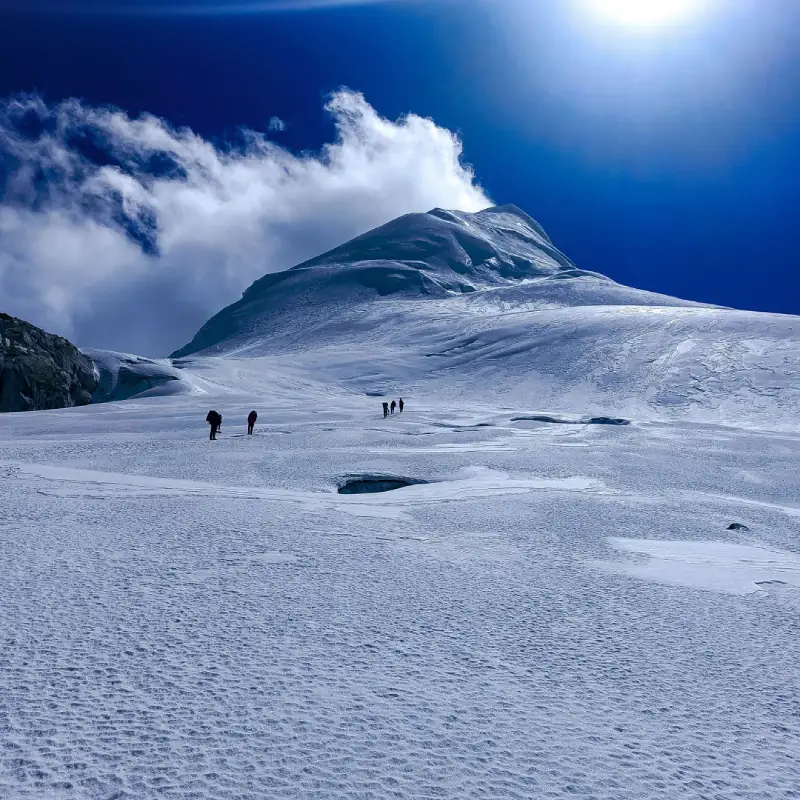
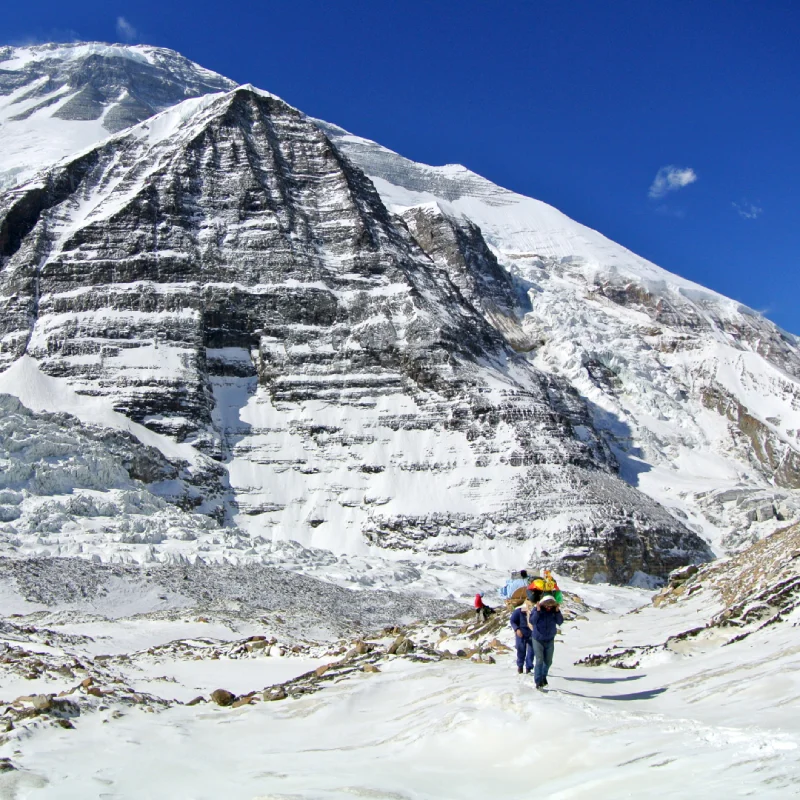
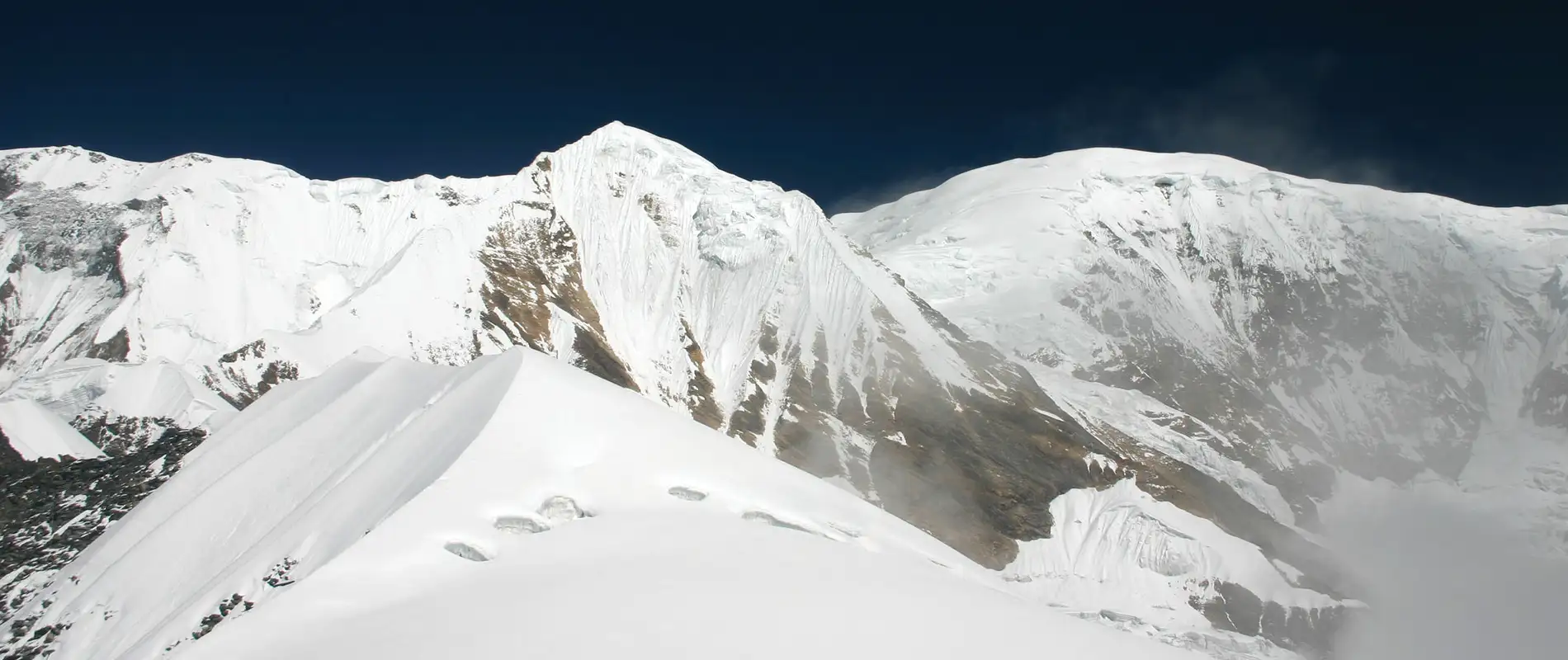
Singu Chuli, also known as Fluted Peak, is one of the most technically challenging trekking peaks in Nepal. Rising dramatically within the Annapurna region, Singu Chuli peak stands at an altitude of 6,501 meters (21,329 feet). This magical peak demands respect even from experienced mountaineers, offering a true alpine climbing experience rather than a simple trek to high altitude.
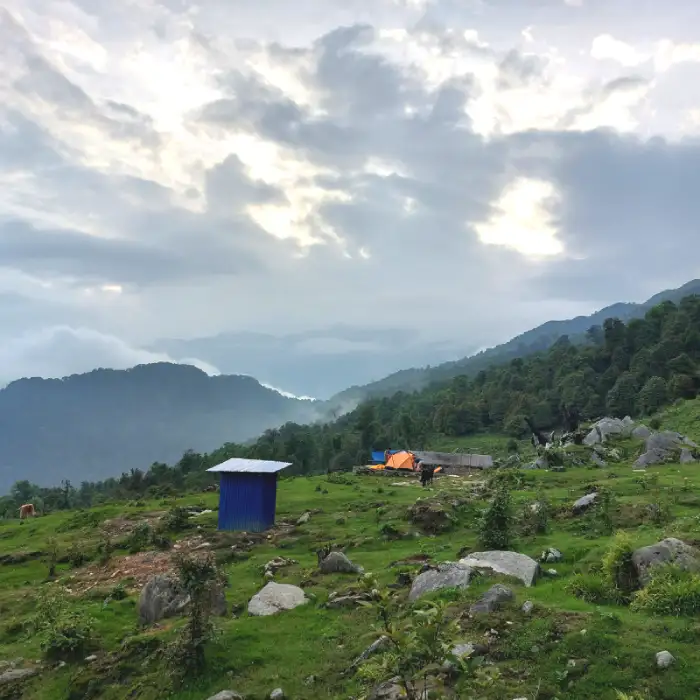
The trek starts with the classic Annapurna Base Camp trail. The trail ascends through terraced farmland, dense bamboo and rhododendron forests, and finally emerges into the spectacular view of the Annapurna range. This gradual ascent provides crucial acclimatization while also highlighting Nepal’s amazing biological diversity.
Unlike many trekking peaks that offer relatively straightforward routes with one or two challenging sections, Singu Chuli has continuous technical climbing. The standard route involves steep ice slopes up to 65 degrees, mixed rock and multiple ice sections requiring excellent crampon technique, and exposed ridges that demand experience with rope management.
The panorama from Singu Chuli’s summit is truly breathtaking, offering a 360-degree view of the Annapurna range. Annapurna South, Hiunchuli, and Machhapuchhre (Fishtail) can be seen close to each other, while Annapurna I dominates the northern horizon.
Singu Chuli is an excellent choice for experienced mountain climbers who want a real technical challenge that goes beyond the regular “trekking peak” level of difficulty. It has a serious alpine climb that, while not as hard as an 8,000-meter peak, still needs the same level of technical skills and mountain awareness.
Included MealsNot Included
Included MealsBreakfast, Lunch and Dinner
Included MealsBreakfast, Lunch and Dinner
Included MealsBreakfast, Lunch and Dinner
Included MealsBreakfast, Lunch and Dinner
Included MealsBreakfast, Lunch and Dinner
Included MealsBreakfast, Lunch and Dinner
Included MealsBreakfast, Lunch and Dinner
Included Meals
Included MealsBreakfast, Lunch and Dinner
Included MealsBreakfast, Lunch and Dinner
Included MealsBreakfast, Lunch and Dinner
Included MealsBreakfast, Lunch and Dinner
Included Meals
Included Meals
Included Meals
Included Meals
Included Meals
Included MealsBreakfast, Lunch and Dinner
Included MealsBreakfast, Lunch and Dinner
Included MealsBreakfast, Lunch and Dinner
Included MealsBreakfast, Lunch and Dinner
Included MealsBreakfast and Farewell Dinner
Included MealsBreakfast
Singu Chuli Peak Climbing is rated as a technically demanding Nepal high-altitude peak with an AD grade, making it one of the more challenging 6,000 m objectives in the Annapurna region. At 6,501 m, the Singu Chuli Expedition Nepal features steep ice and snow slopes reaching 50–60°, intricate fluted ridges, and sustained glacier travel with crevasses. It demands greater technical commitment than peaks such as Dhampus or Yala, serving as an ideal progression in Himalaya mountaineering for experienced climbers seeking a serious Nepal trekking and climbing challenge.
Climbers preparing for Singu Chuli Peak Climbing should possess outstanding cardiovascular endurance and the ability to carry a 14–18 kg pack for 8–10 hours at altitude. Exceptional leg strength, core stability, and mental resilience for long, technical summit days are essential. Prior experience on at least one technical 6,000 m peak or equivalent high-altitude trekking Nepal is strongly recommended. A rigorous 5–7 month training program incorporating weighted hill repeats, stair climbing, and interval sessions equips participants for the physical and mental demands of this Nepal high-altitude peak.
Acclimatization is absolutely critical for every safe Singu Chuli Expedition Nepal. The itinerary includes carefully planned “climb high, sleep low” rotations through progressive high camps, allowing the body to adapt gradually to altitudes above 5,000 m before the demanding summit push. This methodical process significantly lowers the risk of altitude illness and improves performance on steep technical terrain. Professional teams build in extra rest days because thorough acclimatization remains one of the most reliable factors for success in Himalaya mountaineering.
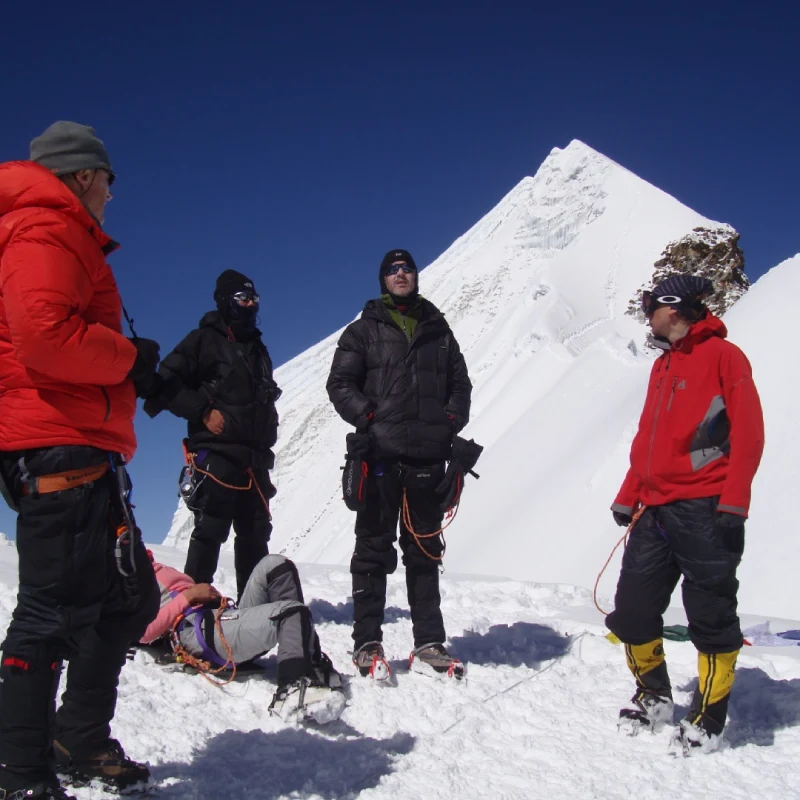
Singu Chuli Peak Climbing requires advanced crampon technique on steep ice and snow, proficient ice-axe arrest and self-arrest, and confident movement in a roped team across heavily crevassed glaciers. Climbers must be fully comfortable using harnesses, jumars, and fixed ropes on exposed fluted ridges. The route involves sustained technical sections that reward precise footwork and route-finding. Previous experience on peaks such as Lobuche East or Pharchamo provides the essential technical foundation for this Nepal high-altitude peak.
An essential equipment checklist for the Singu Chuli Expedition Nepal includes double mountaineering boots, technical crampons with front points, ice axe, helmet, harness, ascenders, a down suit rated to –25 °C, and a sleeping bag rated to –20 °C or lower. Additional items include a 45–60 L backpack, layered clothing systems, trekking poles, and high-altitude goggles. Reputable operators supply group technical gear such as ropes, ice screws, and snow anchors, allowing climbers to focus on personal equipment for this Himalaya mountaineering objective.
Safety during Singu Chuli Peak Climbing is maintained through very low guide-to-client ratios, real-time weather monitoring, and strict conservative turnaround times on technical terrain. Teams carry satellite communication devices, comprehensive medical kits, supplemental oxygen, and maintain constant radio contact. Fixed ropes are installed on all exposed sections, and glacier travel is always conducted in tightly roped teams. These professional protocols reflect the high safety standards required for responsible Nepal trekking and climbing on a demanding peak.
Singu Chuli Peak Climbing requires a climbing permit from the Nepal Mountaineering Association, an Annapurna Conservation Area Permit (ACAP), and local rural municipality approvals. These documents are secured in advance by the guiding company and ensure full regulatory compliance. The permitting process supports sustainable management of the Annapurna Sanctuary and demonstrates Nepal’s commitment to regulated access for every Singu Chuli Expedition Nepal.
Professional guide services are strongly recommended for the Singu Chuli Expedition Nepal because they bring expert local route knowledge, real-time technical decision-making, and continuous safety support on complex ice and snow terrain. Licensed Sherpa guides and experienced international leaders manage rope work, crevasse rescue readiness, and acclimatization monitoring. Their presence significantly raises summit success rates and allows climbers to focus entirely on the experience, making guided services the preferred choice for safe Nepal high-altitude peak ascents.
The best seasons for Singu Chuli Peak Climbing are spring (April–May) and autumn (September–October). Spring offers stable weather patterns and longer daylight hours ideal for technical summit attempts, while autumn provides clearer skies and firmer snow conditions after the monsoon. Both periods avoid the heavy winter snowfall and summer monsoon rains, delivering the most reliable windows for successful Himalaya mountaineering on this Nepal high-altitude peak.
Local Gurung and Magar culture greatly enriches the Singu Chuli Peak Climbing journey through warm hospitality in traditional villages such as Chhomrong, Sinuwa, and Bamboo. Climbers often participate in Buddhist puja blessing ceremonies at base camp and gain authentic insight into Himalayan daily life and conservation values. These meaningful cultural interactions transform the Singu Chuli Expedition Nepal from a purely physical challenge into a deeply immersive experience within the living heritage of Nepal trekking and climbing.
Environmental responsibility is central to every Singu Chuli Expedition Nepal. Teams strictly follow “Leave No Trace” principles, pack out all waste, and use only designated campsites within the Annapurna Conservation Area. Climbers are encouraged to minimize single-use plastics and support local eco-friendly initiatives. By choosing operators committed to sustainable practices, participants help protect the pristine sanctuary ecosystem that makes this Nepal high-altitude peak such a special Himalaya mountaineering destination.
The typical cost of a fully supported Singu Chuli Peak Climbing expedition ranges from US $3,800 to $5,500 per person, depending on group size and service level. This investment covers permits, professional guiding, technical equipment, and complete logistical support. While representing a significant commitment, the price reflects the high safety standards and specialized technical expertise required for this demanding Nepal high-altitude peak expedition.
Trekking logistics for Singu Chuli Peak Climbing include a scenic 6–9 day approach through the Annapurna Sanctuary, with comfortable teahouse accommodation and gradual altitude gain. Porters and mules handle heavy gear, allowing climbers to walk with only daypacks. The return follows the same well-established trails, providing time for reflection after the summit. These reliable yet adventurous logistics make the Singu Chuli Expedition Nepal accessible while retaining an authentic sense of wilderness in Himalaya mountaineering.
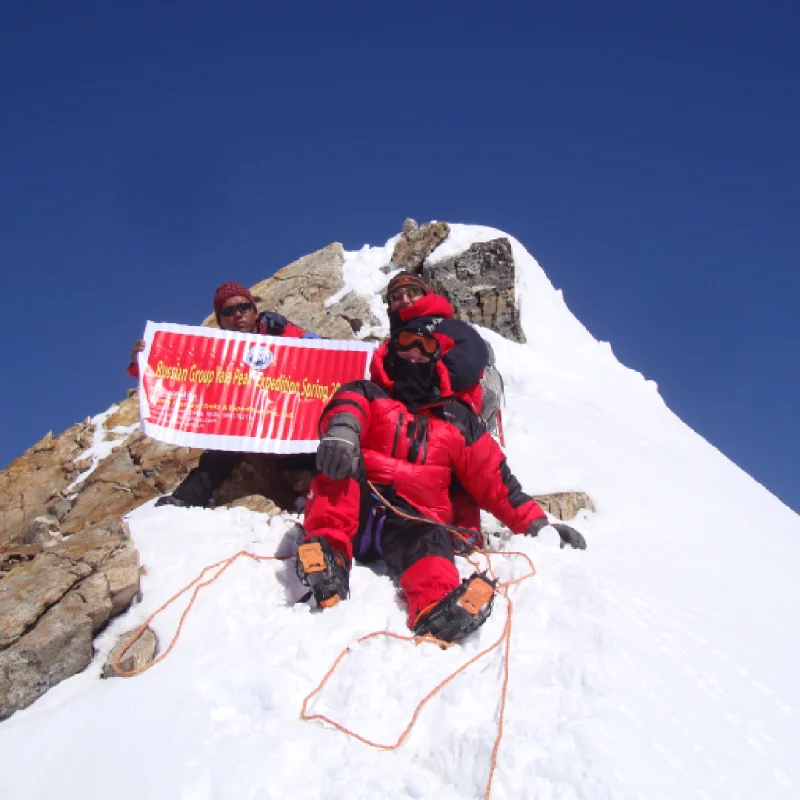
The summit strategy for Singu Chuli Peak Climbing emphasizes an early departure from high camp, steady pacing across the glacier, and precise energy management on the steep fluted ridges. Climbers use fixed ropes on the most exposed sections and maintain consistent hydration and nutrition throughout the 10–12 hour day. Experienced guides monitor individual performance closely and enforce safe turnaround times to ensure a controlled descent before afternoon weather develops. This methodical approach maximizes both safety and success on this Nepal high-altitude peak.
Altitude-related challenges in Singu Chuli Peak Climbing are managed through rigorous acclimatization rotations, daily health monitoring with pulse oximeters, and immediate intervention protocols. Guides are trained in high-altitude medicine and carry supplemental oxygen and portable hyperbaric chambers for emergencies. Participants learn to recognize early symptoms and are encouraged to communicate openly with the team. This proactive, evidence-based approach significantly reduces risks and supports safe, enjoyable progress in Nepal trekking and climbing.
Trip Duration 24 Days starting from Kathmandu and ending at Kathmandu
Trip Grade Tough
Best Season March - May, September - November
Or
Pharchamo Peak, standing at 6,279 meters (20,600 feet), is a challengi
Dhampus Peak, with an elevation of 6,012 meters (19,724 feet), is a po
The Upper Dolpo Trek is one of the most beautiful and isolated adventu
The Makalu Base Camp trek is one of the underrated trekking routes tha
The Everest Three Passes Trek is a challenging high-altitude adventure
Dhaulagiri Round trek is one of the least-travelled and beautiful trek
Island Peak, also known as Imja Tse, stands at 6,165 meters (20,226 fe
Mera Peak is Nepal’s highest trekking peak. It is located in the Mah
Lobuche East peak is one of the popular and challenging trekking peak
The combination of the magical Nar Phu Valley and the classic high-alt
Makalu Base Camp Trek is truly an unforgettable adventure, covering so
Yala Peak is perhaps the most accessible genuine mountaineering experi
The Ama Dablam Expedition occupies a unique and revered position in th
One of Nepal’s most notable high-altitude climbs, the Himlung Himal