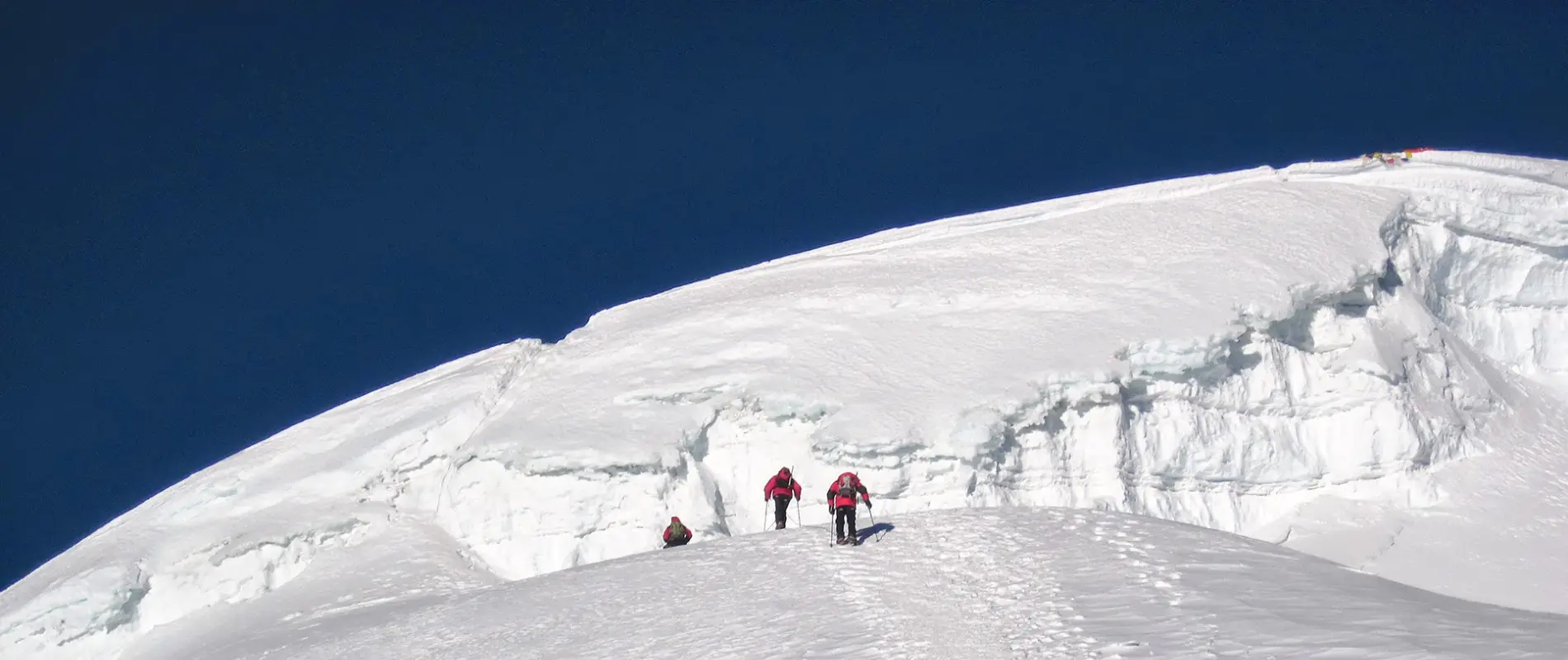
Nepal's Highest Trekking Peak: The Mera Adventure waits for you to witness the jaw-dropping view of five 8,000-meter mountains.
Enquire NowTrip Duration 18 Days starting from Kathmandu and ending at Kathmandu
Trip Grade Tough
Group Size 1-20 pax
Max Height 6470m.
Best Season March - May, September - November
Mera Peak is Nepal’s highest trekking peak. It is located in the Mahalangur range of Nepal’s Himalayas, on the southern side of the Everest region. Mera Peak has three main summits: Mera North (6,470 m), Mera Central (6,461 m), and Mera South (6,064 m). Despite its impressive height, the standard route does not require much technical climbing, making it suitable for trekkers looking to summit their first 6,000-meter mountain.
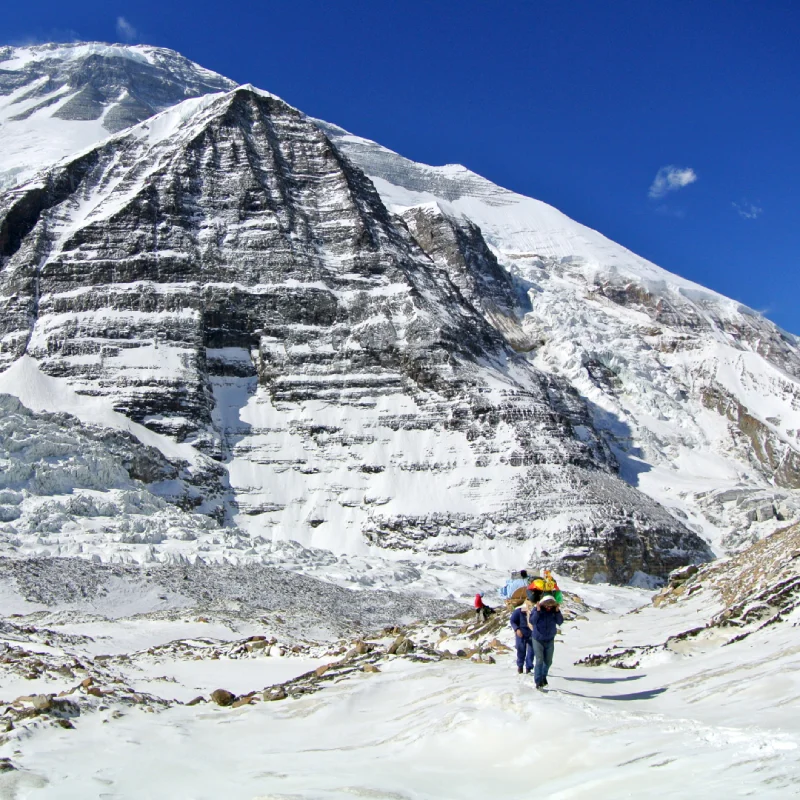
The trek to Mera Peak starts with a scenic flight to Lukla and continues through the lush woods and traditional Sherpa villages in the Hinku Valley. The Mera Peak Climbing Trek requires crossing two passes: Zatrwa La Pass (4,610 m) and Mera La Pass (5,415 m).
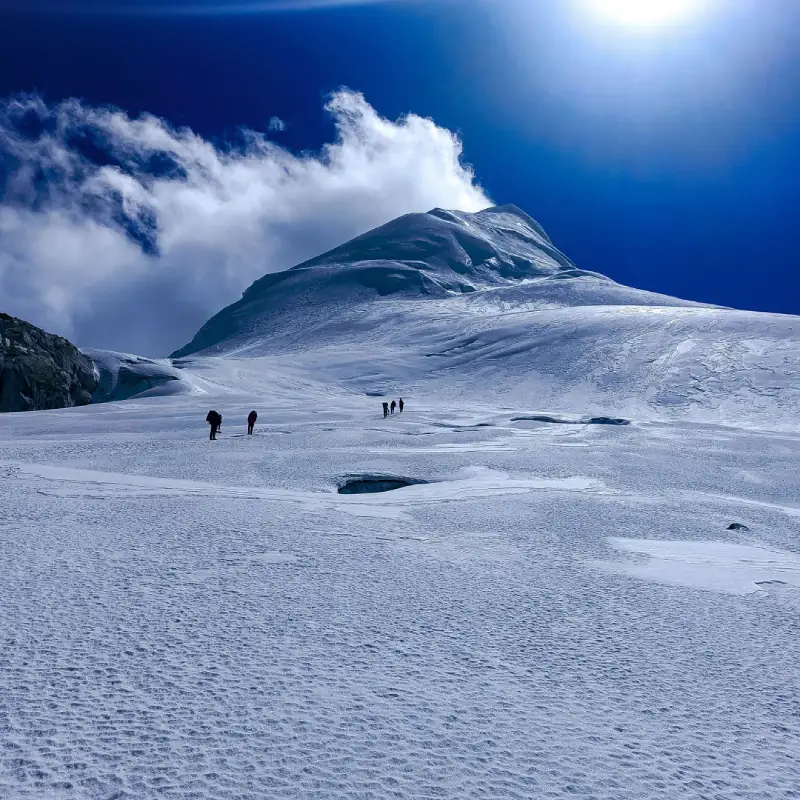
The journey to the summit of Mera Peak is non-technical, making it accessible to people with basic mountaineering skills. To reach the summit, climbers have to cross the Mera Glacier and climb a steep, snow-covered slope. The views seen from the top are often regarded as Nepal’s best mountain panorama, with five of the world’s 8,000-meter peaks visible: Mount Everest, Lhotse, Cho Oyu, Makalu, and Kangchenjunga.
Mera Peak is a great choice for people who want to experience a Himalayan summit without requiring major technical climbing skills. Mera Peak provides both the physical journey and the emotional satisfaction of standing at one of Nepal’s finest viewpoints.
Included MealsNot Included
Included MealsBreakfast, Lunch and Dinner
Included MealsBreakfast, Lunch and Dinner
Included MealsBreakfast, Lunch and Dinner
Included MealsBreakfast, Lunch and Dinner
Included MealsBreakfast, Lunch and Dinner
Included MealsBreakfast, Lunch and Dinner
Included MealsBreakfast, Lunch and Dinner
Included MealsBreakfast, Lunch and Dinner
Included MealsBreakfast, Lunch and Dinner
Included MealsBreakfast, Lunch and Dinner
Included MealsBreakfast, Lunch and Dinner
Included MealsBreakfast, Lunch and Dinner
Included MealsBreakfast, Lunch and Dinner
Included MealsBreakfast, Lunch and Dinner
Included MealsBreakfast, Lunch and Dinner
Included MealsBreakfast and Farewell Dinner
Included MealsBreakfast
The Lukla flight may have an impact on your entire plan. Due to increased air traffic in Kathmandu during peak seasons, the service will operate from Manthali Airport, Ramechaap district. However, flights are operated from Kathmandu in the nonpeak seasons. Flights can be delayed because of the bad weather, crowded traffic, unmanaged runway, and topographical challenges. Hence, it is recommended to arrange an additional 1-2 days to avoid the stress of flight delays when trekking in the Everest region. Also, we offer helicopter flight service directly from Kathmandu to Lukla for an additional fee of USD 500 per person (on a five-person sharing basis), thus avoiding the long drive to Manthali airport during peak seasons.
Mera Peak Climbing holds the distinction of being the highest trekking peak permitted by the Government of Nepal, standing at 6,476 metres and offering a genuine high-altitude summit experience that is accessible to non-technical climbers with a solid trekking background and adequate physical preparation. Unlike most peaks of comparable altitude in the Nepal peak climb category, Mera Peak's standard glacier route does not require advanced rock or ice climbing skills, making it one of the most sought-after introductory Himalaya mountaineering objectives for experienced trekkers making their first transition into high-altitude summit climbing.
Mera Peak comprises three distinct summit points — Mera North at 6,476 metres, Mera Central at 6,461 metres, and Mera South at 6,065 metres — with Mera North representing the official and highest summit objective of the standard Mera Peak Expedition itinerary. Most guided climbing programmes target Mera Central as the primary summit due to its marginally safer approach conditions on the upper glacier, while Mera North demands additional technical confidence and is typically attempted only by stronger and more experienced members of an expedition team
The Mera Peak Climbing route is distinguished from other high-altitude trekking Nepal objectives by its predominantly glacier-based ascent, which involves relatively straightforward snow and ice travel on well-established fixed lines without the exposed rock sections, technical ridgeline traverses, or complex route-finding challenges associated with more demanding Khumbu peaks such as Island Peak or Lobuche East. This characteristic makes the Mera Peak Expedition particularly well-suited to trekkers with strong endurance backgrounds who are new to glacier mountaineering and seeking a technically manageable but genuinely high-altitude first summit experience in the Nepal Himalaya.
The summit of Mera Peak at 6,476 metres delivers one of the most expansive and unobstructed Himalayan panoramas available from any trekking peak in Nepal, with five of the world's six highest mountains — Everest (8,848m), Kanchenjunga (8,586m), Lhotse (8,516m), Makalu (8,481m), and Cho Oyu (8,188m) — all simultaneously visible on a clear day from the summit plateau. This extraordinary concentration of eight-thousander peaks visible from a single vantage point is widely cited by experienced Himalaya mountaineering practitioners as one of the most compelling reasons to undertake the Mera Peak Expedition, and represents a summit panorama that very few other accessible climbing objectives in the world can match.
Khare, situated at approximately 5,045 metres in the remote Hinku valley, serves as the primary acclimatization hub and pre-summit staging village for the Mera Peak Expedition, where expedition teams typically spend two to three nights conducting acclimatization hikes, equipment checks, and technical climbing orientation sessions before ascending to Base Camp and High Camp. The village represents the highest permanently inhabited settlement on the Mera Peak Climbing approach route and plays a logistically critical role in the expedition's altitude conditioning strategy — making the quality of rest, nutrition, and hydration management at Khare a significant determinant of subsequent summit performance.
Effective preparation for Mera Peak Climbing should prioritize sustained aerobic endurance capacity over raw strength, with a training programme built around progressively loaded hiking on varied terrain, high-volume cardiovascular exercise including running and cycling, and stair or incline training that replicates the sustained uphill effort required during the long glacier ascent to the Mera North summit at 6,476 metres. Specific pre-expedition preparation should also include familiarization sessions with crampons, ice axe, and harness in a controlled environment — ideally during a skills course with a qualified mountaineering instructor — to ensure that the technical equipment required on the Mera Peak Expedition glacier sections does not present an unfamiliar challenge at altitude.
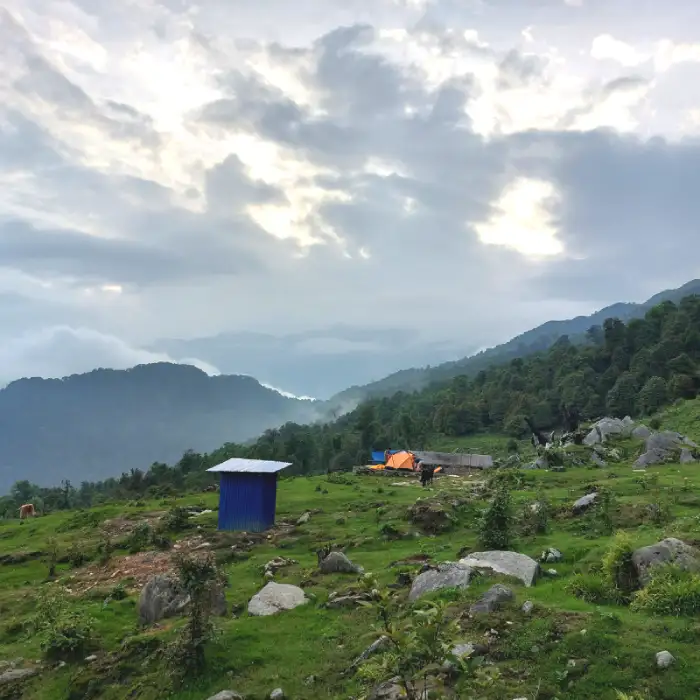
The Hinku valley approach corridor to Mera Peak Base Camp is one of the most remote, ecologically pristine, and rarely visited trekking valleys in the entire Khumbu region — a multi-day journey through dense rhododendron and bamboo forests, high alpine pastures, and glacial moraines that sees a fraction of the visitor traffic received by the main Everest Base Camp trail running parallel to its west. For many participants in the Mera Peak Expedition, the Hinku valley approach becomes one of the most memorable dimensions of the entire experience — delivering a quality of wilderness solitude, natural beauty, and cultural authenticity that enriches the overall high-altitude trekking Nepal journey well beyond the summit achievement itself.
Weather on the Mera Peak Expedition is governed primarily by the pre-monsoon and post-monsoon weather cycles that characterize the Khumbu and Hinku regions of northeastern Nepal, with the spring season from late March through May offering warming temperatures and gradually stabilizing conditions after winter, and the autumn season from October through November delivering the clearest skies, lowest wind speeds, and most reliable summit windows of the annual trekking calendar. The summit glacier on Mera Peak is particularly sensitive to recent snowfall accumulation, which can significantly alter snow conditions and step-kicking effort on the upper mountain — making current weather intelligence from expedition operators and local guides a valuable planning resource in the days immediately before any summit attempt.
The Mera Peak Climbing route passes through the Makalu-Barun National Park buffer zone and the Khumbu Pasang Lhamu Rural Municipality — both protected areas where waste management regulations are increasingly enforced and environmental awareness among expedition operators is a growing professional standard. Responsible Mera Peak Expedition operators implement structured waste management protocols including the separation and pack-out of all non-biodegradable waste from Base Camp and High Camp, the use of designated latrine systems, and the prohibition of single-use plastics throughout the approach and climbing phases — standards that all participants should actively support as a fundamental expression of responsible Himalaya mountaineering practice.
The overall summit success rate on Mera Peak Climbing is generally higher than on most comparable Nepal peak climb objectives due to the non-technical nature of the standard glacier route, but success rates still vary considerably depending on weather conditions, individual acclimatization quality, team fitness levels, and the experience and judgment of the guiding team managing the summit push. Statistical data gathered across multiple seasons consistently indicates that teams which invest adequately in the acclimatization phase at Khare, depart for the summit in the pre-dawn hours to avoid afternoon weather deterioration, and maintain strict turnaround time discipline on the upper mountain achieve significantly higher and safer summit success rates than those who compromise on any of these foundational principles.
Spring Mera Peak Climbing offers warmer daytime temperatures, longer daylight hours, and the visual spectacle of rhododendron forests in full bloom along the lower Hinku valley approach, but carries a higher probability of afternoon cloud build-up and pre-monsoon precipitation events that can temporarily close summit windows in late May. The autumn Mera Peak Expedition season — particularly October and early November — is widely preferred by experienced operators for its drier atmosphere, superior mountain visibility, more stable pressure systems, and the added cultural richness of the Khumbu festival season, with the Mani Rimdu festival at Tengboche Monastery occasionally coinciding with the return journey through the Khumbu valley on extended itineraries.
The physiological challenges of altitude sickness on the Mera Peak Expedition are substantially greater than on standard high-altitude trekking Nepal routes that remain below 5,000 metres, as the summit altitude of 6,476 metres places all climbers in a zone of significant hypoxia where cognitive function, physical coordination, and recovery capacity are all meaningfully impaired compared to sea-level baseline performance. All Mera Peak Climbing participants should be comprehensively briefed on the full spectrum of altitude illness — from mild Acute Mountain Sickness through to the life-threatening presentations of High Altitude Pulmonary Oedema and High Altitude Cerebral Oedema — and should carry personal altitude medication, a pulse oximeter for objective oxygen saturation monitoring, and a clear and pre-agreed descent protocol that is activated without hesitation if serious symptoms develop at any point above Base Camp.
The Mera Peak Expedition combines naturally with several complementary trekking and climbing programmes in the broader Khumbu and Hinku region, with the most popular combination itinerary pairing Mera Peak Climbing with the Island Peak summit via the challenging Amphu Labtsa Pass crossing — a technically demanding high-altitude traverse that connects the Hinku and Imja valleys and is widely regarded as one of the finest and most adventurous multi-peak programmes available in Himalaya mountaineering. Trekkers with additional time and strong acclimatization may also extend their itinerary to include the Everest Base Camp trail or the Gokyo Lakes circuit, both of which are accessible from the Khumbu valley on the return journey from the Mera Peak approach.
The remote Hinku valley approach to Mera Peak Base Camp passes through the traditional Rai and Sherpa communities of the lower and mid-valley, where the cultural landscape reflects a distinctive blend of indigenous Rai animist traditions and the Tibetan Buddhist heritage that becomes increasingly dominant as the trail ascends toward the high-altitude settlements of the upper valley. Unlike the heavily trekked Everest Base Camp corridor where commercialization has significantly altered the character of village life, the communities encountered on the Mera Peak Climbing approach retain a quality of unhurried authenticity and genuine daily rhythm that provides Nepal peak climb participants with a cultural dimension of remarkable depth — one that meaningfully enriches the overall expedition experience well beyond the physical achievement of the summit itself.
Trip Duration 18 Days starting from Kathmandu and ending at Kathmandu
Trip Grade Tough
Best Season March - May, September - November
Or
Pharchamo Peak, standing at 6,279 meters (20,600 feet), is a challengi
Dhampus Peak, with an elevation of 6,012 meters (19,724 feet), is a po
The Upper Dolpo Trek is one of the most beautiful and isolated adventu
The Makalu Base Camp trek is one of the underrated trekking routes tha
The Everest Three Passes Trek is a challenging high-altitude adventure
Dhaulagiri Round trek is one of the least-travelled and beautiful trek
Island Peak, also known as Imja Tse, stands at 6,165 meters (20,226 fe
Lobuche East peak is one of the popular and challenging trekking peak
The combination of the magical Nar Phu Valley and the classic high-alt
Makalu Base Camp Trek is truly an unforgettable adventure, covering so
Yala Peak is perhaps the most accessible genuine mountaineering experi
Singu Chuli, also known as Fluted Peak, is one of the most technically
The Ama Dablam Expedition occupies a unique and revered position in th
One of Nepal’s most notable high-altitude climbs, the Himlung Himal