Trip Duration Days starting from and ending at
Trip Grade
Group Size
Max Height 7126m.
Best Season
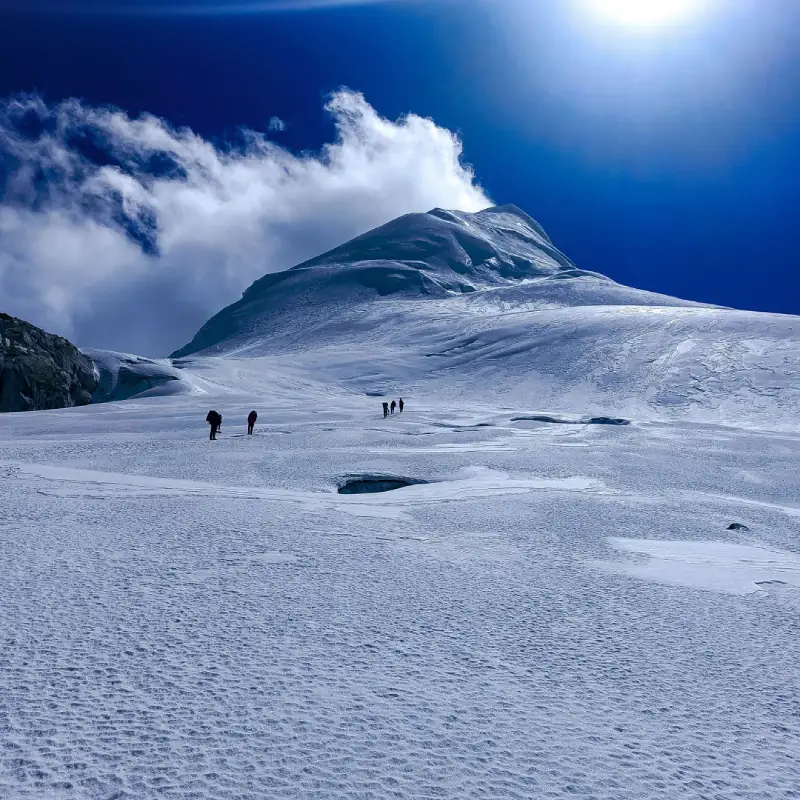
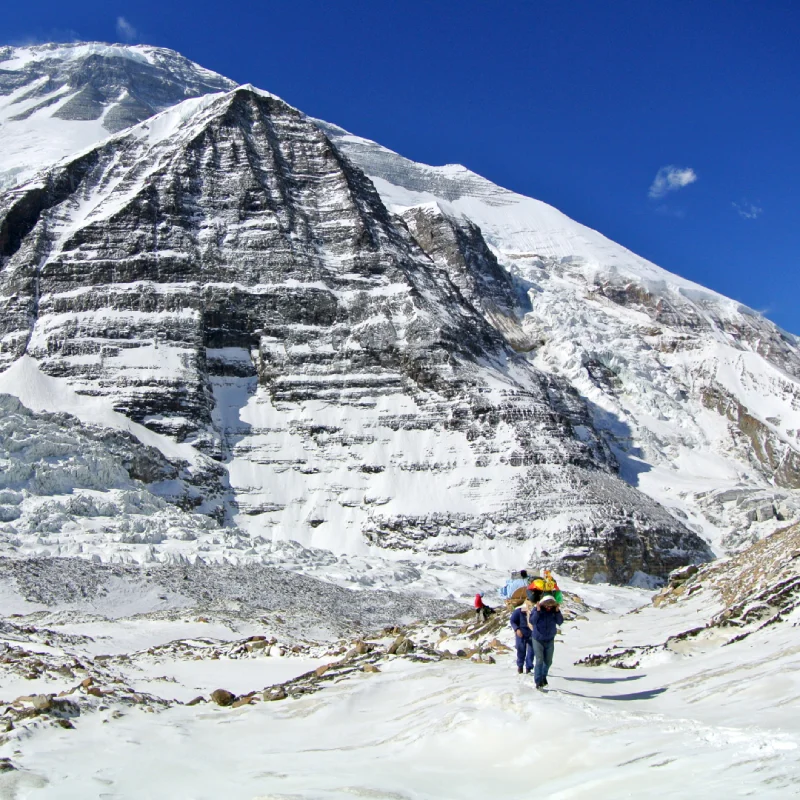
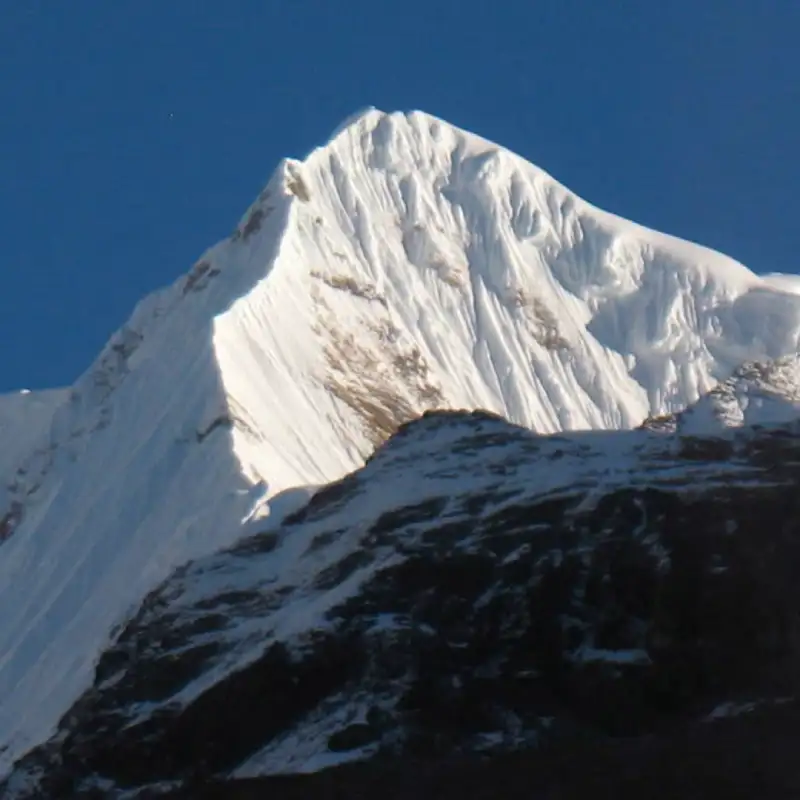
One of Nepal’s most notable high-altitude climbs, the Himlung Himal Expedition in Nepal draws serious attention due to its mix of technical demand and isolated trekking access. Though distant, the route unfolds through a preserved cultural landscape within the Nar Phu Valley trek, rare even by Himalayan standards. At 7,126 metres, Himlung Himal (7,126m) straddles the edge between Nepal and Tibet, asserting presence without fanfare. Few who attempt this Himlung Himal climbing expedition describe anything like crowds; instead, vast silence dominates near the top. Its first ascent occurred in 1992, yet little about the climb feels routine today. Among seasoned climbers, regard for this Nepal peak climbing expedition grows — not from fame, but consistency in delivering meaningful challenge paired with feasible logistics. Because support systems exist, though minimal, reaching base camp does not require improvisation or extreme risk. When compared to more traveled routes at similar elevation, this remote Himalayan expedition maintains authenticity. Climbers familiar with six-thousand-metre peaks may find progression here both natural and demanding. Beyond altitude gain lies something less measurable: terrain untouched by mass participation. Even now, few expeditions set foot in these upper reaches each year. This lack of traffic shapes much of what makes the effort worthwhile. Not every high summit offers such depth of experience along with relative accessibility. For some, arriving at the top brings quiet clarity rather than triumph. Each season reconfirms that remoteness still exists where preparation matters above all in a high-altitude expedition in Nepal.
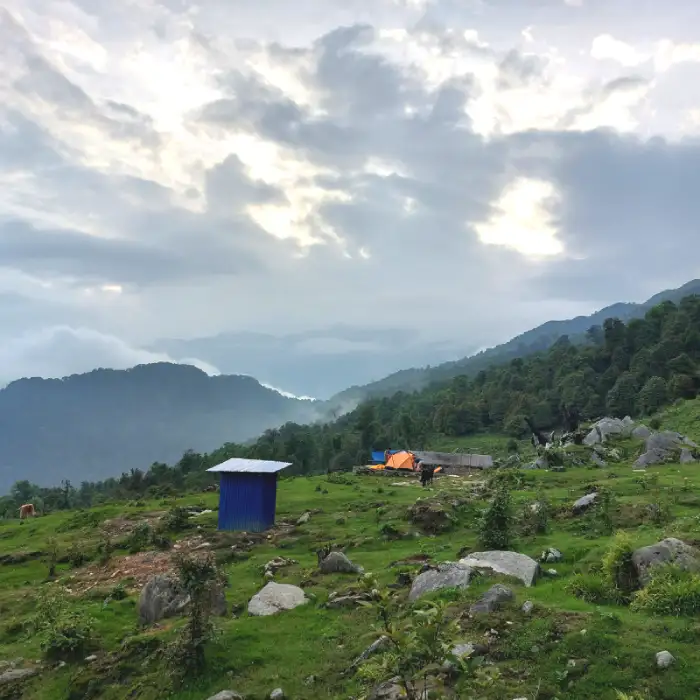
Himlung Base Camp lies along a path marked by shifting landscapes and deep-rooted traditions, distinct within Nepal’s trekking routes. Travel unfolds first by road, moving from Kathmandu toward Besisahar, then forward into quieter reaches beyond. Through Dharapani the route climbs, next touching Koto, followed by Meta, Kyang, then arriving at Phu Gaun — a string of settlements where green slopes give way to open heights shaped by Tibetan ways along the Nar Phu Valley trekking route. As elevation increases, so does isolation; the land becomes spare, windswept, quiet. Because access to Nar Phu is controlled, few travelers pass here, unlike the busier trails nearby. This limitation helps hold onto what many places have lost — space untouched, culture unaltered. At 4,900 meters, base camp appears not just as destination but as outcome: effort measured in altitude, time, observation on a Himlung Himal expedition itinerary. What comes after arrival — the climb — is separate, though equally demanding. Distance covered on foot carries weight of its own, regardless of summit plans.
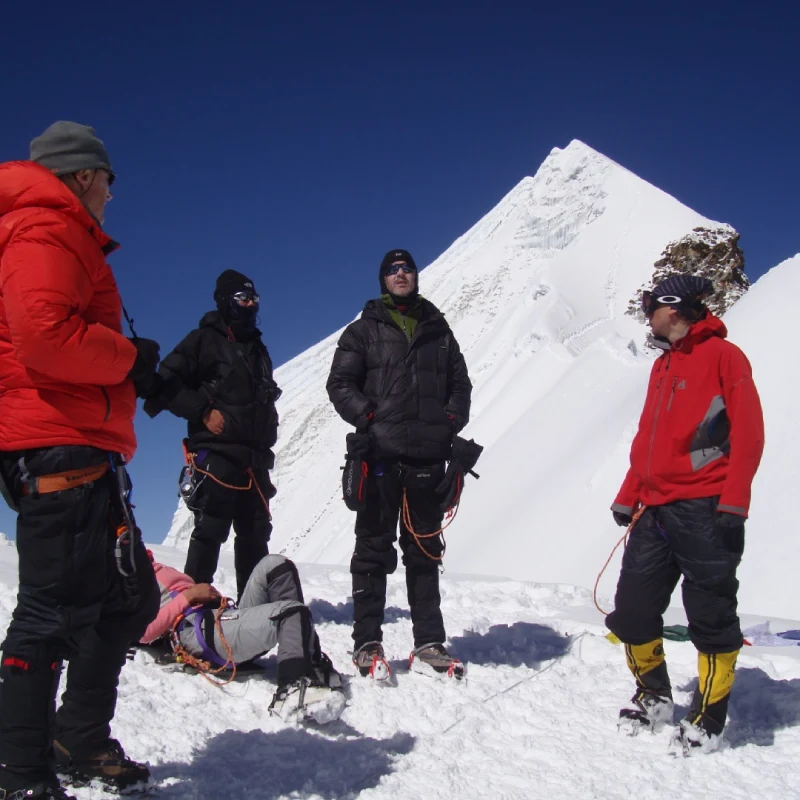
Upward movement during the Himlung Himal Expedition follows a step-by-step rhythm, where climbers rise gradually from Base Camp to Camp I, then Camp II, returning down each time to adjust bodily functions to thinner air. Such repeated climbs, followed by rest periods below, prepare the body for extreme elevations beyond 7,000 meters, aligning with methods long applied on major Nepal mountaineering expeditions. Progress toward the top includes walking across ice fields, ascending secured lines anchored into rock and snow, continuing under demanding atmospheric conditions requiring skill, clear thinking, and reliable group dynamics. After prolonged ascent spanning multiple stages, arrival at the summit of Himlung Himal opens wide sightlines — stretching north into Tibet and circling past neighboring summits within Manang and Mustang areas — a result shaped entirely by endurance, patience, and collective resolve during this Himalayan peak climbing expedition.
Among high-altitude destinations in Nepal, few match the Nar Phu Valley for cultural uniqueness. Through this remote region runs a quiet thread of Tibetan heritage, preserved in isolation. Villages like Phu Gaun and Kyang hold ways of life shaped by old mountain pathways between Nepal and Tibet. Speech patterns differ here; so do rooflines, prayer customs, and herding practices. Stone-built gompas rest on wind-facing ridges, standing unchanged through decades. Along trails rise chortens stacked with care, each layer telling silent stories. Mani stones line paths, their surfaces worn smooth by time and touch. Where peaks meet sky, human presence still leaves delicate marks. Climbers find more than altitude and slope along this Himlung Himal climbing route. Experience unfolds slowly — through gesture, silence, weathered wood, thin air. The journey gains meaning not just from ascent, but what lies beneath it. Tradition moves quietly here, undisturbed by speed or spectacle. Mountains remain distant, yet somehow closer because of the lives lived below them during this remote trekking and climbing experience in Nepal.
Included Meals
Included MealsBreakfast, Lunch & Dinner
Included MealsBreakfast, Lunch & Dinner
Included MealsBreakfast & Dinner
Included MealsBreakfast, Lunch & Dinner
Included MealsBreakfast & Dinner
Included MealsLunch & Dinner
Included MealsBreakfast, Lunch & Dinner
Included MealsDinner
Included MealsDinner
Included MealsBreakfast & Dinner
Included Meals
Included MealsLunch & Dinner
Included MealsBreakfast & Dinner
Included MealsBreakfast, Lunch & Dinner
Included MealsBreakfast
The Himlung Himal Expedition is a high-altitude mountaineering programme targeting the summit of Himlung Himal at 7,126 metres in the remote Nar Phu valley of Nepal's Manang District. It is widely regarded as one of the most rewarding and accessible seven-thousander expeditions in Nepal, combining a technically engaging climbing programme with a culturally rich trekking approach through one of the country's most restricted and least-visited highland valleys.
The Himlung Expedition Nepal is rated as a serious high-altitude mountaineering objective requiring prior experience on peaks above 6,000 metres, solid technical skills in glacier travel and fixed rope climbing, and strong physical and mental endurance across a multi-week expedition format. While it is considered one of the more accessible seven-thousanders in Nepal, it should not be underestimated — the altitude, remote terrain, and glacial climbing conditions demand a well-prepared and experienced team.
The maximum altitude reached on the Himlung Himal Expedition is the summit at 7,126 metres above sea level, making it a genuine seven-thousander objective and one of the higher peaks accessible to experienced non-professional mountaineers in the Nepal Himalaya. Base Camp is established at 4,900 metres, with Camp I and Camp II positioned progressively higher on the glacial approach to the summit.
The Himlung Himal Expedition requires a Climbing Permit issued by the Government of Nepal's Department of Tourism, an Annapurna Conservation Area Permit, and a restricted area permit specific to the Nar Phu valley — the latter being mandatory for all trekkers and climbers entering this designated restricted zone. All permit arrangements are handled during the preparation days in Kathmandu at the beginning of the expedition programme.
The best time for the Himlung Himal Expedition is the pre-monsoon spring season from April to early June, when weather windows are most stable, temperatures on the upper mountain are manageable, and the approach valley is fully accessible. The post-monsoon autumn season from late September to November offers a viable secondary window, though summit weather conditions can be less predictable than during the primary spring season.
Climbers considering the Himlung Expedition Nepal should ideally have prior summit experience on at least one or two peaks above 6,000 metres — such as Island Peak, Mera Peak, or Lobuche Peak — along with demonstrated competence in cramponing, ice axe use, fixed rope techniques, and multi-day expedition camping at altitude. A strong cardiovascular fitness base built through twelve or more months of dedicated training is equally important.
The Nar Phu valley is a government-designated restricted area in Nepal's Manang District, requiring a special permit for entry and seeing only a small fraction of the visitor numbers received by the adjacent Annapurna Circuit. For the Himlung Himal Expedition, the valley serves as the primary trekking approach corridor — a journey through extraordinarily remote terrain past ancient Tibetan-influenced villages that adds profound cultural and scenic depth to the overall expedition experience.
The Himlung Himal Expedition acclimatization programme follows the established rotation system used on all serious high-altitude mountaineering expeditions in Nepal, involving progressive ascents between Base Camp at 4,900 metres and the high camps at Camp I and Camp II before the summit push. A dedicated acclimatization rest day at Phu Gaun village during the trekking approach, combined with the gradual elevation gain across the nine-day trek to Base Camp, ensures a well-conditioned physiological foundation before the climbing phase begins.
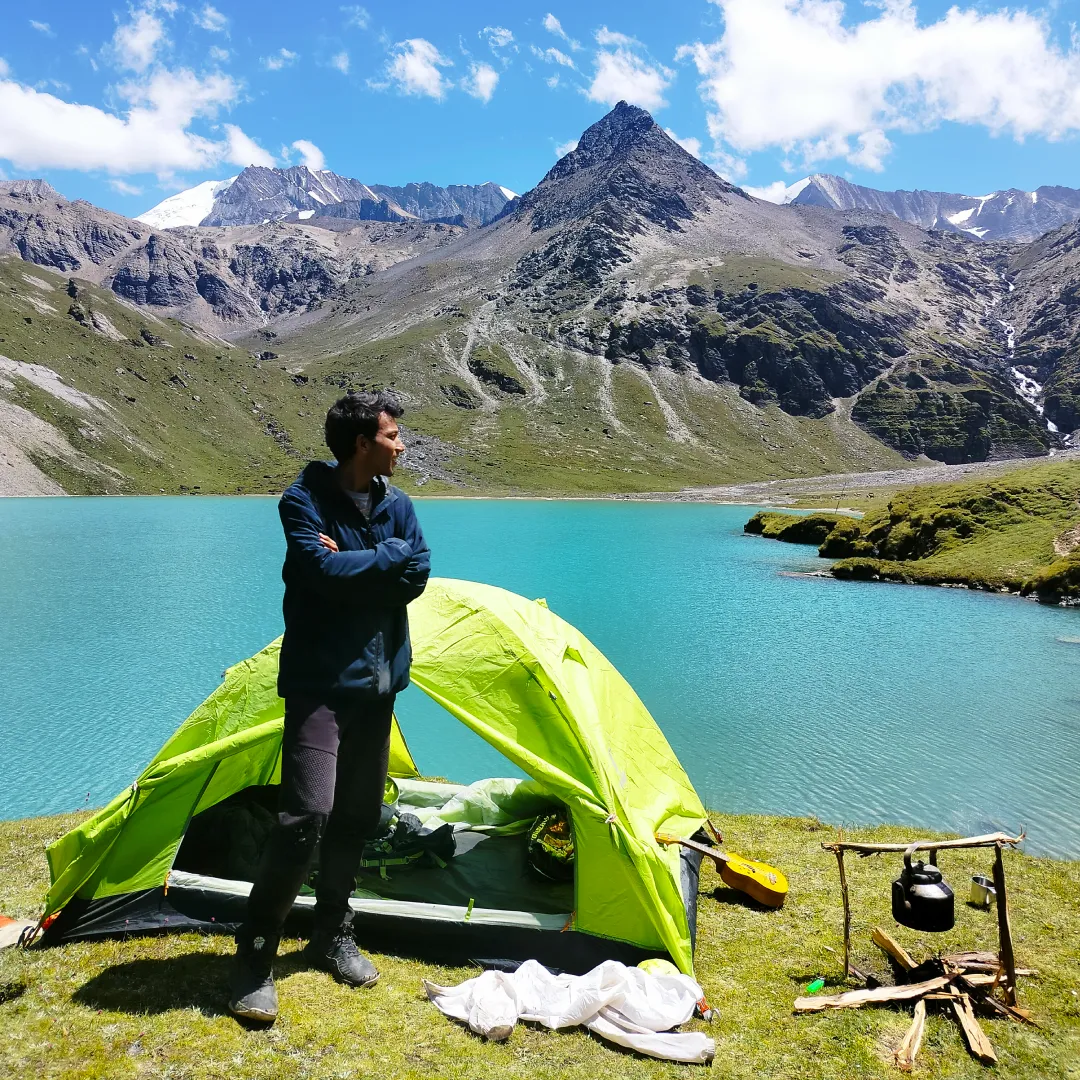
Accommodation during the Himlung Expedition transitions from hotel lodging in Kathmandu to basic but comfortable guest houses in the valley villages of Dharapani, Koto, Meta, Kyang, and Phu Gaun during the trekking approach, before shifting to full expedition tent camp accommodation from Base Camp onward through the duration of the climbing programme. Trekkers should be prepared for simple facilities in the more remote valley guest houses, where amenities are basic but sufficient.
The restricted Nar Phu valley approach to Himlung Base Camp passes through one of Nepal's most ecologically intact highland corridors, supporting populations of Himalayan blue sheep, snow leopards, Himalayan wolves, golden eagles, and a diverse range of high-altitude bird species in a protected natural environment largely undisturbed by commercial tourism. The glacial terrain surrounding Base Camp and the upper mountain offers its own stark and dramatic natural character, with permanent snowfields and glaciated peaks dominating the landscape above 5,000 metres.
Supplemental oxygen is not standard practice on the Himlung Himal Expedition for most climbers, as the summit altitude of 7,126 metres falls below the threshold at which oxygen use becomes physiologically essential on properly acclimatized expeditions. However, emergency supplemental oxygen is always carried by the expedition team as a precautionary measure, and individual climbers with specific medical requirements or acclimatization difficulties may choose to use supplemental oxygen on medical advice.
The trekking approach to Himlung Base Camp through the restricted Nar Phu valley passes through some of the most culturally authentic and least-visited Tibetan-influenced communities in the entire Nepal Himalaya, including the ancient village of Phu Gaun with its historic Buddhist gompa, traditional stone architecture, and living heritage of highland pastoral culture. The low visitor density of the restricted valley means that cultural encounters feel entirely genuine rather than commercially staged — a quality increasingly rare on more heavily trekked Himalayan routes.
The Himlung Himal Expedition is generally considered more technically accessible than seven-thousanders such as Dhaulagiri or Kangchenjunga while offering greater altitude and a more genuine expedition character than the standard six-thousander peaks popular with trekking climbers. Its combination of a remote and culturally rich restricted area approach, a structured acclimatization programme, and a technically engaging summit route makes it one of the most well-rounded and satisfying high-altitude mountaineering objectives available in Nepal for experienced climbers seeking to progress beyond the six-thousander range.
Preparation for the Himlung Himal Expedition should begin at least nine to twelve months before departure and include sustained cardiovascular training through running, cycling, and loaded hiking, supplemented by strength and endurance conditioning focused on the legs, core, and upper body muscle groups most heavily utilized during high-altitude glacier climbing. Ideally, at least one practice expedition on a Nepali six-thousander peak should be completed within twelve months of the Himlung summit attempt to consolidate technical skills and high-altitude acclimatization experience.
Comprehensive travel and mountaineering insurance covering high-altitude climbing above 7,000 metres, emergency helicopter evacuation from remote terrain, medical repatriation, and expedition cancellation is an absolute requirement for all participants in the Himlung Himal Expedition and will be verified by the organizing agency prior to departure from Kathmandu. Given the extreme remoteness of the Nar Phu valley approach corridor and the high-altitude nature of the climbing programme, helicopter evacuation may represent the only viable emergency response option in the event of a serious medical incident, making adequate insurance coverage a non-negotiable condition of expedition participation.
Trip Duration Days starting from and ending at
Trip Grade
Best Season
Or
Pharchamo Peak, standing at 6,279 meters (20,600 feet), is a challengi
Dhampus Peak, with an elevation of 6,012 meters (19,724 feet), is a po
The Upper Dolpo Trek is one of the most beautiful and isolated adventu
The Makalu Base Camp trek is one of the underrated trekking routes tha
The Everest Three Passes Trek is a challenging high-altitude adventure
Dhaulagiri Round trek is one of the least-travelled and beautiful trek
Island Peak, also known as Imja Tse, stands at 6,165 meters (20,226 fe
Mera Peak is Nepal’s highest trekking peak. It is located in the Mah
Lobuche East peak is one of the popular and challenging trekking peak
The combination of the magical Nar Phu Valley and the classic high-alt
Makalu Base Camp Trek is truly an unforgettable adventure, covering so
Yala Peak is perhaps the most accessible genuine mountaineering experi
Singu Chuli, also known as Fluted Peak, is one of the most technically
The Ama Dablam Expedition occupies a unique and revered position in th