Trip Duration Days starting from and ending at
Trip Grade
Group Size
Max Height 6812m.
Best Season
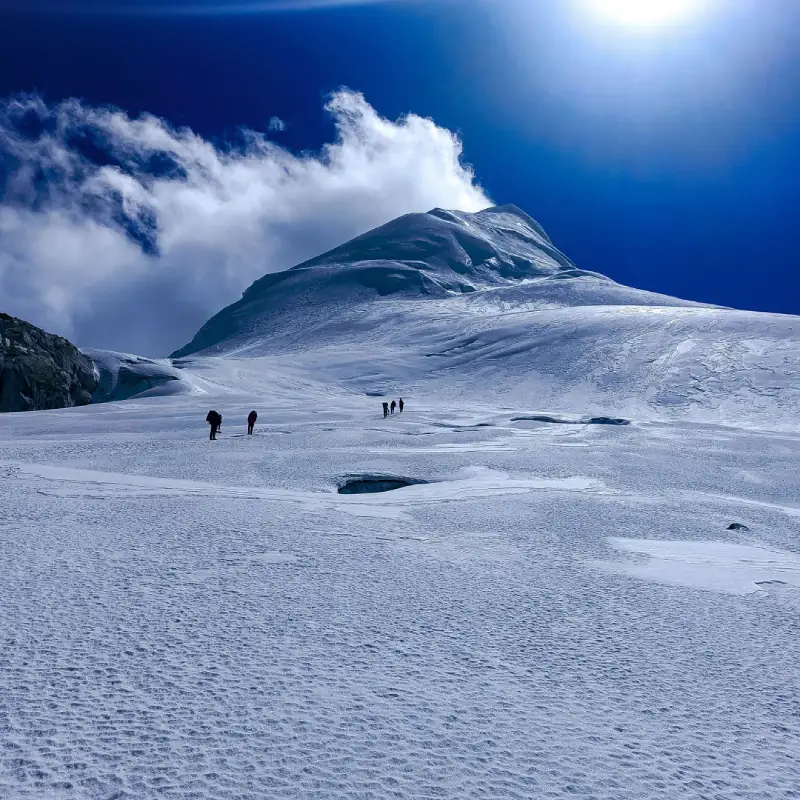
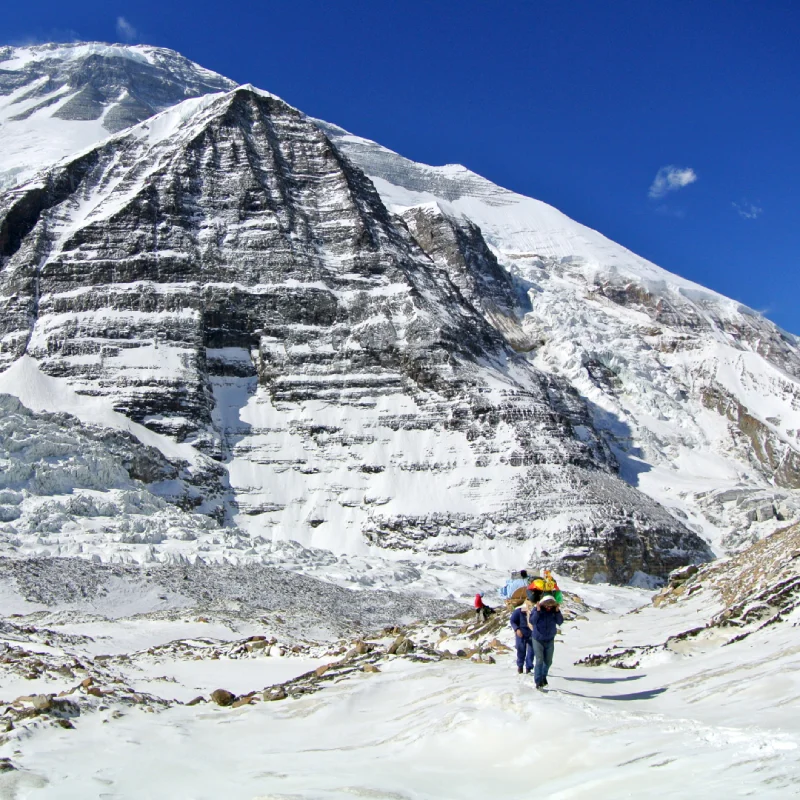
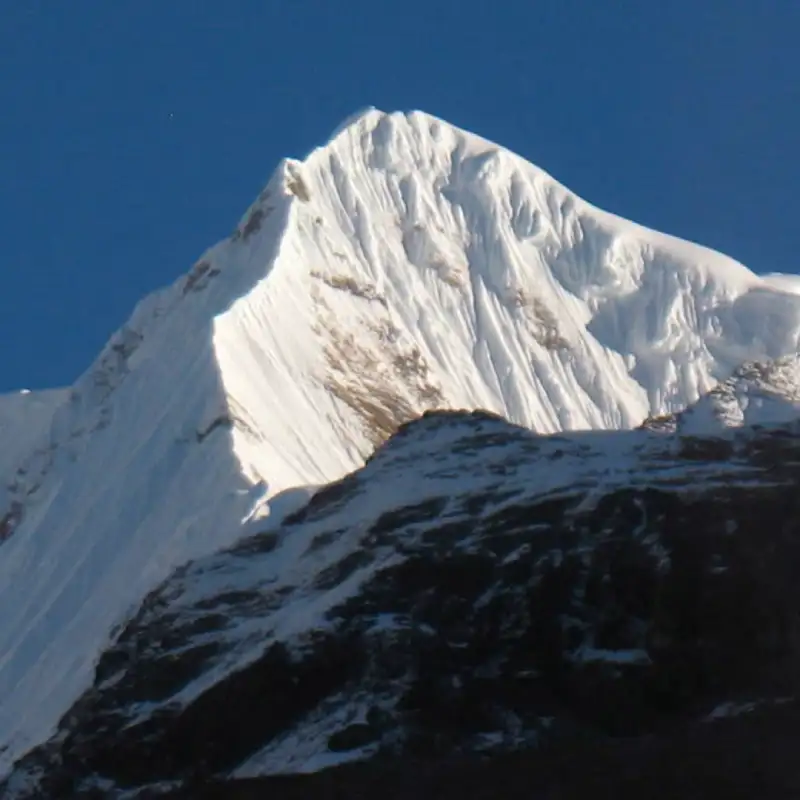
The Ama Dablam Expedition occupies a unique and revered position in the world of Mountaineering near the Himalayas involves facing a summit known for both complexity and striking visuals within Nepalese terrain. At 6,812 metres above sea level, towering over the Khumbu Valley in Nepal in northeastern Nepal’s Solukhumbu area, stands Ama Dablam (6,812m) — notable due to its sharp pyramid-like shape. Attached to its upper southwest flank rests a suspended ice mass, named Dablam, resembling jewelry fastened to light-coloured stone. Although first reached at the top during 1961 by climbers from New Zealand and America, this formation continues drawing skilled ascenders decades later on the Ama Dablam Expedition in Nepal. Challenges along the path mix with breathtaking landscapes, cultural depth found among Sherpa communities en route adds further weight. Individuals who journey here often do so because difficulty merges with visual reward, as this technical climbing peak in Nepal offers access through inhabited high-altitude zones rich in tradition. Recognition follows this ascent; regarded across climbing circles as a standard-setter for technical mountaineering in the Himalayas, especially within the Khumbu zone. Respect emerges naturally when confronting such heights, readiness becomes non-negotiable, actual skill separates completion from retreat. Each group attempting passage must show capability, prior training matters significantly under these conditions of a high-altitude climbing expedition in Nepal.
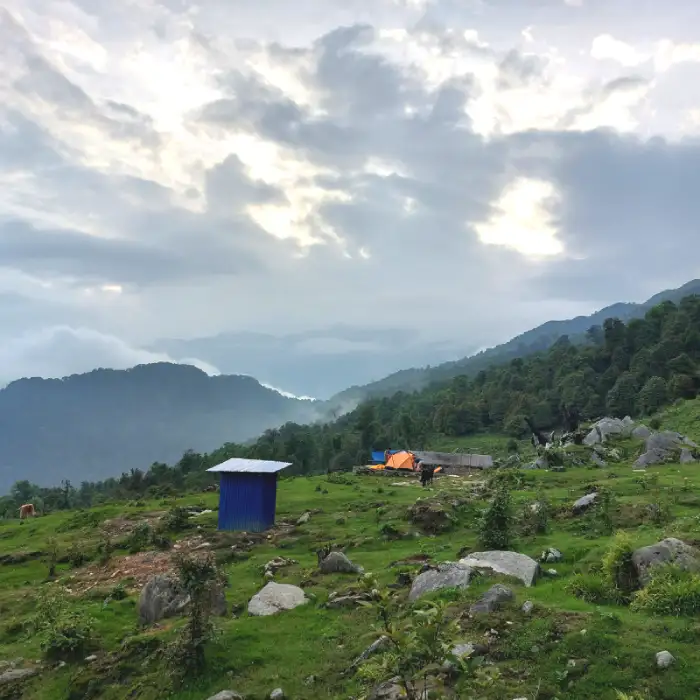
From Lukla, the path toward Ama Dablam Base Camp traces a well-known passage through eastern Nepal’s high valleys along the Everest region trekking route. Though beginning with an airplane descent into mountain terrain, progress onward relies entirely on foot travel across rugged slopes. After leaving the airstrip behind, early stages pass beside rivers where prayer flags flutter above stone homes. Instead of rushing upward, elevation gain unfolds slowly — pausing often in forested zones allows bodies to adjust quietly during this Ama Dablam trekking approach. Villages appear one after another: Phakding first, then higher still, the bustling hub known as Namche Bazaar forms a natural rest point. Beyond it lies Tengboche Monastery, perched like many such places between sky and valley floor. Monastic chants echo here during morning rituals, filling thin air with steady rhythm. Further ahead, Pangboche rests near old juniper groves, its houses shaped by generations of alpine living. Each settlement holds stories tied directly to climbing history, spiritual practice, and survival amid extreme conditions in the Khumbu region of Nepal. At nearly 4,400 meters, arrival at base camp marks completion of a long walk rich in observation rather than speed. Rather than mere transit, this movement through space becomes part of what defines the entire undertaking. Time spent walking connects people not only to altitude but also to ways of life adapted over centuries. Physical preparation occurs without notice — as breath slows, attention shifts naturally to surroundings. What might seem simply functional instead reveals layers of meaning built step by deliberate step.
Nineteen days typically frame the ascent portion of the Ama Dablam Expedition, beginning at Base Camp and ending with descent after summit success. During this span, climbers follow a rhythm shaped by gradual elevation gains, periods spent adjusting to thin air, and coordinated efforts to prepare fixed ropes along higher reaches. Three advanced camps serve as anchors beyond Base Camp, each positioned to support progression upward on this Ama Dablam climbing route. As altitude rises, so does complexity: terrain shifts toward steep rock and ice formations that require precise movement, steady focus, and resilience when oxygen levels drop. Among these segments, the stretch leading into Camp III and the last climb toward the top stands out — veteran mountaineers often describe it as unusually demanding compared to similar peaks considered less technical in Nepal. Conditions change quickly; viable moments for upward travel appear briefly, calling for close observation and measured choices rather than haste. Judgment matters greatly — not only during climbs but across every decision made by team members and leaders alike while active on the mountain during this Himalayan peak climbing expedition.
Within Earth’s rarest terrains, the Ama Dablam Expedition in Nepal takes shape across terrain shaped by culture and nature alike. Though distant, the Khumbu valley holds central importance — inhabited by the Sherpa, serving as passage toward Mount Everest, where beliefs rooted in Tibetan Buddhism meet rugged alpine solitude alongside decades of climbing tradition. Monasteries stand aged at Tengboche and Pangboche; stone inscriptions edge each path, cloth prayers flutter above ridges, while local presence remains steady, marked by quiet dignity and practiced skill. To ascend Ama Dablam is to move through layers of place, not just elevation — those who acknowledge steep slopes along with surrounding customs find their journey deepened without emphasis on conquest. Because of this balance between effort and awareness, few Himalayan routes offer such resonance, nor remain so distinct amid broader exploration of high peaks
Included MealsBreakfast, Lunch & Dinner
Included MealsBreakfast, Lunch & Dinner
Included MealsBreakfast, Lunch & Dinner
Included MealsBreakfast & Dinner
Included MealsBreakfast, Lunch & Dinner
Included MealsBreakfast & Dinner
Included Meals
Included Meals
Included MealsIncluded
Included MealsBreakfast & Dinner
Included MealsLunch & Dinner
Included MealsBreakfast, Lunch & Dinner
Included MealsBreakfast, Lunch & Dinner
Included Meals
The Ama Dablam Expedition is distinguished from other Nepali climbing objectives by its combination of exceptional technical difficulty, extraordinary aesthetic beauty, and iconic status within the global mountaineering community — a peak that experienced climbers consistently rank among the finest and most coveted summit objectives in the entire Himalayan range. Unlike many standard trekking peaks in Nepal, Ama Dablam demands genuine technical climbing competence on mixed rock and ice terrain throughout the upper mountain, making it a benchmark objective for serious mountaineers seeking a step beyond the standard six-thousander experience.
The Ama Dablam Expedition Nepal is rated as a technically demanding high-altitude climb, involving sustained mixed rock and ice climbing on the Southwest Ridge above Camp II, exposed ridge traverses near Camp III, and a technically engaged final push to the summit at 6,812 metres. Climbers without prior experience on technical mixed terrain at altitude will find the upper mountain sections significantly challenging, and a strong prior technical climbing background is considered essential for safe and successful participation in the expedition.
Climbers considering the Ama Dablam Expedition should have prior summit experience on technical peaks above 5,500 metres, demonstrated competence in rock and ice climbing techniques including crampon use, ice axe arrest, and fixed rope ascending and descending, and a proven ability to manage themselves independently in high-altitude terrain under variable weather conditions. Prior experience on Nepali trekking peaks such as Island Peak or Lobuche Peak provides useful acclimatization background but is generally insufficient technical preparation for the demands of the Ama Dablam Southwest Ridge.
The maximum altitude reached on the Ama Dablam Expedition is the summit at 6,812 metres — equivalent to 22,349 feet above sea level — making it a genuine high-altitude mountaineering objective that places significant physiological demands on all expedition members throughout the climbing period. The highest camp on the route, Camp III on the Mushroom Ridge, is established at approximately 6,300 metres and represents the final sleeping point before the summit push.
The Ama Dablam Expedition Nepal requires a Climbing Permit issued by the Government of Nepal's Department of Tourism, a Sagarmatha National Park entry permit, and a Khumbu Pasang Lhamu Rural Municipality permit — all of which are processed during the preparation days in Kathmandu at the beginning of the expedition itinerary. Permit fees and current regulations should be confirmed with the organizing agency prior to departure, as Nepali government permit structures are subject to periodic revision.
The best time for the Ama Dablam Expedition is the pre-monsoon spring season from late September through December, with the autumn window from October to early December being the most popular and consistently reliable season for summit attempts on the Southwest Ridge route. Spring from April to May offers a viable secondary season, though the Khumbu region receives more precipitation and variable weather during this period compared to the crisp, stable conditions that characterize the autumn climbing window.
The standard Southwest Ridge route on the Ama Dablam Expedition involves three established high camps above Base Camp — Camp I on the lower Southwest Ridge at approximately 5,700 metres, Camp II above the Yellow Tower section at around 6,020 metres, and Camp III on the exposed Mushroom Ridge at approximately 6,300 metres. Each camp plays a specific role in the acclimatization rotation and the summit push, with the distances and technical demands between camps increasing significantly on the upper mountain.
Altitude sickness is a genuine and significant risk on the Ama Dablam Expedition Nepal, particularly during the transition to Base Camp at 4,400 metres and throughout the acclimatization rotations to the higher camps above 6,000 metres. The structured trekking approach through Namche Bazaar and Tengboche provides an essential acclimatization foundation, and all expedition members are required to monitor their symptoms closely, follow gradual ascent protocols, and descend immediately if signs of acute mountain sickness, pulmonary oedema, or cerebral oedema develop at any stage of the climb.
Licensed Sherpa climbing guides are a central and indispensable component of the Ama Dablam Expedition, responsible for fixing ropes on the technical sections of the Southwest Ridge, carrying equipment and supplies to the high camps, monitoring route and weather conditions on the upper mountain, and providing direct climbing support and safety management to all expedition members throughout the ascent and descent. The technical knowledge, high-altitude experience, and logistical capability of the Sherpa team are among the most important factors in the safe and successful execution of any Ama Dablam Expedition Nepal.
The complete Ama Dablam Expedition programme runs for 32 days from arrival in Kathmandu to final departure, encompassing the Kathmandu preparation days, the trekking approach to Base Camp, the full climbing period of approximately nineteen days, the descent and return trek to Lukla, and the final leisure and departure days in Kathmandu. This duration reflects the physiological demands of proper acclimatization, the technical requirements of the Southwest Ridge route, and the logistical realities of operating in one of the world's most remote and high-altitude climbing environments.
Essential technical equipment for the Ama Dablam Expedition Nepal includes a full set of high-altitude mountaineering gear — double plastic or insulated mountaineering boots, technical crampons, ice axe, harness, ascenders, descenders, and helmet — alongside high-altitude layering systems including a down suit rated for temperatures well below minus 20 degrees Celsius, insulated gloves, and UV-protective eyewear. A comprehensive personal equipment checklist should be reviewed and confirmed with the organizing agency well in advance of the expedition departure date.
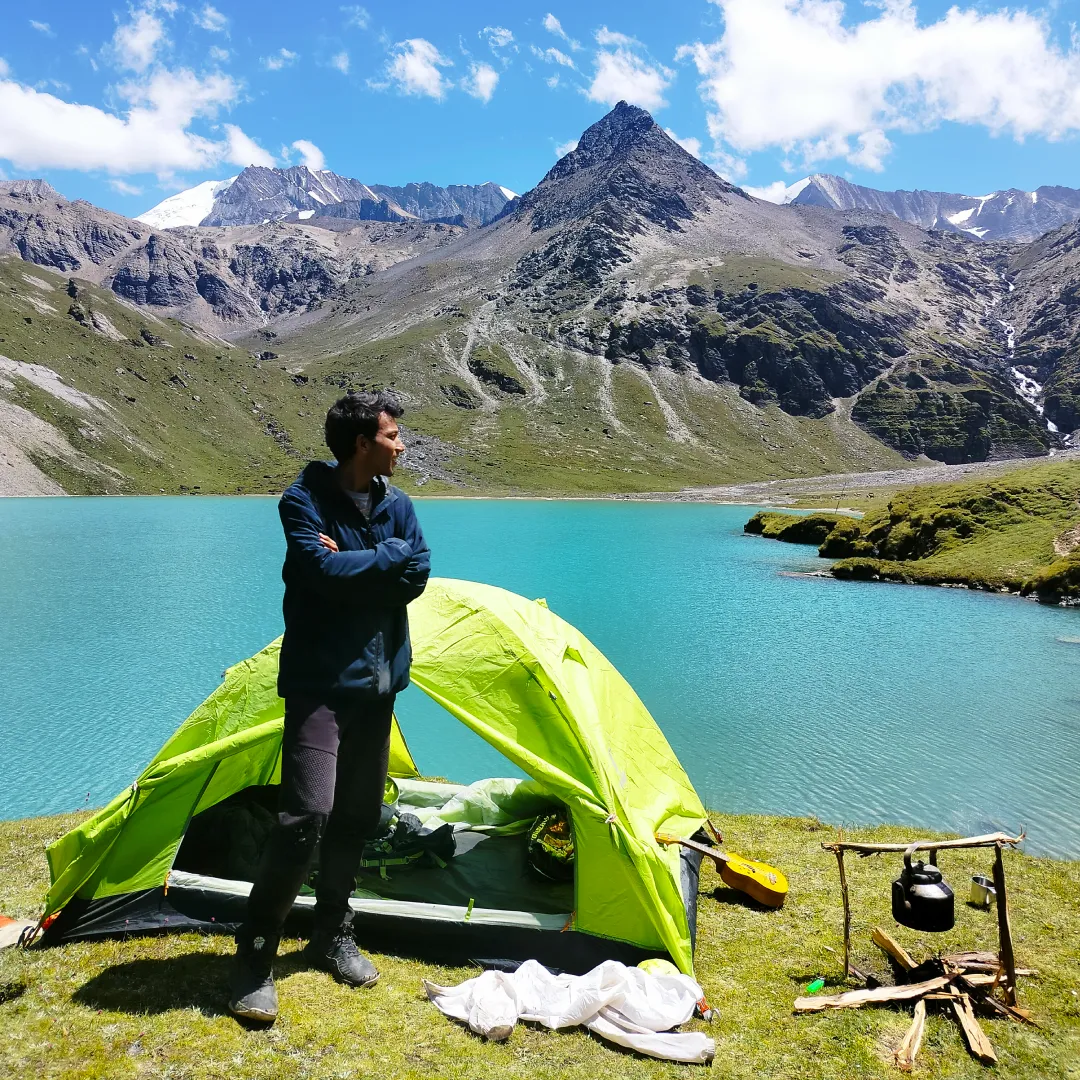
During the trekking approach phase, accommodation consists of comfortable lodge and guest house facilities in Phakding, Namche Bazaar, Tengboche, and Pangboche, with a full range of meals available from teahouse menus at each overnight stop. From Base Camp onward, all accommodation is in expedition tent camps with meals prepared by the expedition cook team — a transition that marks the beginning of the full expedition lifestyle that continues throughout the climbing period on the Ama Dablam Expedition.
Weather management is a critical dimension of the Ama Dablam Expedition Nepal, as the peak's exposed Southwest Ridge and high-altitude summit are particularly vulnerable to the strong winds, rapid temperature drops, and sudden storm systems that characterize the Khumbu region during both the spring and autumn seasons. Summit bids are planned around carefully monitored weather windows using commercial high-altitude meteorological forecasting services, and the patience required to wait at Base Camp for optimal conditions is considered as important to a successful outcome as physical fitness and technical preparation.
The Ama Dablam Expedition approach route through the Khumbu valley passes through Namche Bazaar, Tengboche, and Pangboche — villages that are also integral stops on the classic Everest Base Camp trekking route — making a combined itinerary logistically straightforward for trekkers with sufficient time. However, extending the programme to include an Everest Base Camp visit either before or after the climbing period adds additional trekking days to an already demanding schedule, and the decision should be made in careful consultation with the organizing agency based on overall team fitness and available time.
Comprehensive travel and mountaineering insurance covering technical climbing above 6,000 metres, emergency helicopter evacuation from high-altitude terrain, medical repatriation, and expedition cancellation is an absolute and non-negotiable requirement for all participants in the Ama Dablam Expedition Nepal, and proof of adequate coverage will be verified by the organizing agency before the expedition departs Kathmandu. Given the technical nature of the Southwest Ridge route, the remote location of the high camps, and the inherent risks associated with high-altitude mixed climbing, adequate insurance coverage is not merely a formality — it is a fundamental and essential component of responsible expedition participation.
Trip Duration Days starting from and ending at
Trip Grade
Best Season
Or
Pharchamo Peak, standing at 6,279 meters (20,600 feet), is a challengi
Dhampus Peak, with an elevation of 6,012 meters (19,724 feet), is a po
The Upper Dolpo Trek is one of the most beautiful and isolated adventu
The Makalu Base Camp trek is one of the underrated trekking routes tha
The Everest Three Passes Trek is a challenging high-altitude adventure
Dhaulagiri Round trek is one of the least-travelled and beautiful trek
Island Peak, also known as Imja Tse, stands at 6,165 meters (20,226 fe
Mera Peak is Nepal’s highest trekking peak. It is located in the Mah
Lobuche East peak is one of the popular and challenging trekking peak
The combination of the magical Nar Phu Valley and the classic high-alt
Makalu Base Camp Trek is truly an unforgettable adventure, covering so
Yala Peak is perhaps the most accessible genuine mountaineering experi
Singu Chuli, also known as Fluted Peak, is one of the most technically
One of Nepal’s most notable high-altitude climbs, the Himlung Himal