Find your next great adventure in the untouched wilderness of Makalu, where every step is a story waiting to be told.
Enquire NowTrip Duration 18 Days starting from Kathmandu and ending at Kathmandu
Trip Grade Tough
Group Size 2-16 pax
Max Height 4870m.
Best Season March - May, September - November
Makalu Base Camp Trek is truly an unforgettable adventure, covering some of Nepal’s most remote and stunning landscapes. This trek packs all the glory of nature, culture, and challenging terrain into one package, making it a must-do trek for passionate trekkers.
The trek lies in the tough category with steep height gain and altitude drops, high passes, and a good hard trail to walk. The highest point is the Makalu Base Camp, at an elevation of 4,870 meters. This trek is often preferred by those who want a self-reflective moment, as it is less crowded compared to other popular treks in Nepal.
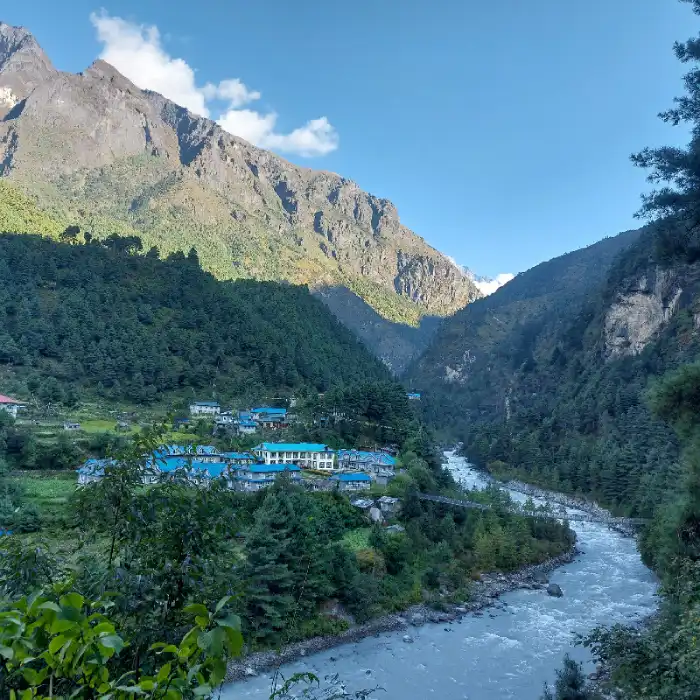
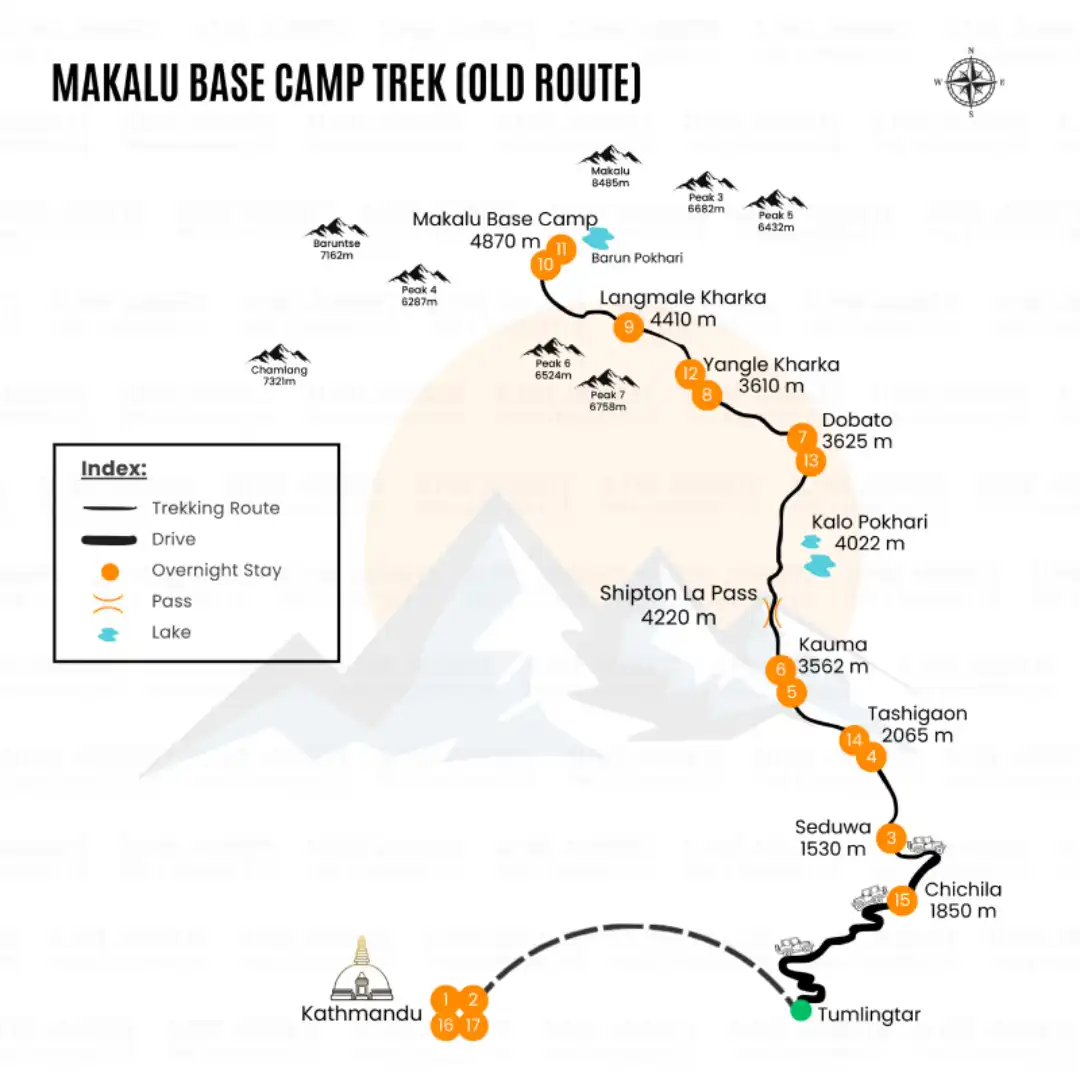
This trek begins with a 35-minute scenic flight from Kathmandu to Tumlingtar, followed by a drive to Seduwa, which is the official starting point of the trek. From here, the trail passes through dense forests, lovely villages, lakes, and high passes, offering very diverse landscapes.
You will also be passing the Barun Valley along the way, which is one of the most wonderful and least explored valleys of Nepal and is also the highlight of the Makalu Base Camp Trek. The valley is a habitat for red pandas, snow leopards, and Himalayan tahr. Barun Valley is also famous for its unique landscape across forests, alpine meadows, and glacial lakes.
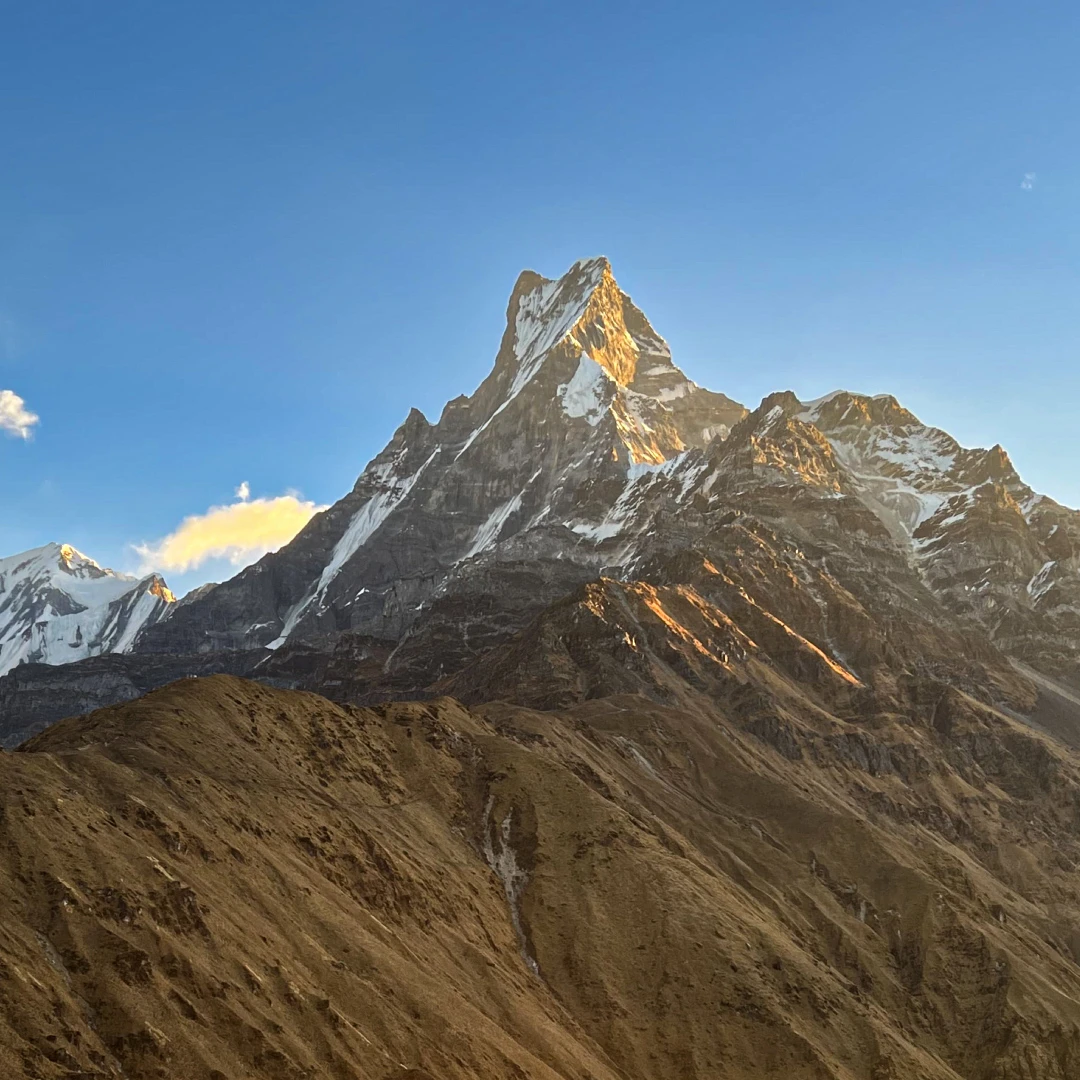
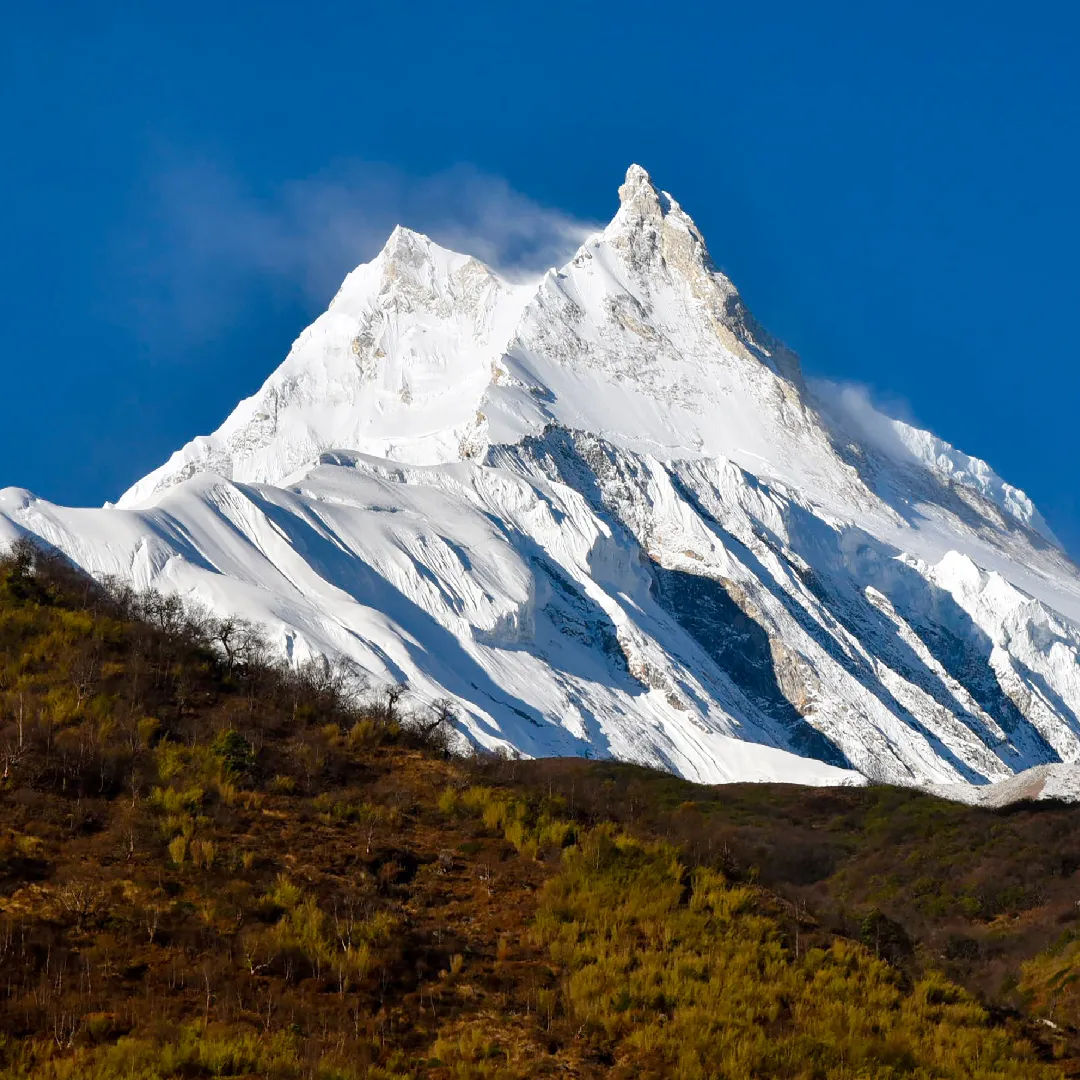
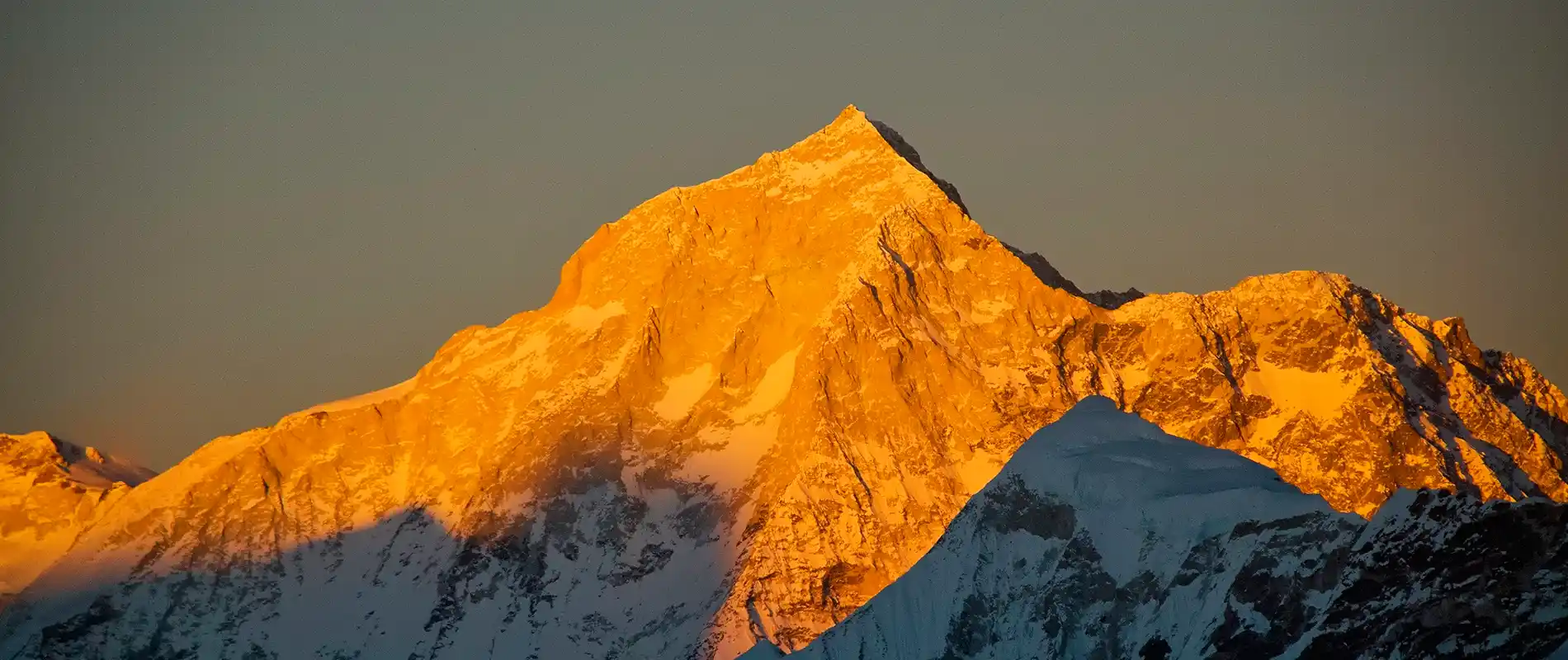
More than the trek, Makalu Base Camp is popular for its spectacular view of Mount Makalu (8,485 m), the fifth-highest peak in the world. The trek offers panoramic and sparkling views of Makalu and its surrounding peaks, such as Baruntse (7,129 m)and Chamlang (7,319 m).
Trekkers can spend a day exploring the base camp surroundings, enjoying the breathtaking views, and feeling a sense of achievement.
Then, you descend the same route via which you travelled to reach the Makalu Base camp, all the way to Seduwa. A private Jeep will be waiting for us at this place and will drive us to Chichila. The next morning, you will go for another scenic ride back to Tumlingtar Airport and fly back to Kathmandu.
Included MealsDinner
Included MealsBreakfast, Lunch & Dinner
Included MealsBreakfast, Lunch & Dinner
Included MealsBreakfast, Lunch & Dinner
Included MealsBreakfast, Lunch & Dinner
Included MealsBreakfast, Lunch & Dinner
Included MealsBreakfast, Lunch & Dinner
Included MealsBreakfast, Lunch & Dinner
Included MealsBreakfast, Lunch & Dinner
Included MealsBreakfast, Lunch & Dinner
Included MealsBreakfast, Lunch & Dinner
Included MealsBreakfast, Lunch & Dinner
Included MealsBreakfast, Lunch & Dinner
Included MealsBreakfast, Lunch & Dinner
Included MealsBreakfast, Lunch & Dinner
Included MealsBreakfast, Lunch & Dinner
Included MealsBreakfast, Lunch & Dinner
Included MealsBreakfast, Lunch & Dinner
Included MealsBreakfast, Lunch & Dinner
Yes. The Makalu Base Camp Trek passes through the Makalu Barun National Park, which requires a Makalu Barun National Park Entry Permit. Additionally, trekkers need a TIMS card (Trekkers' Information Management System) card. If your route enters restricted zones beyond the national park boundary, a Restricted Area Permit may also be required. All permits must be arranged through a registered Nepal trekking agency before departure.
While Lower Makalu routes have historically been more accessible, the remote and technically demanding nature of the Makalu Base Camp Trek makes trekking with a government-licensed guide strongly advisable and in many sections mandatory. The extreme remoteness, absence of rescue infrastructure, and navigation challenges make independent trekking extremely risky and largely impractical.
The trek reaches its highest point at Makalu Base Camp at approximately 5,700m, making it one of the highest base camp treks in Nepal and significantly higher than Everest Base Camp (5,364m). The sustained time spent above 5,000m makes proper acclimatization absolutely critical for the safety and success of the expedition.
Yes — extensive prior high-altitude trekking experience is essential. Having successfully completed demanding treks such as the Everest Three Passes Trek, Kanchenjunga Circuit, or Manaslu Circuit is strongly recommended as minimum preparation. The combination of extreme altitude, technical terrain, remoteness, and long daily walking hours makes Makalu Base Camp unsuitable for beginners or moderately experienced trekkers.
The two optimal seasons are April–May (spring) and September–October (autumn). Spring offers blooming rhododendrons, warming temperatures, and the excitement of pre-monsoon clarity, while autumn delivers exceptionally stable skies, crystal-clear mountain views, and ideal overall trekking conditions. Both seasons provide the best chance of clear views of Makalu (8,485m) — the world's fifth highest mountain.
Spring (April–May) brings progressively warming temperatures, spectacular rhododendron and magnolia blooms in the lower forests, and generally clear morning skies. Pre-monsoon clouds begin building by afternoon in May, occasionally obscuring views. April is widely considered the sweet spot of spring — stable, warm enough for comfort, cold enough to keep trails firm, and offering superb visibility of Makalu's dramatic massif.
At Makalu Base Camp (5,700m), temperatures are extreme year-round. Even during the optimal trekking seasons of spring and autumn, nighttime temperatures plunge to -15°C to -25°C or below. Daytime temperatures at base camp rarely exceed 5°C to 10°C. A high-quality sleeping bag rated to at least -25°C, insulated down jacket, and full cold-weather layering system are non-negotiable gear essentials.
Most Makalu Base Camp treks begin at Num or Seduwa in the Sankhuwasabha District of eastern Nepal, accessed via a domestic flight from Kathmandu to Tumlingtar followed by a jeep or local transport drive of 3–5 hours. Some trekkers begin from Khandbari, the district headquarters. The trek typically ends at the same point it began, returning to Tumlingtar for the flight back to Kathmandu.
The classic route ascends from Num or Seduwa through the dramatic Arun River valley, passing through subtropical jungle, rhododendron forests, and the villages of Tashigaon and Khongma. From Khongma, the trail climbs steeply through the Shipton La and Keke La passes before entering the Barun Valley — a glacially carved wilderness of extraordinary beauty — and ascending to Makalu Base Camp at 5,700m.
While not legally mandatory, comprehensive travel insurance is completely non-negotiable for the Makalu Base Camp Trek. Your policy must explicitly cover high-altitude trekking above 5,700m, emergency helicopter evacuation, and full medical expenses. Given the extreme remoteness of the Barun Valley, helicopter rescues are both logistically complex and extraordinarily expensive — potentially USD 8,000–USD 15,000 or more. No reputable trekking agency will operate in this region without confirmed insurance coverage.
The Makalu Barun National Park is one of the most biodiverse protected areas on earth, sheltering an extraordinary range of Himalayan fauna. Trekkers may encounter red pandas, snow leopards, clouded leopards, Himalayan black bears, musk deer, Himalayan tahr, blue sheep (bharal), and golden langur monkeys in the lower forests. The park records over 440 species of birds — the highest avian diversity of any protected area in Nepal — including the Himalayan monal, blood pheasant, satyr tragopan, and numerous raptors. The lower subtropical jungle sections are particularly rich in wildlife encounters.
Trip Duration 18 Days starting from Kathmandu and ending at Kathmandu
Trip Grade Tough
Best Season March - May, September - November
Or
Dhampus Peak, with an elevation of 6,012 meters (19,724 feet), is a po
The Nar Phu Valley Trek is a hidden gem situated in the Annapurna regi
Far up and away in the remote west of Nepal, the Api Base Camp Trek un
Island Peak, also known as Imja Tse, stands at 6,165 meters (20,226 fe
The Mardi Himal Trek is a perfect trek that offers a wonderful balance
The Jiri to Everest Base Camp Trek follows the classic route taken by
Mera Peak is Nepal’s highest trekking peak. It is located in the Mah
Ghorepani Poon Hill Trekking is most popular who have limited time for
Manaslu Circuit Trek is one of the most beautiful trekking experiences
Lobuche East peak is one of the popular and challenging trekking peak
The Langtang Valley Trek is an amazing journey into the heart of the L
The combination of the magical Nar Phu Valley and the classic high-alt
The Everest Base Camp with Gokyo Lake trek is an extraordinary adventu
Yala Peak is perhaps the most accessible genuine mountaineering experi