Explore the last untouched corners of the Himalayas: Api Base Camp, where culture and mountain stand supreme.
Enquire NowTrip Duration 16 Days starting from Kathmandu and ending at Kathmandu
Trip Grade Moderate
Group Size 1-20 pax
Max Height 3900m.
Best Season March - May, September - November
Far up and away in the remote west of Nepal, the Api Base Camp Trek unfolds a pristine Himalayan valley, a place known to very few travelers, and grants privacy to conversing with towering Api Himal (7,132m) that looms over the Darchula district like a silent sentinel.
Walking across this untouched paradise through ancient trails, you will hardly feel the marks of modern tourism, a pure wilderness experience which seasoned trekkers often say is ‘Nepal of thirty years ago.’
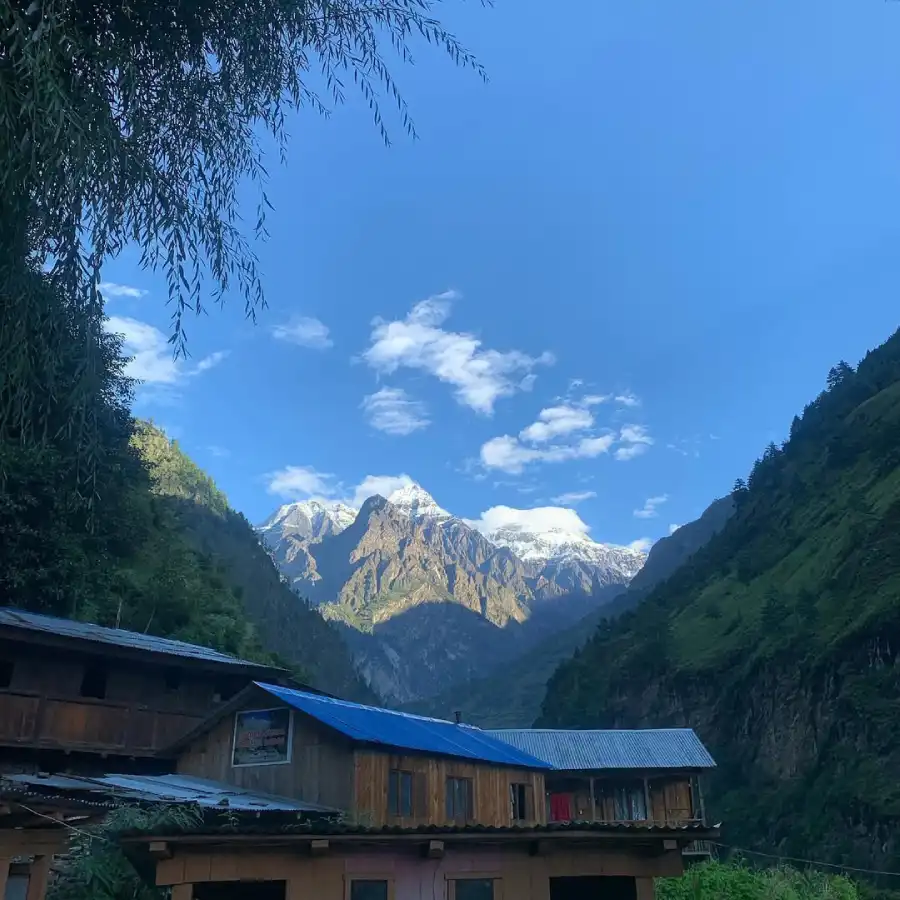
The journey begins with a beautiful flight to Dhangadi before starting its adventurous overland journey through lowland terrains into the awe-inspiring highlands where the air becomes thinner and the view changes to alpine meadows and glacial moraines.
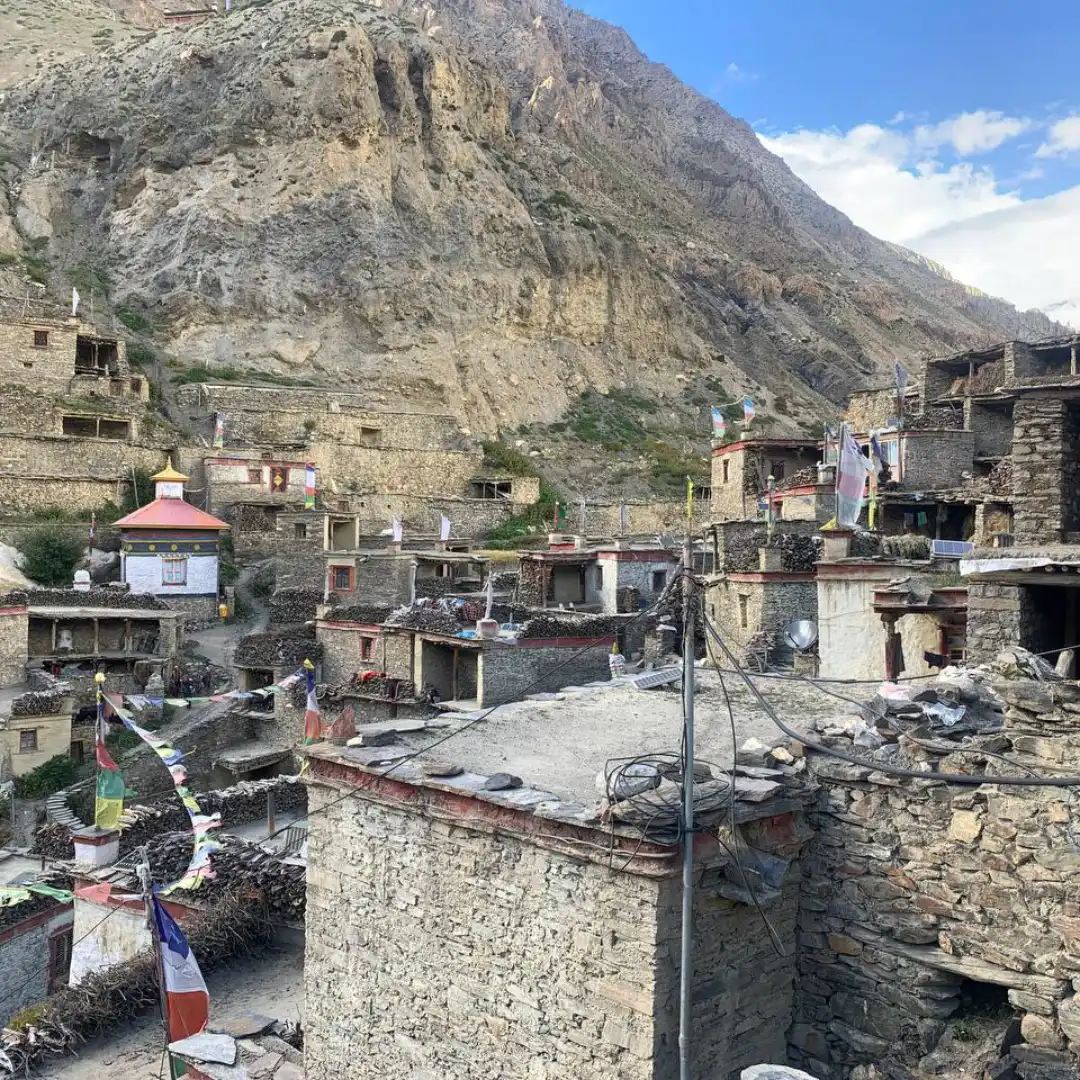
While you ascend to remote villages, you’ll find the Khas communities with distinctive cultures that still remarkably survived since ancient times. The natives wear traditional handloom clothes, garnished with age-old ornaments handed down to them through generations.
The trail to Api Base Camp follows along the Chamaliya River, which originates from Mount Api. Hindu legends say that this sacred watercourse originated from Lord Shiva’s matted hair. This place is also significantly important to Hindu people, as it is considered to be the second home of Lord Shiva after Mount. Kailash.
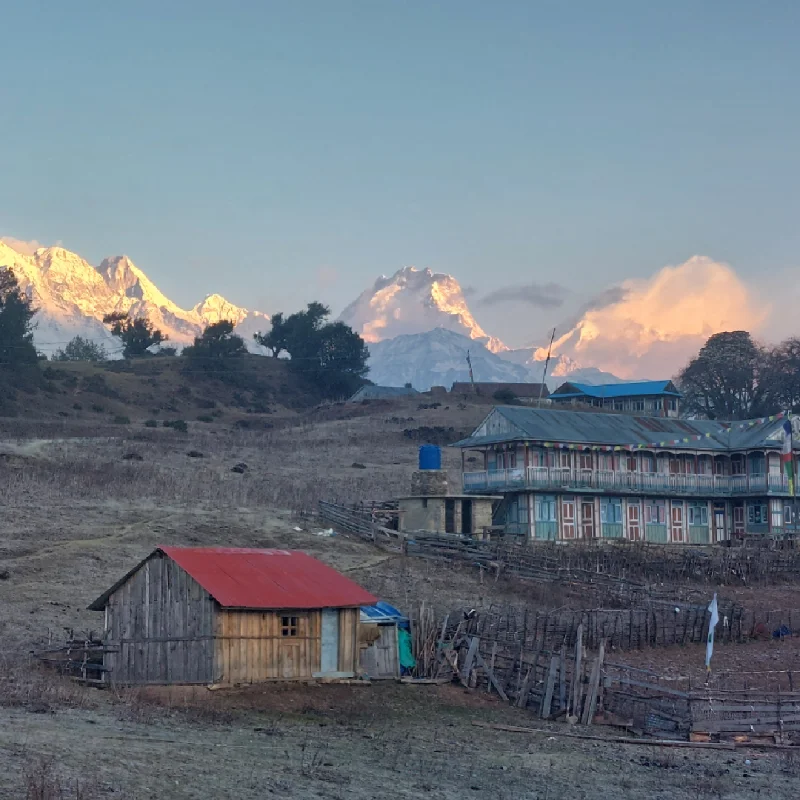
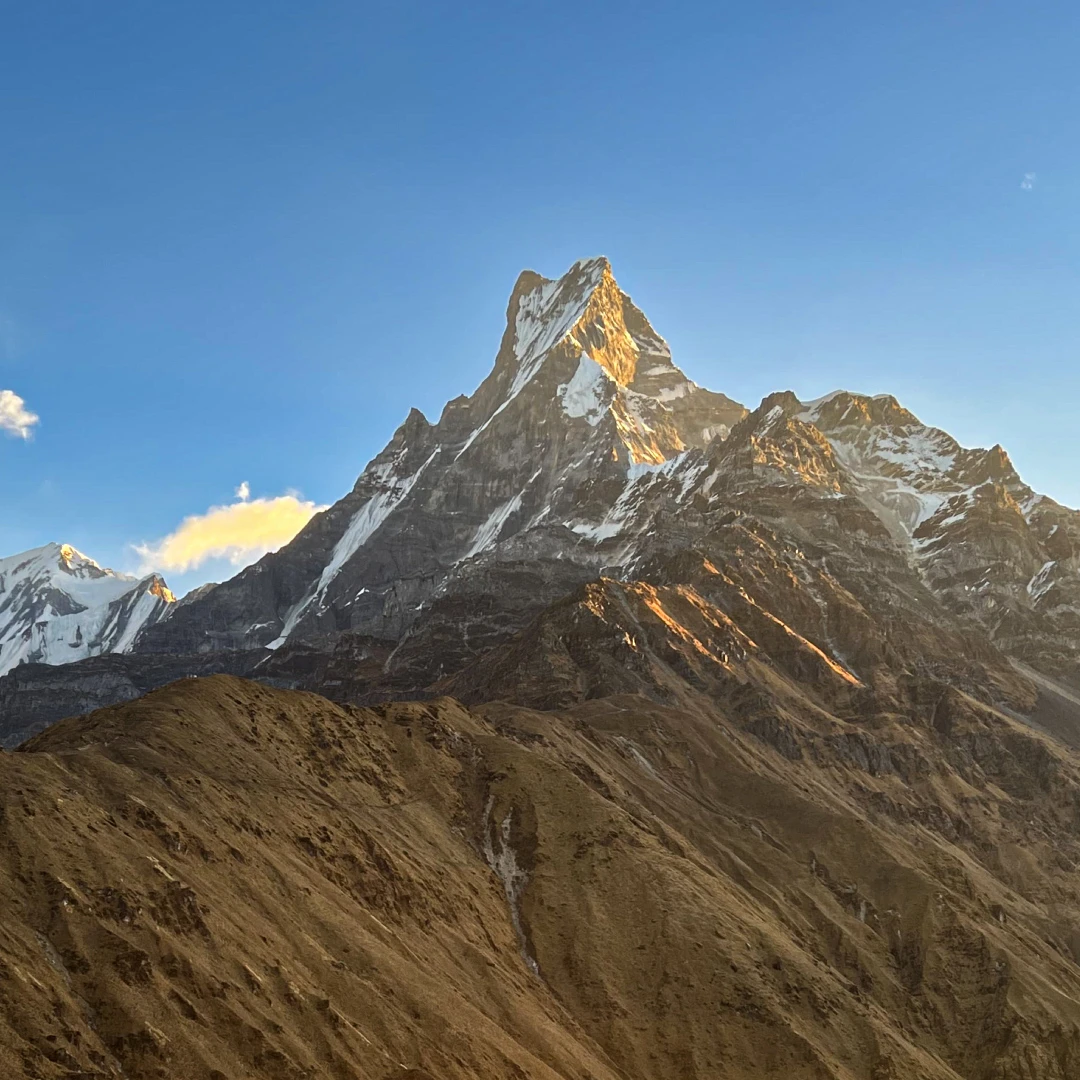
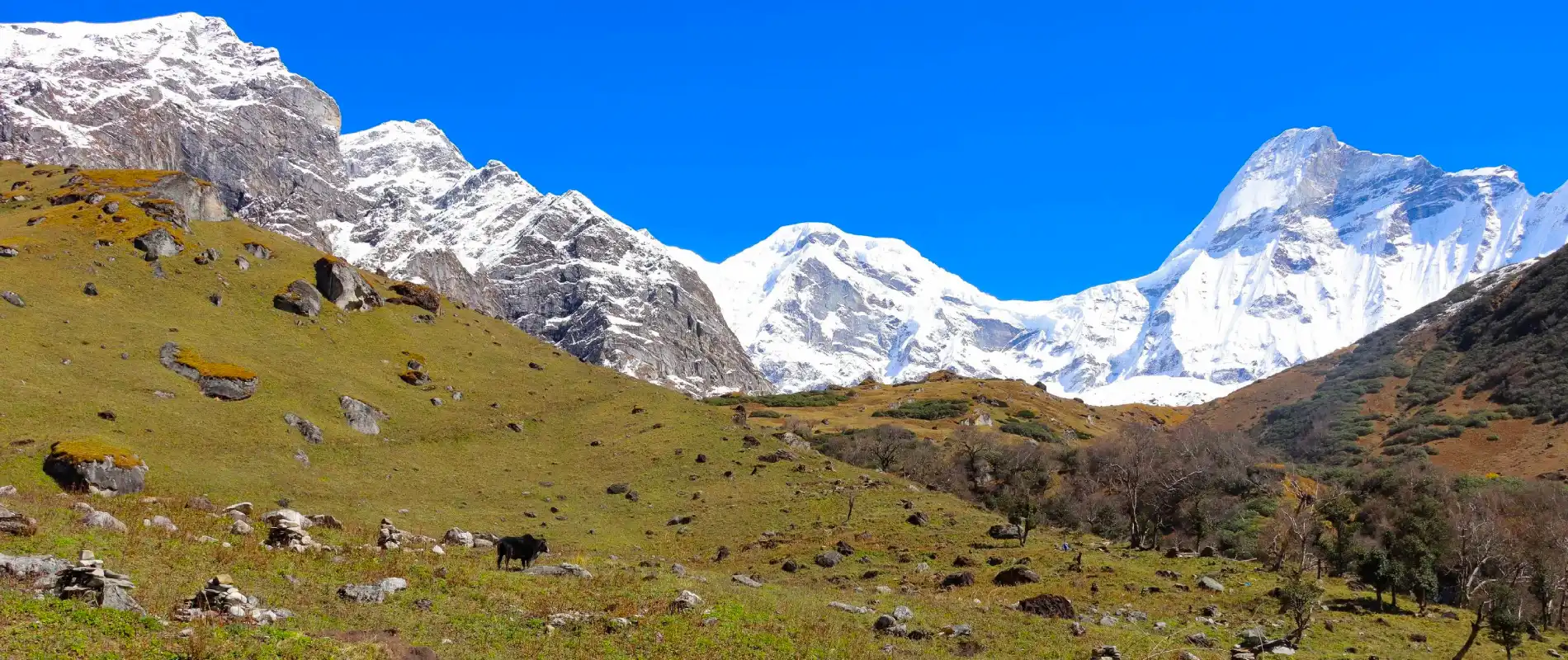
The majestic scope of the panoramic scenery unfolds daily to present an amphitheater of peaks that include Kap Chuli (6,680m), Nampa (6,611m), and the giant Bobaya Chuli (6,808m), which stands like a natural fortress around Api Himal. Most trekkers do not realize that the region contains more than twelve peaks above 6,000 meters and thus ends up forming perhaps the most condensed collection of high mountains in Nepal, yet it also remains among the least photographed.
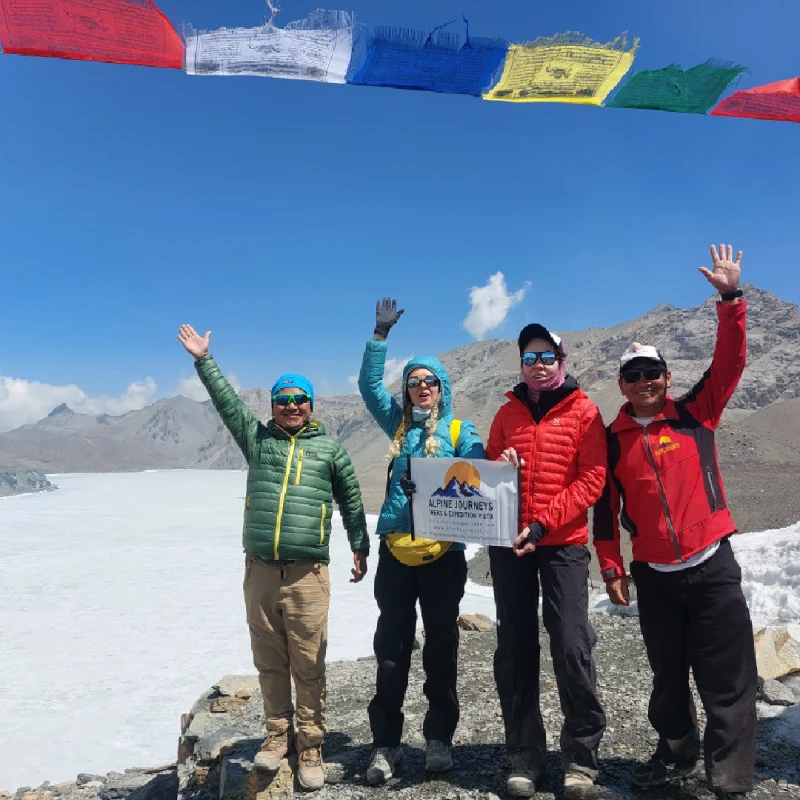
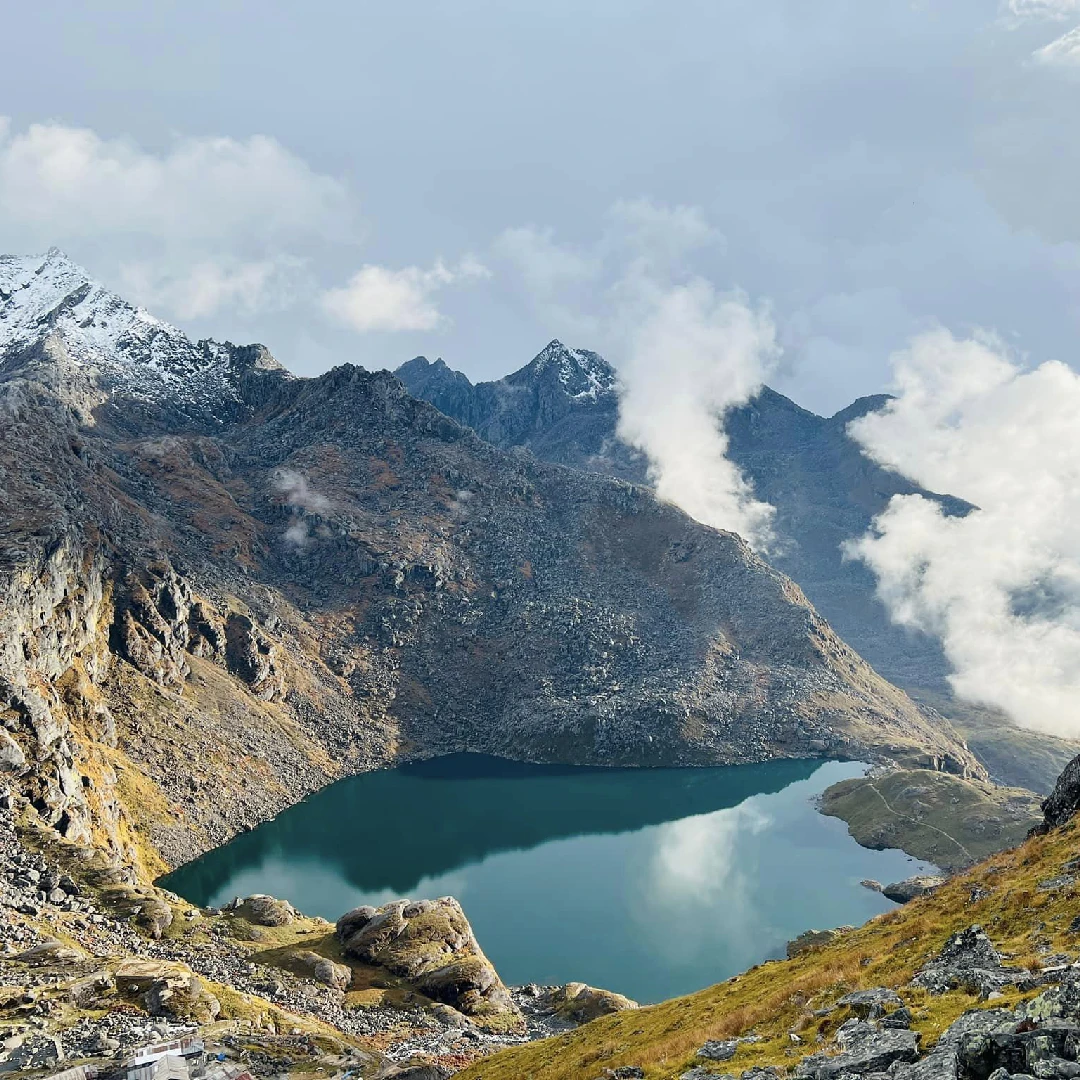
Probably the top sight for a spiritual seeker is the voyage to Kali Dhunga—the holy lake at the base of the mountains, where it is believed that prayers deserve the same merits as said at the faraway Lake Mansarovar in Tibet. This lake and its neighborhood become a frenzy of festivities around the full moon of Shrawan month, a whole week long, filling a remote wilderness with colorful celebrations of faith and traditions — an experience that even veteran trekking guides of Nepal agree is rare to witness.
Working with traditional commercialized teahouse-style trekking of Everest and Annapurna, the Api Base Camp Trek takes everything in an opposite direction and offers genuine camping adventures where every night under the star-lit Himalayan sky becomes a cherished lifetime memory. However, now there are basic hotels at some of the rest points along the trail.
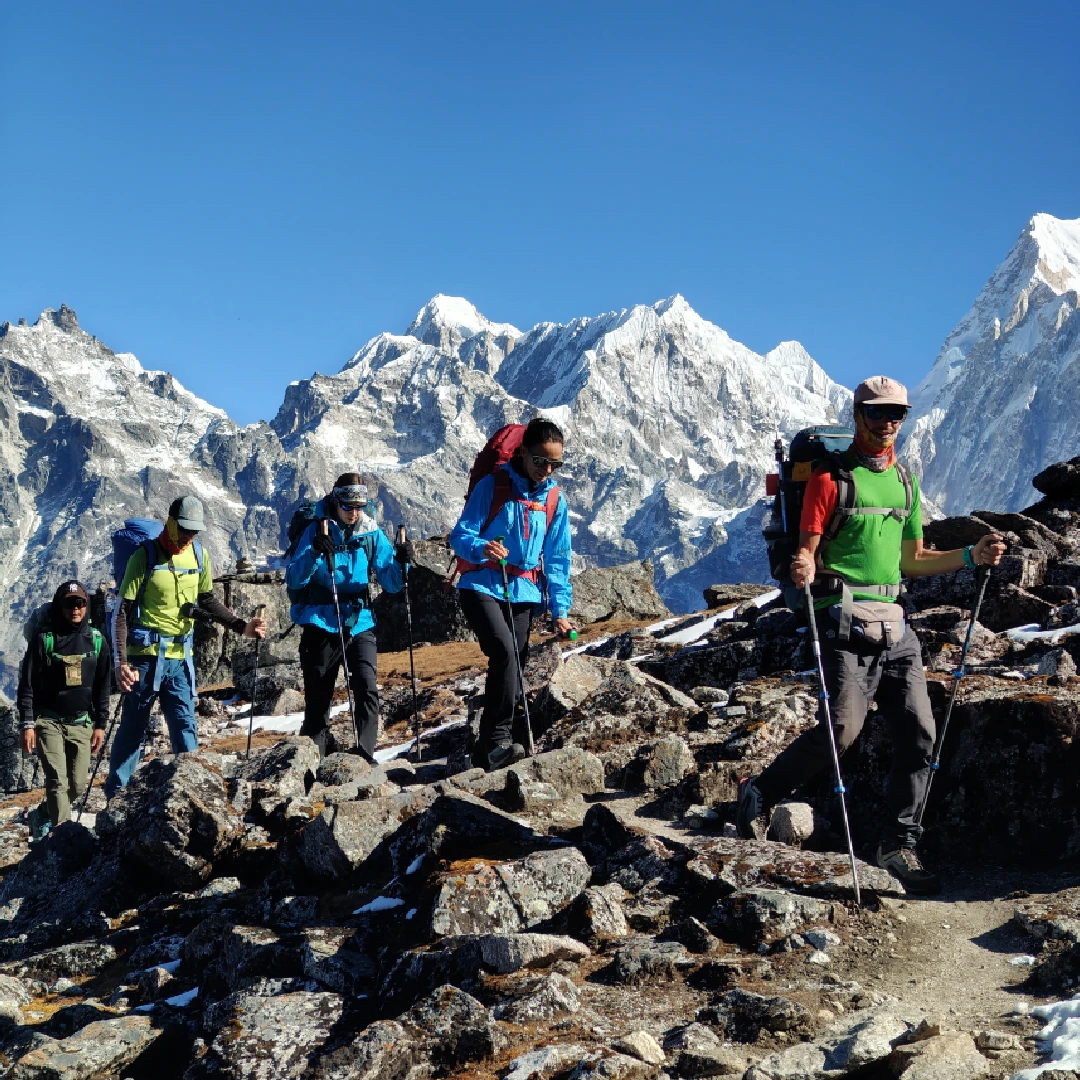
The trekking challenge must never be taken lightly, sometimes demanding seven hours of hiking across different terrains, testing endurance and technical skills. Experienced trekkers often comment on how the Api Base Camp Trek is just about perfectly balanced between challenge and accessibility. It is difficult enough to be felt as a real accomplishment, yet easy enough for anyone with a modicum of fitness and determination to accomplish, making it an important step for adventurers seeking to graduate from Nepal’s more commercial trekking options.
As you make your way down from the highlands laden with memories of snowy peaks and cultural interchanges, one thing will set in: the Api Base Camp Trek offers a frontier experience, increasingly becoming rare in a hyperconnected world, in one of the last tracts of genuine remoteness in the Himalayas. This journey changes how you see Nepal, often changing how you see life, as the simplicity of this hidden land combined with its enormity becomes a soul-tugging reminder of nature’s greatness.
Included Meals
Included MealsBreakfast
Included MealsBreakfast, Lunch and Dinner
Included MealsBreakfast, Lunch and Dinner
Included MealsBreakfast, Lunch and Dinner
Included MealsBreakfast, Lunch and Dinner
Included MealsBreakfast, Lunch and Dinner
Included MealsBreakfast, Lunch and Dinner
Included MealsBreakfast, Lunch and Dinner
Included MealsBreakfast, Lunch and Dinner
Included MealsBreakfast, Lunch and Dinner
Included MealsBreakfast, Lunch and Dinner
Included MealsBreakfast, Lunch and Dinner
Included MealsBreakfast, Lunch and Dinner
Included MealsBreakfast and Farewell Dinner
Included MealsBreakfast
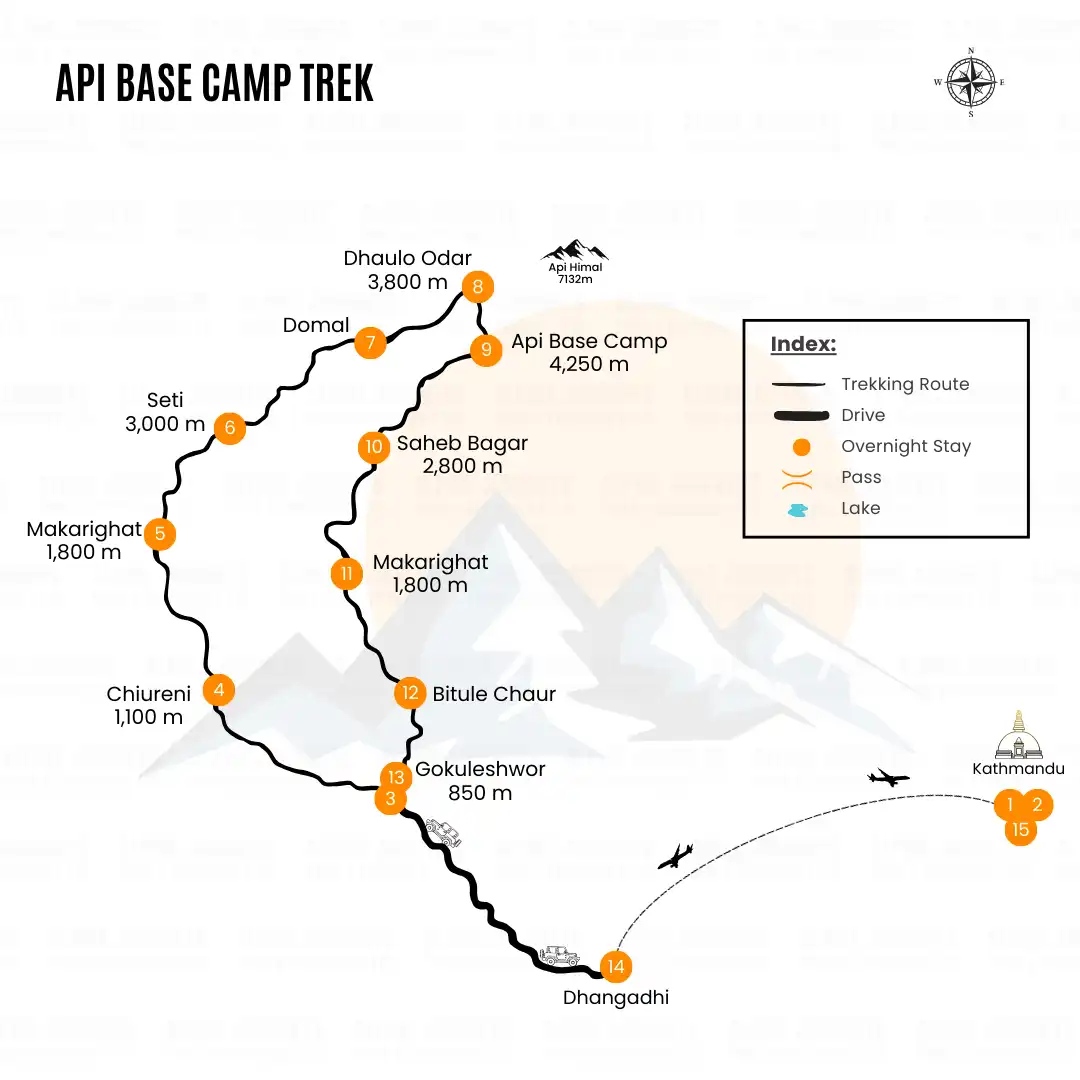
The Api Base Camp Trek is a moderately hard trekking route,
with steep ups and downs along the trail; it is recommended that trekkers have
good physical fitness, some hiking experience, and be able to walk 5-7 hours
daily with a light backpack.
Pre-monsoon (March, April, and May) is considered the best
season for trekking at Api Base Camp when rhododendrons are in full bloom,
followed by the post-monsoon season (October-November) characterized by clear
skies. The winters from December to February are very cold with blockades due
to snow, whereas the monsoon months of June to September bring rains that make
the trails slippery and difficult.
Normally, it takes 15 days to complete the Api Base Camp trek.
However, it may be 1-2 days less or more, depending on your walking pace and
your decision.
Unlike in common teahouse traverses, Api Base Camp is mostly
a camping trek, with porters carrying tents along with other camping equipment.
Basic teahouses or homestays are found in certain lower villages, and at the
base camp area, but the provisions provided at these places are quite basic when
compared to other commercial trekking circuits.
Trekkers need to arrange for a Restricted Area Permit for
Far Western Nepal and a TIMS (Trekkers Information Management System) card. These
permits must be organized through a registered trekking agency, as independent
trekking is not allowed in this region.
Yes, the pristine forests and undisturbed ecosystem of the
Api region provide habitats for diverse wildlife, including Himalayan tahr,
musk deer, and various bird species.
The trek passes through traditional Khas villages, where
ancient culture is still practiced, handwoven textiles are produced, and unique
ornaments are crafted. If the timing works out, one might get to experience the
Shrawan full moon festival at Kali Dhunga lake, full of traditional music,
dance, and religious ceremonies, rarely seen by outsiders.
Api Base Camp is situated at an elevation of about 3,900m (12,795
ft). Trekkers take a few days to reach there gradually to avoid altitude
sickness.
No independent trekking is allowed in the Api region as it
is a remote and restricted area. All trekkers entering the Api region must be
accompanied by a licensed guide and undertake the trek through a registered
trekking agency in Nepal.
For the Api Base Camp Trek, it is advisable to pack extra
warm layers as nights get very cold, extra batteries and power banks as
charging facilities are very limited, water purification tablets as water
sources are very few, and cash as there are no ATMs. Along with these, carrying
a good sleeping bag (-15 C rating) and a camera with extra storage will come in handy for amazing photography opportunities.
Trip Duration 16 Days starting from Kathmandu and ending at Kathmandu
Trip Grade Moderate
Best Season March - May, September - November
Or
Mount Kailash stands at 6,638 metres. It has never been summited — n
The Jiri to Everest Base Camp Trek follows the classic route taken by
The combination of the magical Nar Phu Valley and the classic high-alt
Manaslu Circuit Trek is one of the most beautiful trekking experiences
Makalu Base Camp Trek is truly an unforgettable adventure, covering so
The Langtang Valley Trek is an amazing journey into the heart of the L
The Ama Yangri Trek is one of the popular short treks located in the H
The Everest Base Camp with Gokyo Lake trek is an extraordinary adventu
Winding through the Langtang area near the Tibetan frontier, the Taman
Kanchenjunga Base Camp trek is known as the hidden gem among the trekk
While the classic Annapurna Circuit continues to be one of the world’s
The Nar Phu Valley Trek is a hidden gem situated in the Annapurna regi
Gosaikunda is a holy pilgrimage site for Hindus and is believed to hav
The Mardi Himal Trek is a perfect trek that offers a wonderful balance