The world's most sacred pilgrimage, circling the mountain that four religions call home.
Enquire NowTrip Duration 16 Days starting from Kathmandu and ending at Kathmandu
Trip Grade Moderate
Group Size 2-20 pax
Max Height 5636m.
Best Season May - June & September - October
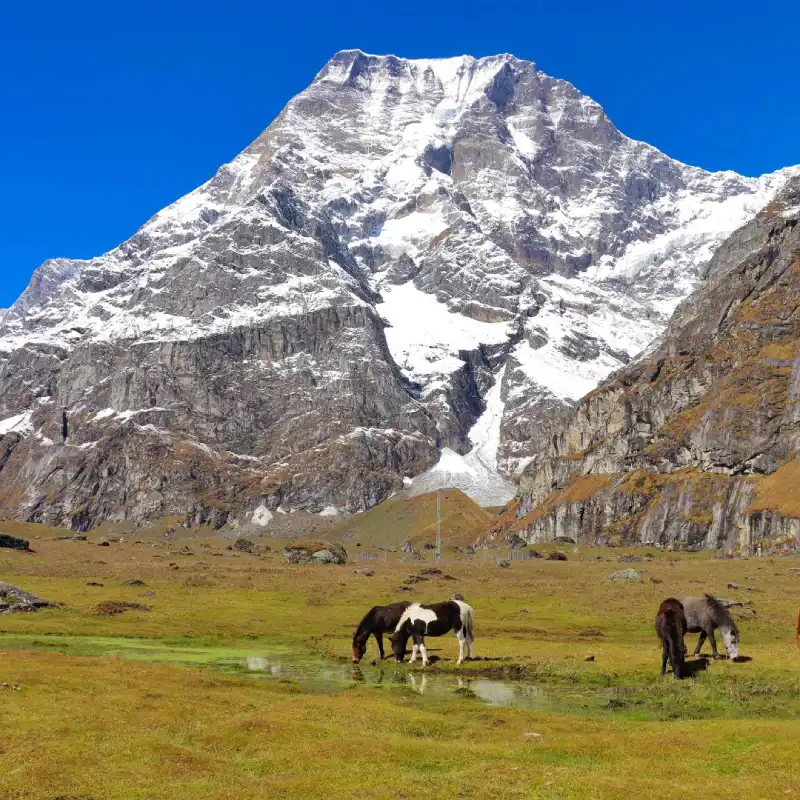
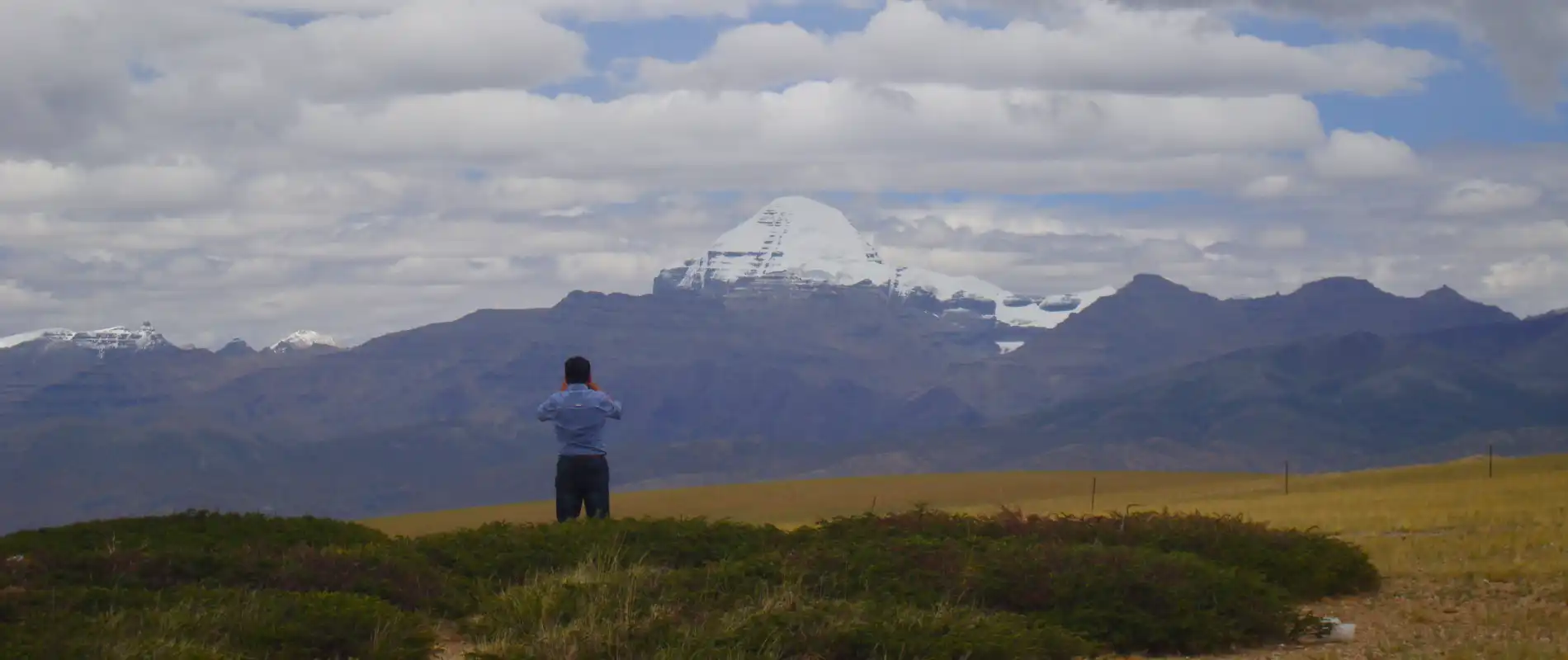
Mount Kailash stands at 6,638 metres. It has never been summited — not because climbers haven’t tried, but because Hindus, Buddhists, Jains, and Bon followers consider it too sacred to climb. The correct way to honour the mountain is to walk around it. That walk is the Kailash Mansarovar Yatra/ Parikrama.
For Hindus, Mount Kailash is the home of Lord Shiva and Goddess Parvati. For Tibetan Buddhists, it is Mt. Meru — the axis of the universe. For Jains, it is the site where their first Tirthankara, Rishabhadeva, attained liberation. For followers of Bon, the ancient Tibetan spiritual tradition, it is the seat of all divine power. No other mountain on Earth holds this level of belief across so many traditions and billions of people.
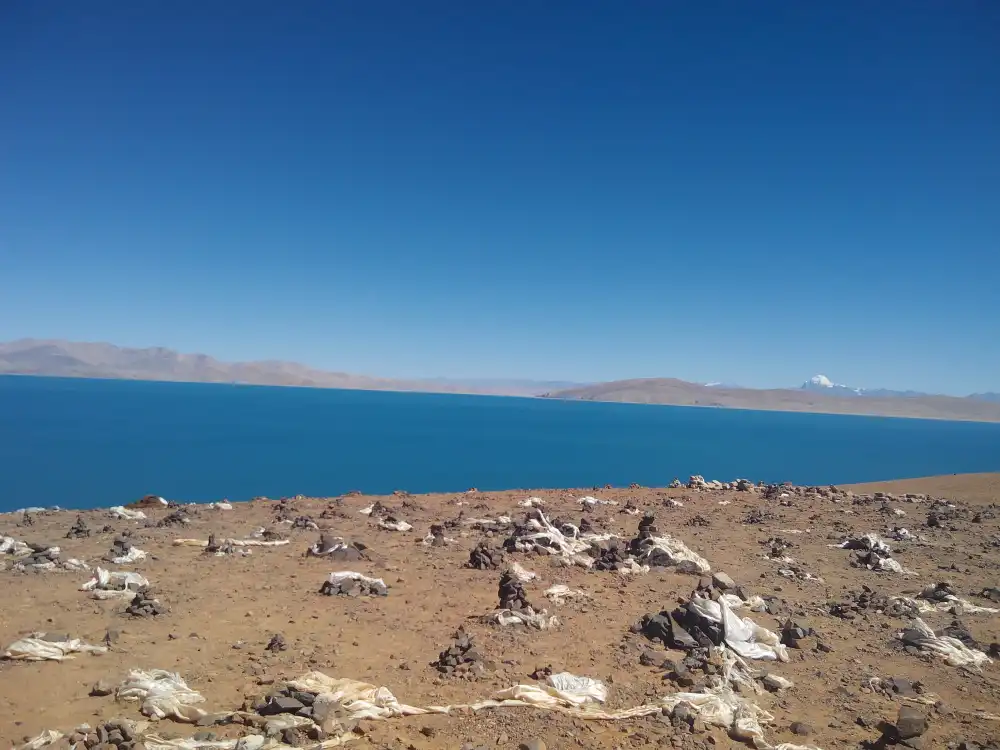
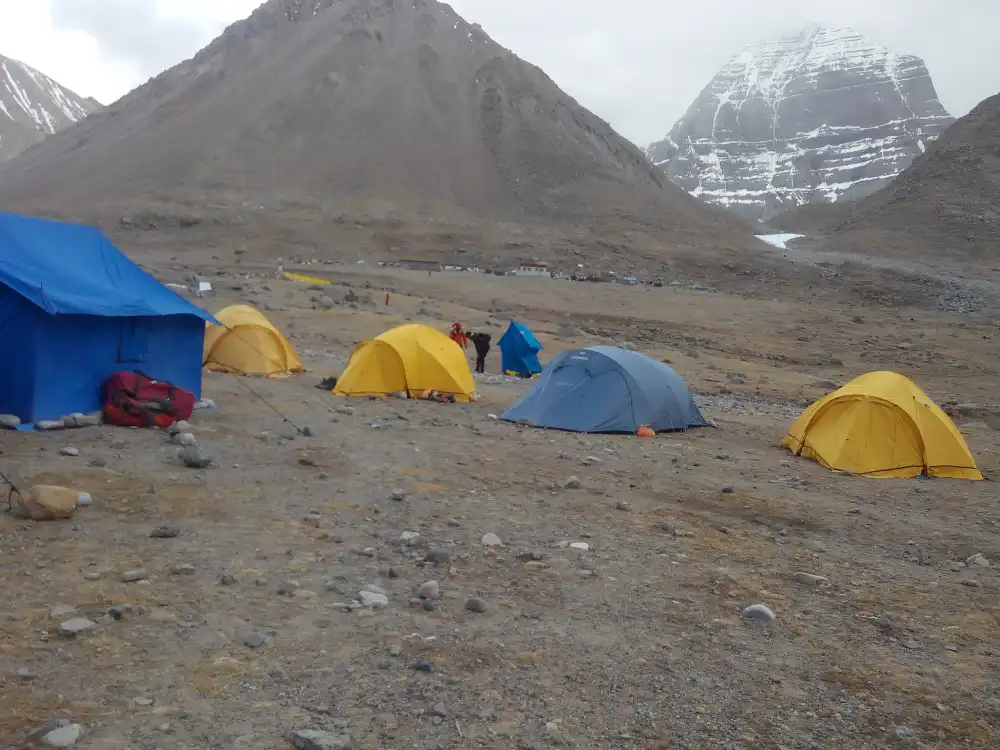
The Parikrama (also called Kora) is the 52 km circumambulation of Mount Kailash, completed over three consecutive days. It is the spiritual core of the entire journey. The route passes through valleys, moraines, ancient monasteries, and one of the highest mountain passes in the world.
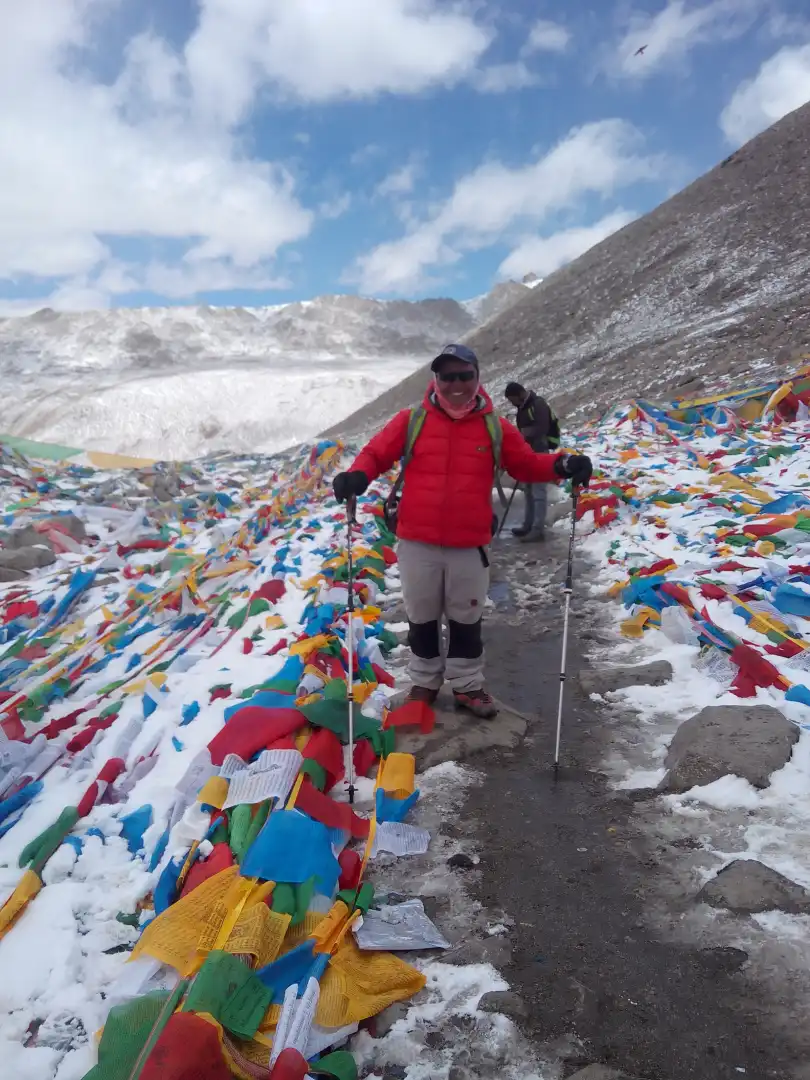
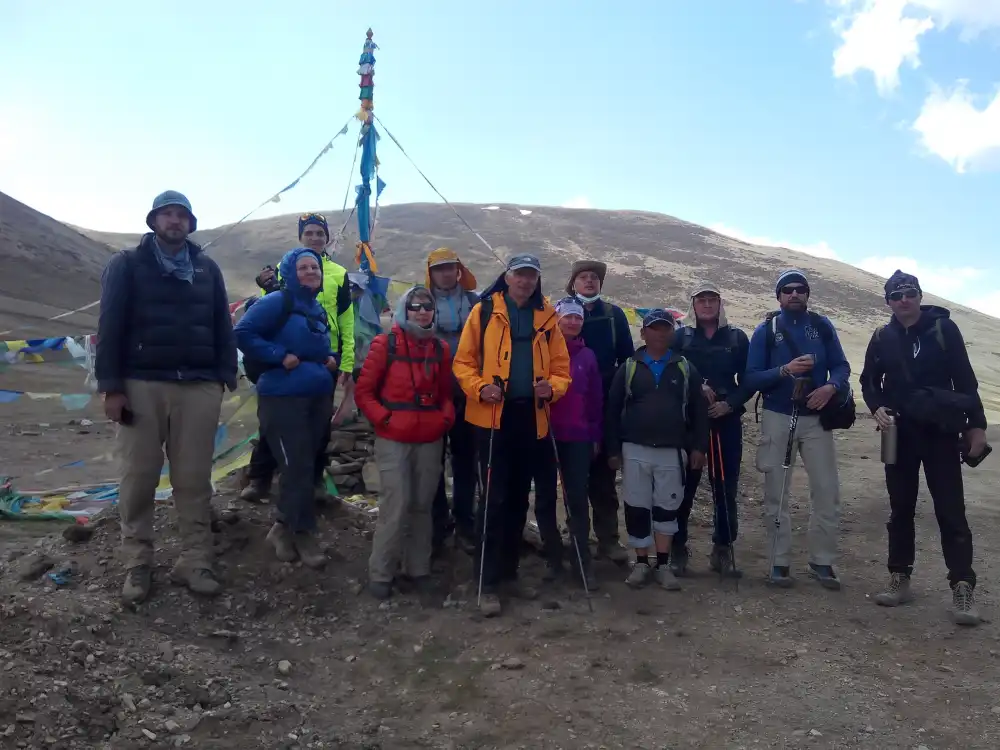
On Day 2 of the Parikrama, you cross Dolma La Pass at 5,636m. The ascent is steep and demanding. At the top, prayer flags stretch in every direction. Most people stop and stand quietly for a few minutes. That quiet is difficult to describe but easy to remember. Completing one full Parikrama is believed, in Hindu tradition, to erase the sins of an entire lifetime. 108 Parikramas is said to bring liberation. Most pilgrims complete one, return home, and spend the rest of their lives talking about it.
Included Meals
Included MealsBreakfast
Included MealsBreakfast, Lunch and Dinner
Included MealsBreakfast, Lunch and Dinner
Included MealsBreakfast, Lunch and Dinner
Included MealsBreakfast, Lunch and Dinner
Included MealsBreakfast, Lunch and Dinner
Included MealsBreakfast, Lunch and Dinner
Included MealsBreakfast, Lunch and Dinner
Included MealsBreakfast, Lunch and Dinner
Included MealsBreakfast, Lunch and Dinner
Included MealsBreakfast, Lunch and Dinner
Included MealsBreakfast and Dinner
Included MealsBreakfast, Lunch and Dinner
Included MealsBreakfast, Lunch, and Dinner
Included MealsBreakfast, and Lunch
Included MealsBreakfast
Included MealsBreakfast
All foreign nationals entering Tibet from Nepal must travel in a group of at least four people to qualify for the Chinese Group Visa (also known as the Tibetan Group Tourist Visa), along with a separate Tibet Travel Permit — both of which are mandatory. To allow sufficient time for the visa application, biometric registration, and collection process at the Chinese Embassy in Kathmandu, we kindly ask all participants to arrive in Kathmandu on a Sunday. This allows us to submit your application on Monday and collect your visa by Thursday or Friday, keeping the journey on schedule without unnecessary waiting.
Travellers holding passports from the following countries currently has visa-free entry to mainland China (valid through 31 December 2026): Australia, Austria, Belgium, Brazil, Argentina, Brunei, Bulgaria, Canada, Chile, Croatia, Cyprus, Czech Republic, Denmark, Estonia, Finland, France, Germany, Greece, Hungary, Iceland, Ireland, Italy, Japan, Latvia, Liechtenstein, Luxembourg, Malaysia, Malta, Monaco, Montenegro, Netherlands, New Zealand, North Macedonia, Norway, Poland, Portugal, Romania, Russia*, Saudi Arabia, Singapore, Slovakia, Slovenia, South Korea, Spain, Sweden, Switzerland, Thailand, United Arab Emirates, United Kingdom, and Uruguay. (*Russia visa-free valid until 14 September 2026.)
Please note that Tibet is not covered under mainland China’s visa-free arrangements — a Tibet Travel Permit is mandatory for all foreign nationals regardless of visa-free status, and it can only be arranged through a licensed operator in Kathmandu. Beyond the permit process, we warmly recommend that even visa-free travellers begin their journey from Kathmandu. Arriving directly at high altitude — without the gradual ascent through Kyirong (2,900m) and Saga (4,400m) — significantly increases the risk of altitude sickness and can affect your entire Yatra. Kathmandu is not simply a transit point; it is the natural and safest gateway to this sacred journey, and beginning here gives your body and your spirit the preparation they both deserve.
May to June and September to October are the two best windows.
May and June offer the clearest mountain views, the most stable weather, and the easiest road conditions. The Saga Dawa Festival — the most auspicious occasion on the Tibetan Buddhist calendar, held on the full moon of May or June — draws thousands of Tibetan pilgrims to the Kailash circuit simultaneously. If you want to experience the Parikrama in its fullest and most spiritually charged atmosphere, this is the time.
September and October deliver post-monsoon clarity with excellent visibility and a quieter trail.
July and August are technically possible — the Tibetan Plateau sits largely in a rain shadow — but some road and trail sections can be wet, and views are occasionally obscured.
Three separate documents are required: the Tibet Travel Permit (TTP), the Chinese Group Visa, and the specific Kailash and Mansarovar Parikrama permits.
Individual tourist visas to Tibet do not exist — the group visa is the only legal route for foreign nationals and must be arranged through a licensed Nepal-based operator with an authorised Tibetan partner agency.
We manage all of this on your behalf, including the biometric registration that is now required in Kathmandu as part of the process. Indian nationals additionally require an Inner Line Permit (ILP), which we also arrange.
Permit processing takes 4 to 5 days in Kathmandu, which is why Days 2 through 4 of the itinerary are specifically allocated for this. Your passport must be valid for at least 6 months from your travel date.
Altitude sickness (Acute Mountain Sickness / AMS) can affect anyone, regardless of fitness, age, or previous high-altitude experience.
Our itinerary addresses this with two dedicated acclimatisation stops — Kyirong (2,900m) and Saga (4,400m) — before the group reaches the highest sections of the program.
The key rules throughout the high-altitude section are: ascend slowly, drink 3 to 4 litres of water per day, avoid alcohol, eat regularly, and tell your guide immediately if you feel unwell.
We carry a medical kit throughout. We strongly recommend consulting your doctor about Diamox (acetazolamide) before departure. Your guide is trained to monitor group health daily and will always put safety before the itinerary.
Essential gears, and recommendations are all combined and packed together "All in One Trekking Gear List".
Trip Duration 16 Days starting from Kathmandu and ending at Kathmandu
Trip Grade Moderate
Best Season May - June & September - October
Or
Far up and away in the remote west of Nepal, the Api Base Camp Trek un
Step by step, the shift from city streets to high plateau reveals itse
The Langtang Valley Trek is an amazing journey into the heart of the L
Gosaikunda is a holy pilgrimage site for Hindus and is believed to hav
Winding through the Langtang area near the Tibetan frontier, the Taman
The Mardi Himal Trek is a perfect trek that offers a wonderful balance
Nepal The Annapurna Base Camp (ABC) Trek is a journey into the heart o