Trip Duration Days starting from and ending at
Trip Grade
Group Size
Best Season
Among nations, Nepal stands alone in offering jumps above Mount Everest or beside glacial lakes ringed by towering summits – each accessible during one journey, making it a premier destination for skydiving in Nepal and Everest skydiving experience. Thrill unfolds here differently: adventurers arrive not just for height but for views few places grant in a tandem skydiving Nepal adventure. From high-altitude drops to guided partner dives, precision blends with raw landscape. Scenery plays a role equal to speed; peaks frame every descent like natural amphitheaters in this high altitude skydiving Nepal experience. Operators follow strict safety routines without dulling the experience’s edge, making it a trusted choice for professional skydiving in Nepal. Few countries match this mix of risk, beauty, and care folded into freefall moments of a true Nepal adventure tourism activity.
High above the Solukhumbu landscape, the plane ascends near 23,000 feet, placing thrill-seekers right over Earth’s tallest peaks ahead of exit in the iconic Everest skydiving Nepal jump. Once the hatch swings open, gravity takes hold – suddenly you’re plummeting through thin air while Everest’s northern wall surges into view below, defining the Mount Everest skydiving experience. Not far beyond stretches Lhotse’s spine, along with endless folds of towering terrain dominating every angle of sight. This descent isn’t merely an extreme drop from great height; it unfolds across a stage unmatched globally for raw alpine magnitude in tandem skydiving over Everest Base Camp region. Nowhere else combines skydiving and mountain grandeur so intensely – the moment defines what aerial adventure can become when grounded in such colossal surroundings of Everest region skydiving Nepal.
Pokhara skydiving delivers a striking alternative, distinct yet just as memorable for Pokhara skydiving Nepal experience. Above the valley, the drop area unfolds beneath open skies, revealing Phewa Lake shimmering far below while peaks like Annapurna, Machapuchare, and Dhaulagiri rise in silent formation – creating one of Nepal’s most arresting mountain views in a Pokhara tandem skydiving experience. Reaching the site takes less flying time from Kathmandu compared to Everest routes, which helps simplify planning for those juggling limited days in a Nepal skydiving tour package. Though starting at a lower elevation than jumps near Everest, the landscape here holds its own with breathtaking clarity. Because Pokhara functions so easily as a launch point, newcomers adjusting to Nepal often find the rhythm of this adventure flows without complication in beginner skydiving Nepal conditions.
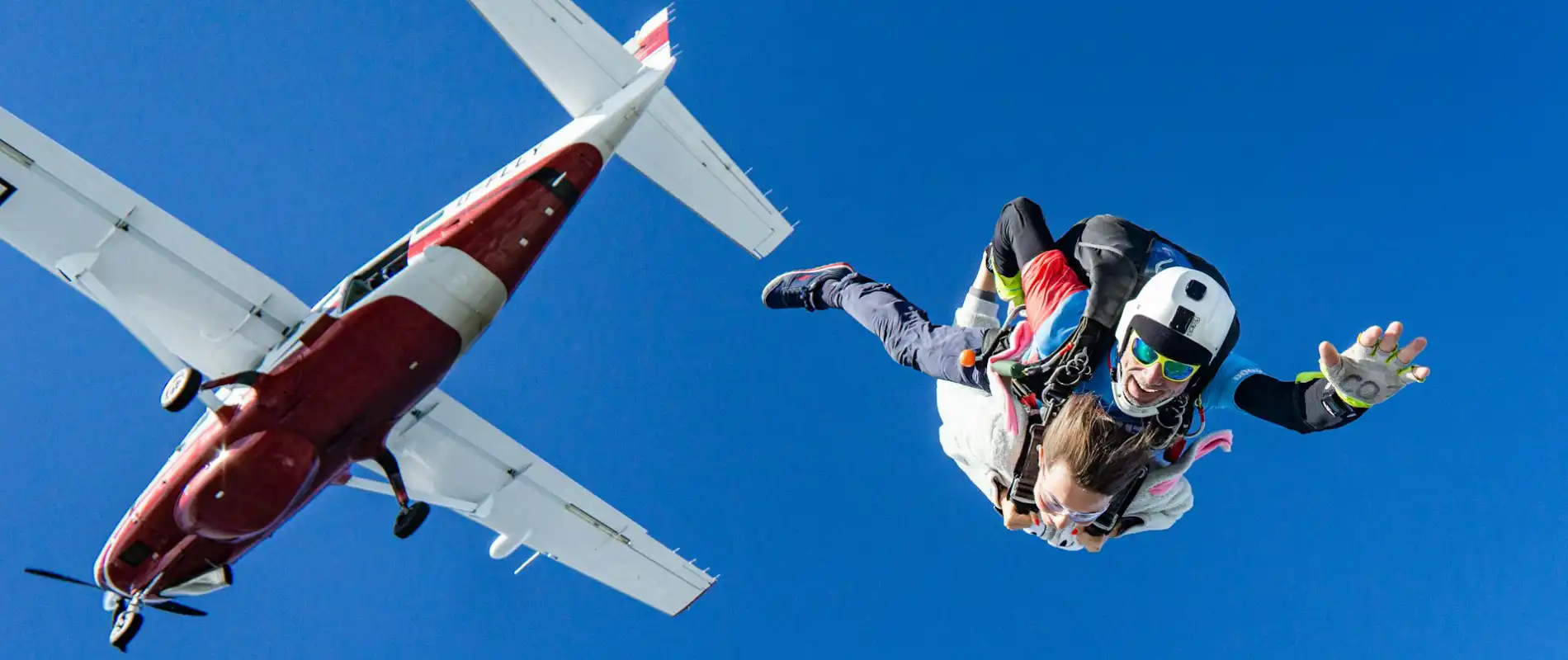
One spot, then another – each offers tandem skydives in Nepal, so zero prep or past jumps matter here in tandem skydiving Nepal booking options. Jump above Everest, or float down near Pokhara, maybe even do both on one journey in a combined Everest and Pokhara skydiving package – these moments stick. Years pass, yet you’re still telling friends about that drop through thin mountain air, capturing the essence of best skydiving experience in Nepal tourism, grasping for words that never quite capture how it truly felt.
There are two main spots. The Everest region offers a jump at 23,000 feet, freefalling right above the world's highest peaks – a truly intense experience. Then there's Pokhara, where you jump over the valley, enjoying views of Phewa Lake and the Annapurna range. Both are tandem jumps, so no experience is needed. Everest is quite remote and complex logistically, but Pokhara is far more accessible, especially if you're on a tighter schedule.
Honestly, both are incredible, just different. Everest is the more extreme choice: higher up, remote, offering the most dramatic mountain views imaginable. Pokhara, on the other hand, is easier to reach from Kathmandu and gives you stunning Annapurna views with Phewa Lake below. If you're after the ultimate high-altitude rush and have the time, Everest is hard to beat. But if your schedule is tighter or you prefer simpler logistics, Pokhara provides amazing scenery and value.
Not at all! Both Everest and Pokhara jumps are tandem. You're securely attached to a certified instructor who handles everything, from exiting the plane to landing. A quick briefing covers body positions and what to expect. Most jumpers are first-timers. Just ensure you're reasonably healthy, meet the weight limit, and are mentally ready for the leap – your instructor takes care of the rest.
Spring (March-May) and autumn (September-November) are ideal. These months bring stable weather and crystal-clear mountain views, essential for both safety and enjoying the incredible scenery. October is usually the absolute best month, offering amazing clarity. The monsoon season (June-August) typically shuts things down due to heavy clouds. Winter jumps are possible but expect colder temperatures and less visibility.
It's usually around 13,000 to 15,000 feet. Though lower than the Everest jump, the views are truly breathtaking – imagine Phewa Lake sparkling below and the Annapurna range dominating the horizon. Your freefall lasts about 30 to 45 seconds, then a peaceful parachute descent over the valley for a few minutes.
Prices vary quite a bit between the two spots. The Everest jump is definitely more expensive, reflecting the complex logistics, remote location, and specialized high-altitude gear needed. Pokhara, however, is much more moderately priced, comparable to skydiving elsewhere in Asia. Photo and video packages are extra at both. For precise current rates, your best bet is always to get a direct quote from the operator, as prices can shift.
Yes, when you go with licensed operators. They use internationally certified instructors, regularly inspected gear, and dual parachute systems. Weather is checked before every jump, and they won't go if conditions aren't safe. Keep in mind Everest jumps involve high altitude physiology, and mountain weather can change fast at both locations. The biggest thing is choosing a reputable operator with solid safety records.
Yes, generally. Most operators have a maximum weight limit of 90-100 kilograms for safety, which is firm for both locations. The minimum age is usually 16, needing parental consent if you're under 18. There's no upper age limit, but you might need a health declaration if you're older or have medical conditions. Always check with your doctor first if you have serious health concerns.
Definitely book in advance, especially during the busy autumn and spring seasons. For the Everest jump, aim for six to eight weeks ahead due to its complex logistics. Pokhara is a bit more flexible but still gets booked solid in October and April. Last-minute jumps are rare. It's really smart to build extra buffer days into your trip, just in case weather delays your jump.
A light, easy-to-digest meal 2-3 hours before your jump is best. Skip anything heavy or greasy, as excitement and altitude can make some feel queasy. Stay well hydrated in the days leading up to it, especially for Everest. Absolutely no alcohol for at least 12 hours before. Moderate caffeine is fine, but don't overdo it, as it can heighten pre-jump nerves.
Absolutely, it's one of Nepal's best adventure pairings! The jump spot is in the same region as the EBC route, and some operators offer packages. Trekking first helps your body adapt to the altitude, making the skydive more comfortable. Just remember to coordinate your trek and jump timing carefully, planning well ahead with an experienced operator.
In a mountain environment like Nepal, weather delays are a normal part of skydiving. Operators at both Everest and Pokhara have clear policies for rescheduling or refunds if conditions aren't safe. Your jump would be postponed to the next available weather window. This is why having some flexibility in your Nepal travel schedule around your jump date is incredibly important.
People say it's unlike anything else. From Everest at 23,000 feet, the air is incredibly clear, and the sheer scale of the mountains—Everest, Lhotse, Makalu—is just overwhelming. Pokhara freefall offers a different beauty: the vibrant green valley, Phewa Lake shimmering, and the Annapurna range filling the view. After the freefall, the parachute descent from either spot is often described as the most peaceful part of the experience.
Yes, you do. Since the Everest jump is at 23,000 feet, where the air is thin, oxygen is provided inside the aircraft during your ascent. You'll breathe through a mask until just before you exit. During the short freefall itself, oxygen isn't used. This is standard for high-altitude skydiving, and the aircraft crew manages it all.
Pokhara is generally a much easier, more straightforward introduction to skydiving in Nepal. The jump is lower, you don't need oxygen, the flight is shorter, and Pokhara itself is a convenient tourist hub. While it's slightly less intense than the Everest jump, the views over Phewa Lake and the Annapurna range are still absolutely stunning. Many people choose Pokhara for their first jump, then come back later for the Everest experience.
Trip Duration Days starting from and ending at
Trip Grade
Best Season
Or