Trip Duration Days starting from and ending at
Trip Grade
Group Size
Best Season
Among Nepal’s wild landscapes, attention tends toward mountain peaks when discussing daring exploits, especially bungee jumping in Nepal and extreme adventure in Nepal tourism. Yet leaping into space from a bridge above roaring rivers captures just as much awe in a Nepal bungee jump experience. Standing at the edge before such drops means facing views few places allow – cliffs plunging deep below, snow ridges framing distant skies. The freefall here hits harder because nature surrounds every second of it. Some might overlook jumping for climbing, but those who fall know how powerfully scenery shapes fear and thrill alike.
Perched high above a rugged glacial canyon, the Bhote Koshi River Gorge hosts Nepal’s premier Bhote Koshi bungee jumping in Nepal experience. Roughly 160 kilometers northeast of Kathmandu lies the span where thrill-seekers pause before stepping into open air for a high altitude bungee jump Nepal adventure. Though not the continent’s tallest drop, its position amid sheer rock walls amplifies the sense of exposure in this Bhote Koshi bungee experience. Below, white water churns through narrow stone corridors, adding sound and motion to the descent. What follows after gravity takes hold is a series of forceful snaps back upward – sudden, wild, unfiltered. Nature here feels untamed in this Nepal adventure tourism bungee activity.
High above the Seti River canyon, Pokhara bungee delivers an intense rush surrounded by beauty in a Pokhara bungee jumping Nepal experience. Views stretch across to Annapurna, Dhaulagiri, and the peak of Machhapuchhre – sharp against the sky in this bungee jumping over Himalayan mountains Nepal activity. Because the jump site lies close to a popular lakeside town, reaching it takes little time, making it ideal for short adventure trips in Nepal. Few spots blend natural grandeur with such heart-pounding energy quite like this Pokhara extreme adventure experience.
Beneath towering cliffs, Bhote Koshi pairs with Pokhara to form Nepal’s premier tandem bungee jumping Nepal destinations. Though miles apart, each site brings careful oversight, trained crews, while framing views only the high Himalayas provide in this best bungee jumping in Nepal experience. One jump might satisfy some thrill-seekers; others find value diving into both locations on a Nepal adventure package itinerary. Scenery stretches beyond expectation where ropes meet air and stone walls echo every drop. Memories stick long after landing – etched by altitude, precision, and landscapes few places match in bungee jumping in Nepal tourism.
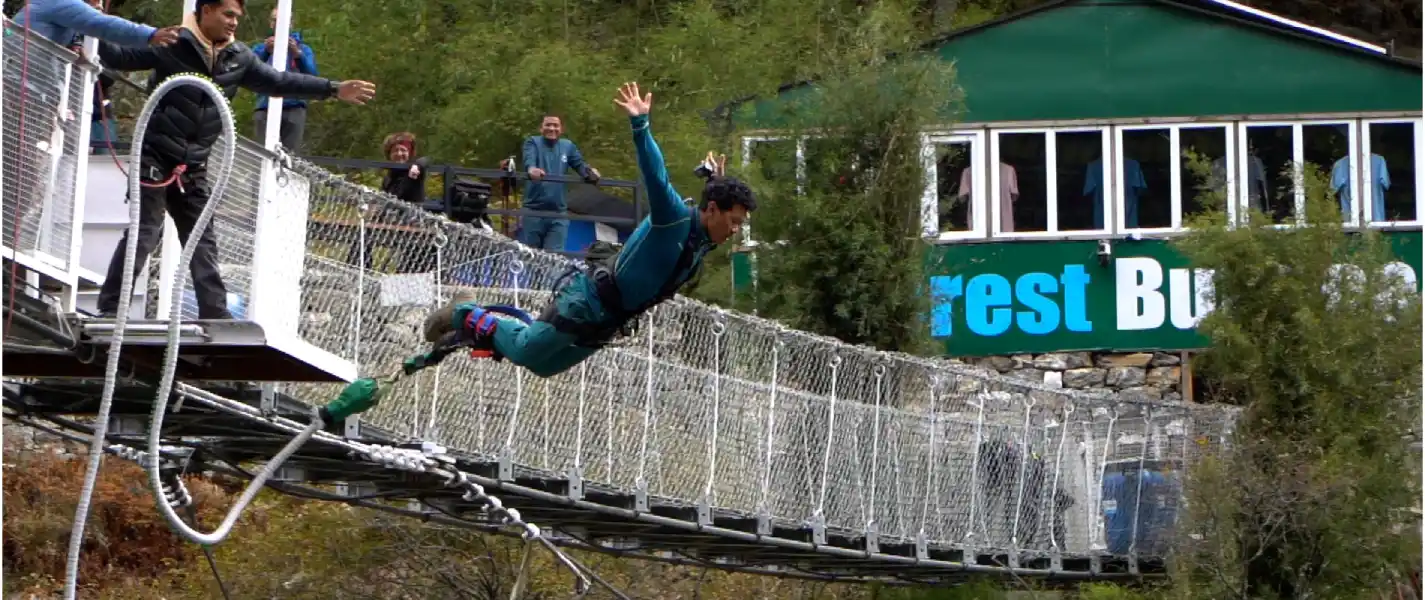
The Bhote Koshi bungee jump drops 160 meters from a steel suspension bridge spanning the Bhote Koshi gorge, making it one of the highest bungee jumps in Asia and among the most dramatic in the world. The jump platform is positioned above a fast-moving glacial river, and the sheer depth of the gorge means you are in full freefall for several seconds before the cord begins to take effect. The rebound phase brings you back up multiple times before you are gradually lowered to the retrieval point above the river. The height, combined with the natural gorge environment, is what consistently sets this jump apart from bungee experiences at purpose-built facilities.
The Bhote Koshi bungee jumping site is located approximately 160 kilometers northeast of Kathmandu along the Arniko Highway, which runs toward the Nepal-Tibet border. The drive from Kathmandu takes roughly three to four hours depending on road conditions and traffic. The site is part of an established adventure resort in the Bhote Koshi gorge area, which also offers white water rafting, canyon swinging, zip-lining, and accommodation. Its proximity to Kathmandu makes it a very manageable day trip from the capital, though many travelers choose to stay overnight at the gorge resort to make the most of the full range of activities available.
Pokhara bungee jumping takes place above the Seti River gorge on the edge of Pokhara city, with the Annapurna massif and Machhapuchhre forming a dramatic mountain backdrop visible from the jump platform. The height at Pokhara is lower than the Bhote Koshi drop, but the mountain scenery surrounding the jump zone is arguably even more photogenic. Bhote Koshi offers a wilder, more remote gorge environment and the greater height for a more intense freefall experience. Pokhara is more convenient for travelers already based in the lakeside city and pairs naturally with other Pokhara adventure activities like paragliding, zip-lining, and white water rafting on the same trip.
Bungee jumping in Nepal at both the Bhote Koshi and Pokhara sites is operated to international safety standards by experienced professional teams. The bungee cords used are rated well above the maximum load requirements for any participant, and full body harnesses rather than simple ankle attachments are standard at most Nepal bungee operations, providing significantly better security during the jump and rebound phase. Weather conditions are assessed before every jump session and operations are halted if wind, rain, or visibility fall outside safe parameters. Choosing a site with a documented safety record, certified equipment, and trained staff is the most important step before booking any Nepal bungee jump.
Bungee jumping in Nepal is available year-round at both Bhote Koshi and Pokhara, but the best seasons are spring from March to May and autumn from September to November. These periods offer stable weather, dry conditions, and clear skies that make the experience more enjoyable and visually rewarding. The monsoon season from June through August brings heavy rainfall that can make the gorge environment slippery and increase river levels significantly, sometimes leading to temporary closures or restricted operations. Winter months from December to February are generally fine for jumping but come with colder temperatures at the platform, particularly at the Bhote Koshi gorge site.
The cost of bungee jumping in Nepal varies between the two main locations and depends on whether photography or video packages are included. The Bhote Koshi bungee, being a more remote and logistically complex operation with greater height, is generally priced higher than the Pokhara jump. Prices can also vary depending on whether you book as part of a combined adventure package that includes activities like rafting or canyon swinging at the same site. For the most accurate current pricing, contacting the specific operator directly or booking through a reputable Nepal adventure travel company is the best approach, as rates are updated seasonally and can change.
Yes, weight limits apply at both Nepal bungee jumping locations and are strictly enforced for equipment safety reasons. The standard weight range accepted at most Nepal bungee sites is between 40 and 120 kilograms, though this can vary slightly between operators. A minimum weight requirement exists because the bungee cord's elastic properties are calibrated to a specific weight range — too light and the rebound dynamics become unpredictable. A maximum limit exists to stay within the rated safety capacity of the cord and harness system. If you are close to either limit, confirming your eligibility directly with the operator before traveling to the site is strongly recommended.
Most bungee jumping operators in Nepal set a minimum age of 18 years for independent participation, though some sites permit jumpers from 16 years old with verified parental or guardian consent. There is no strict upper age limit at most locations, but operators typically require older participants or those with pre-existing medical conditions to complete a health declaration before jumping. Individuals with heart conditions, high blood pressure, spinal or neck problems, epilepsy, or recent surgeries are generally advised to consult a physician before attempting any bungee jump. The physical impact of the rebound phase in particular places brief but significant stress on the neck and spine, which makes health screening an important part of the pre-jump process.
No prior experience is required for bungee jumping in Nepal at either the Bhote Koshi or Pokhara location. Both sites are fully managed professional operations where trained staff handle all equipment fitting, safety checks, and jump preparation. A pre-jump briefing covers the correct body position for the jump, what to expect during freefall and the rebound phase, and how to signal to staff when you are ready to be retrieved. The entire process from arrival to jump typically takes one to two hours including the briefing. The only thing required of the jumper is the willingness to step off the platform — everything else is managed by the team on site.
Yes, and the Bhote Koshi gorge site is specifically designed to support multi-activity adventure combinations. The resort at Bhote Koshi offers white water rafting on the river below, canyon swinging from the same bridge structure, zip-lining across the gorge, and rock climbing in the surrounding terrain. Many travelers book a two-day package that combines the bungee jump with a rafting run on the Bhote Koshi River and an overnight stay at the riverside camp. This makes Bhote Koshi one of the most comprehensive single-location adventure experiences in Nepal, and one of the best ways to fully justify the drive from Kathmandu with more than just a single jump.
The total time at the bungee site from arrival to completion of the jump is typically between two and four hours, depending on group size and the queue on the day. This includes registration and health check on arrival, a safety briefing and equipment fitting session, waiting time at the platform if there are other jumpers ahead of you, the jump itself including the rebound phase, and the retrieval process from above the river back up to the bridge level. The jump and rebound sequence itself lasts around two to three minutes from platform exit to final rest position. Travel time to and from Kathmandu or Pokhara adds significant additional time to the overall day.
Comfortable, close-fitting clothing that allows freedom of movement is the best choice for bungee jumping in Nepal. Avoid loose shirts, open shoes, jewelry, or glasses without a securing strap, as the force of the freefall and rebound can dislodge anything that is not securely attached to your body. Closed athletic shoes or sneakers with good ankle support are recommended. Contact lenses are generally fine. Long hair should be tied back securely. The full body harness is fitted over your clothing, so anything very bulky or with hard external fastenings can make the fitting process uncomfortable. Lightweight, flexible layers are the practical choice, particularly at the Bhote Koshi gorge where the temperature in the valley can be cooler than Kathmandu.
Yes, at both the Bhote Koshi and Pokhara bungee sites it is possible to observe other jumpers from the bridge or viewing area before committing to your own jump. Watching the experience from the platform level — seeing the height, hearing the sound of the cord, and observing the full rebound sequence — is something many first-time jumpers find helpful in mentally preparing for their own turn. Staff at both locations are experienced in working with nervous jumpers and will take the time to answer questions and reassure you before your jump. However, once you are harnessed and on the platform edge, committing fully and going on your own terms is always the most rewarding approach.
Photography and video packages are available at both the Bhote Koshi and Pokhara bungee sites, typically offered as an add-on at the time of booking or on arrival. The footage usually captures the platform moment, the full freefall, the rebound sequence, and the retrieval, delivered as an edited video file and a set of still photographs. Given the dramatic gorge environments at both locations — and the fact that you are unlikely to attempt the jump more than once or twice in your life — investing in the media package is something most jumpers are glad they did in retrospect. Having a record of the exact moment you stepped off the edge above a 160-meter Himalayan gorge is not something you can recreate later.
Trip Duration Days starting from and ending at
Trip Grade
Best Season
Or